Best pokies in Perth: venue hours and payout claims
 Available in AU
A clear look at what payout claims, operating schedules and gaming-floor requirements can—and cannot—confirm about Perth venues.
- When a Perth Gaming Venue Is Open, and What Changes on the Floor
- What “Best Paying” Can—and Cannot—Tell You About a Pokie
- Perth Gaming Venues: The Reporting Rules Behind the Machines
- Pokies Near Perth Airport and the CBD: What Can Be Verified
- Crown Perth Searches and the Limits of Game-Payout Claims
- Online Pokies and Deposits: The Legal and Payment Reality
- Why “24-Hour Pokies” Is Not a Verified Perth Opening Claim
- Perth CBD Clubs and Responsible-Gambling Tools
- Perth, Western Australia—not South Australia
- Cashless Pokies and the Perth–Newcastle Search Mix-Up
When a Perth Gaming Venue Is Open, and What Changes on the Floor
Opening hours and the way a gaming floor is supervised are separate matters. A venue may set its own operating schedule; the duty attached to its machines concerns what must be in place while they are running. That distinction matters when considering whether a Perth venue is open now, opens early, or stays open late. An opening time does not, by itself, describe the arrangements required on the floor.
A report by regionriverina.com.au describes a change applying from 1 July: venues operating more than 20 gaming machines are required to have a dedicated Responsible gambling officer (RGO) on duty during machine operation. The obligation is tied to the machines being in use, not simply to the venue’s general business hours. In practical terms, the relevant point is when the gaming machines are operating; the RGO duty applies during that period.
That is a floor-management requirement, not a published timetable. It does not establish that a particular Perth venue opens at a particular time, nor that every venue has the same schedule. A venue’s opening and closing times remain a separate question from whether its machine count brings it within the stated requirement. The wording also matters: the threshold is more than 20 machines, rather than 20 or more.
I have always found it useful to separate what a venue advertises about access from what its operating obligations require. “Open” is a simple word, but it can refer to the venue doors, food and drink service, or the gaming floor. Those things do not necessarily begin or end together. The RGO requirement described in the report attaches specifically to gaming machines operating. It should not be read as proof that every other part of a venue is available at the same time.
The report also describes a one-month grace period for venues to remove signage and put the responsible gambling officer arrangement in place. That transition period is part of the reported change; it is not a recurring allowance or a way to infer current opening hours. The practical effect is that venues were given a period to adjust their arrangements. The duty itself is the point to distinguish from the transition.
For anyone comparing opening information, a posted schedule and a floor requirement answer different questions. The schedule tells when a venue says it operates. The RGO rule concerns staffing while the relevant machines are operating at a venue above the stated threshold. Neither detail supplies the other. A schedule cannot show by itself how many machines are in operation, and a staffing rule cannot tell whether a venue is open at a particular moment.
That is why broad claims about Perth pokies being open now should be treated carefully. A city-wide label does not make all venues share one timetable, and the reported operating duty does not create a common opening hour. Early and late access are venue-specific matters. The rule gives no basis for translating the 1 July start into a list of places open at any particular time.
The same distinction helps avoid over-reading the change. A dedicated RGO on duty is a defined staffing obligation for qualifying venues while machines operate. It is not a statement about payout percentages, game outcomes, or the availability of any particular machine. Those are separate matters. The operational detail here is narrower: a qualifying gaming floor has an officer duty linked to machine operation, alongside a reported grace period for making the transition.
For a venue, the distinction is straightforward but consequential. If the machines are operating and the venue falls above the threshold, the reported rule concerns the presence of the designated officer then—not merely whether the building is open. If the machines are not operating, the stated condition is not being triggered by machine operation. The report does not turn those conditions into a universal schedule for Perth.
The useful takeaway is modest. Opening times describe access; the reported RGO requirement describes supervision during machine operation at venues with more than 20 machines. They belong in the same practical picture, but they are not interchangeable. A timetable answers when. The duty answers what must be in place on the floor.
What “Best Paying” Can—and Cannot—Tell You About a Pokie
Choosing pokies in Perth starts with checking the practical details behind an online casino, including its stated licensing and payment information. Use this list as a reference point when deciding which options to look into further.
Payout speed: crypto 30-120 minutes, fiat 24-72 hours · Min. deposit: A$30 MrPacho lists crypto payouts at 30–120 minutes and fiat payouts at 24–72 hours. Its minimum deposit is A$30.
License: Curacao eGaming (Hollycorn N.V., since 2017) · Min. deposit: A$20-30 (depends on the offer) Playfina Casino is listed under a Curacao eGaming license held by Hollycorn N.V., with the license dating from 2017. Its minimum deposit is A$20–30, depending on the offer.
License: Curacao Gaming Control Board OGL/2023/174/0082 (Dama N.V.) SpinsUp is listed under Curacao Gaming Control Board license OGL/2023/174/0082, held by Dama N.V.
License: Curacao Gaming Control Board JustCasino is listed as licensed by the Curacao Gaming Control Board.
License: Curacao eGaming OGL/2024/923/0383 (Antillephone N.V.) · Min. deposit: A$30 WinSpirit Casino is listed under Curacao eGaming license OGL/2024/923/0383, held by Antillephone N.V. Its minimum deposit is A$30.
License: Curacao eGaming (Roby Games Ltd) Roby Casino is listed under a Curacao eGaming license held by Roby Games Ltd.
License: Curacao Gaming Control Board (TechSolutions Group N.V.) Bizzo Casino is listed under a Curacao Gaming Control Board license held by TechSolutions Group N.V.
License: Curacao · Min. deposit: A$20 (POLi) Lucky Dreams lists a Curacao license and a minimum deposit of A$20 via POLi.
License: Curacao · Payout speed: crypto 30-60 minutes, fiat 1-5 days · Min. deposit: A$10 Wild Tokyo lists a Curacao license. Its stated payout times are 30–60 minutes for crypto and 1–5 days for fiat, with a minimum deposit of A$10.
License: Curacao – Antillephone N.V. (Versus Odds B.V.) · Min. deposit: EUR 20 Thor Casino is listed under a Curacao license with Antillephone N.V. (Versus Odds B.V.). Its minimum deposit is EUR 20.
“Best paying” sounds like a settled property of a game. In practice, the label can conceal two separate questions: which return setting is in use, and what any individual spin can do. Those are not the same thing. A pokie may have a published return percentage, but that figure does not tell anyone what will happen in the next session.
I learned to be wary of rankings that treat a game’s name as if it carried one fixed payout everywhere. A specialist review has reported that some providers let casinos choose between multiple return-to-player (RTP) settings for the same pokie. That means a title available at one casino may not necessarily be operating at the same RTP setting at another. The game’s reputation alone cannot settle the comparison.
RTP is a percentage describing the share of stakes a game is designed to return over a very large number of plays. It is a long-run measure, not a promise that a particular player will receive that share back. A displayed figure is useful only when its context is clear: which setting it refers to, and whether that setting applies to the version being played. Without that, a “high RTP” claim can sound more definite than it is.
RTP Meaning
Return-to-Player (RTP) is a long-run measure describing the share of stakes a game is designed to return over a very large number of plays, not a promise for any individual session.
The practical difficulty is that a player can recognise a game but not necessarily know which setting sits behind it. A familiar title, similar graphics or identical bonus features do not establish that two versions use the same RTP. Nor does a venue’s general reputation tell the player which setting has been selected for a particular machine. The distinction is easy to overlook because the visible game can look unchanged.
Why a strong reputation cannot predict a spin
Every pokie spin is a separate random event determined by a Random Number Generator (RNG). The outcome of one spin does not become more or less likely because the previous spins were wins or losses. A run of losing results does not make a win “due”; a recent win does not make another one less possible.
That independence is the part advertising language tends to blur. Words such as “hot,” “generous” or “best paying” may describe a reputation, a promotional angle or a long-run statistic, but they do not forecast the next result. A machine that has paid out recently has no obligation to continue, and one that has not paid out is not storing up a result. The outcome is not a ledger balancing itself in real time.
This matters when comparing Perth pokies, whether the interest is in a venue in the city or elsewhere in the metropolitan area. A list of popular titles may show what people recognise; it cannot, on its own, establish which machine offers the most favourable setting. Even a genuine RTP comparison needs to be tied to the relevant version, rather than transferred from one casino or machine to another by assumption.
I have seen the mistake made in both directions: treating an appealing game as a guarantee, or dismissing a game because an individual session went badly. Neither conclusion follows from a handful of results. The RNG governs each spin; the selected RTP setting concerns the game’s long-run design. One does not cancel out the other.
What “best” can usefully mean
A more careful use of “best paying” is a question about evidence, not a promise of winnings. It asks whether a return figure is available, whether it identifies the setting, and whether it applies to the exact version under consideration. If those details are absent, a ranking cannot fill the gap by sounding confident.
- Check if a return figure is available
- Verify the specific RTP setting
- Confirm it applies to the exact version played
- Rely on a game’s name as a fixed payout
- Treat past results as a forecast
- Assume “best paying” is a settled property
This is why the phrase “best pokies in Perth” needs qualification. No game name alone establishes that it pays better at every Perth casino, and a past result is not a forecast. A return percentage may help describe a game’s design over extensive play, but it cannot tell an individual what a session will return.
The distinction is plain once separated: RTP describes a setting; the RNG determines each spin. Reputation is not a result.
Perth Gaming Venues: The Reporting Rules Behind the Machines
A venue’s reputation tells little about how it responds when gambling begins to cause harm. The more useful question is what oversight is expected on the floor and how concerning incidents are recorded. In a report on changes to venue requirements, regionriverina.com.au describes a gambling incident register for recording occurrences, including cases where a patron’s behaviour suggests they may be at risk of harm or already affected by it.
That record-keeping requirement has a practical role: it makes incidents part of the venue’s formal oversight rather than something left solely to memory or informal conversation. The register is about recording occurrences, not rating a venue or a particular pokie. It also gives the issue a place within venue administration, where staff and management can treat signs of gambling harm as matters requiring attention.
The same report says that, from 1 July, venues with more than 20 gaming machines are required to have a dedicated Responsible gambling officer (RGO) on duty while the machines are operating. It also reports a one-month grace period for venues to remove signage and introduce these officers. The register and the RGO duty address different parts of oversight: one concerns documenting incidents; the other concerns having a designated officer present during machine operation.

I have seen how easily a policy can become a line on a noticeboard unless someone is responsible for putting it into practice. A named duty and a record of incidents make the expectations more concrete. Neither, by itself, establishes that a venue has no gambling harm or that every concerning moment will be resolved well. They describe responsibilities, not outcomes.
For anyone comparing Perth gaming venues, this is a more grounded distinction than calling one place the “best”. A ranking based on atmosphere or machine choice does not answer how a venue handles signs that a patron may be struggling. Equally, the presence of a register or an officer should not be mistaken for proof that a venue is safer in every respect. The value lies in knowing that oversight includes both a person with a defined role and a formal record of relevant incidents.
The word “responsible” can sound reassuring in promotional language. In practice, the useful detail is narrower: who is required to be on duty, when that duty applies, and whether incidents involving possible gambling harm are recorded. Those are operational obligations, not a promise of a particular experience or result.
The register also changes the way an incident is understood inside a venue. Rather than treating a visible sign of distress as an isolated interaction, the requirement places such occurrences within a reporting framework. That matters because gambling harm can be difficult to assess from a single moment; recording an occurrence is a way of making it visible to venue oversight. It does not, on its own, diagnose a person or show what action followed.
Venue Oversight
- Venues with over 20 machines must have a dedicated Responsible Gambling Officer on duty during operation.
- Gambling incident registers are used to formally record occurrences of possible gambling harm.
- These operational obligations are separate from a venue’s general reputation or ratings.
So a Perth venue’s standing cannot be established by a slogan, a list of machines or an online rating alone. The reporting rules offer a narrower measure: whether venue operations include a designated responsible gambling role where the requirement applies, alongside formal recording of incidents linked to possible harm. A useful distinction.
Pokies Near Perth Airport and the CBD: What Can Be Verified
A venue described as “near Perth Airport” or “near the CBD” sounds easy to place. In practice, those labels can conceal a lot: the starting point may be a terminal, a hotel, a station or a broad district, while “near” has no fixed distance. I would not turn that wording into a travel recommendation without a confirmed address and current venue information.
The same caution applies to searches for pokies in Perth’s central area, North Perth or around a named local point. A place name in a search does not establish that a gaming venue is there, that it has pokies, or that it is open. It identifies the area someone has in mind; it is not proof of a particular venue’s location or facilities. That distinction matters when a result is being used to decide where to go.
Airport wording is especially easy to overread. “At the airport” and “near the airport” are different claims. The first suggests a venue inside an airport precinct; the second may refer to a wider surrounding area. Without a confirmed address, neither phrase supports a reliable estimate of walking or driving distance. A map pin can also describe a business address without showing how convenient the route is from a terminal or another starting point.
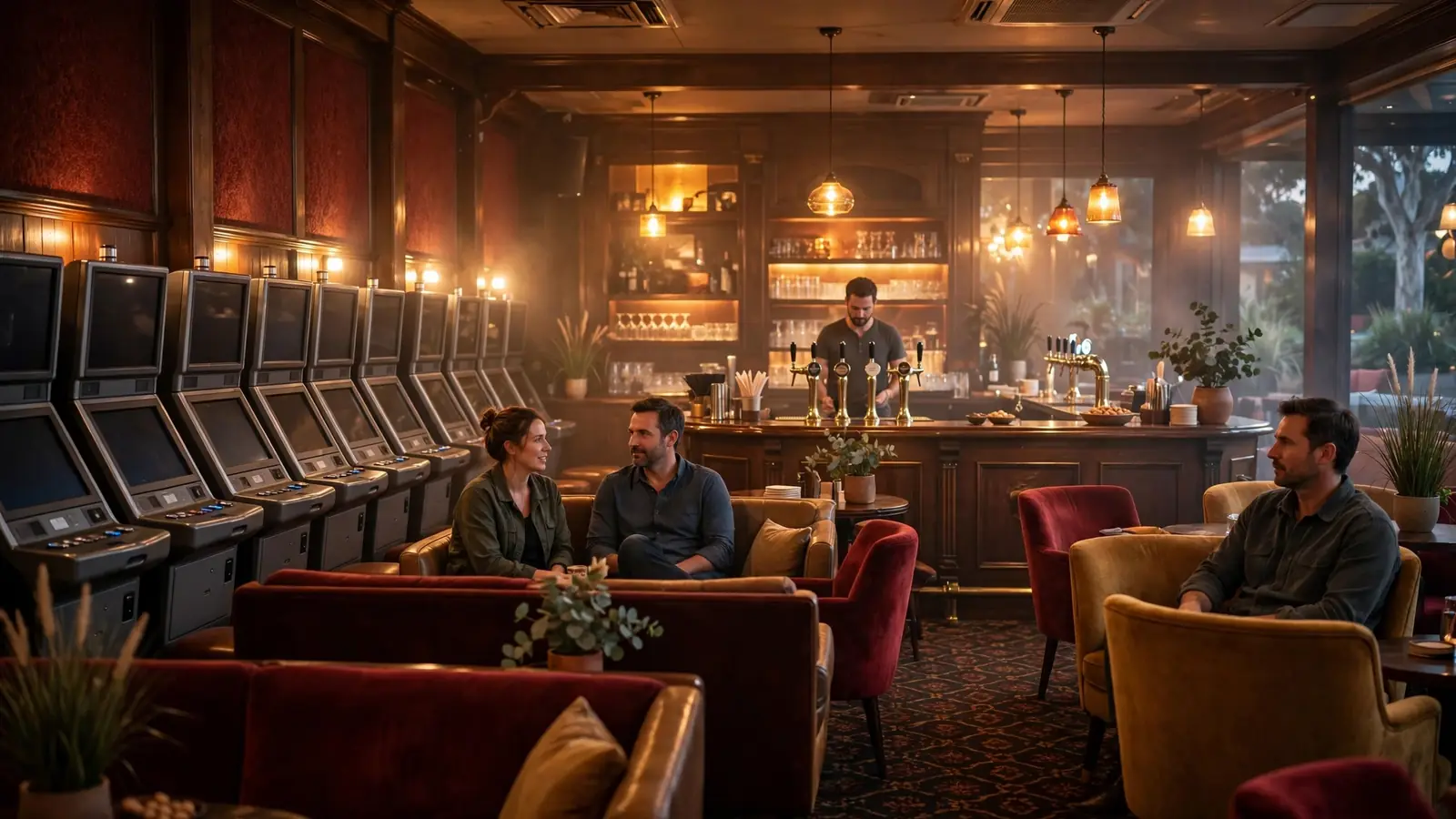
CBD wording is similarly broad. Perth’s central area is not one doorway or one point on a map. A venue can be described as central while still being a poor fit for someone starting elsewhere in the district. I would check the actual street address rather than treating “CBD” as a precise location. The same applies to “near me”: that phrase depends on the person’s position, which can change the result entirely.
There is also a location ambiguity in searches that combine Perth with other place names. A suburb, street, venue or destination may share a word with a place elsewhere, and a loosely phrased result can blur those meanings. Parkes, for example, should not be treated as a confirmed Perth venue area merely because the terms appear together. Search wording is not a locator. Verify the full address and the city or suburb attached to it.
For a practical check, separate three questions that are often bundled together: where the venue is, whether it offers pokies, and whether it is open at the intended time. Each needs its own confirmation. A listing that answers only one does not settle the others. I would rely on a venue’s own current details for its address and facilities, then check those details against a map before travelling. A directory label or a short search-result description is a lead, not a guarantee.
This is not a case for ranking nearby options. Without a confirmed venue and location, a list would imply knowledge it does not provide. Nor does a broad area label establish that a venue suits a particular trip. The useful result is narrower: keep airport, CBD and suburb references distinct, and do not mistake proximity language for a verified route or recommendation.
Verifying a Venue
- Confirm the actual street address
- Verify the venue offers pokies
- Check if the gaming floor is open at the intended time
- Use a map to verify the route from the starting point
That is the sensible boundary. Search terms can point toward an area, but they cannot establish the address, distance, facilities or suitability of an individual venue. A precise claim needs a precise location.
Crown Perth Searches and the Limits of Game-Payout Claims
Crown Perth is a recognisable name in searches for pokies in Perth, but recognition is not evidence of a particular machine, room, payout or playing condition. I would not turn the name into a recommendation without venue-specific information to support it. A familiar destination and a verified claim are different things.
That distinction matters when a search is looking for the “best” pokies room or the largest cash payout. Those phrases imply that venues or machines have been compared on a common basis. Without reliable details about the specific machines and the conditions attached to them, there is no sound basis for ranking a room or naming a maximum payout. The result would look precise while answering a different question: what can be asserted, rather than what is actually available.
Payout language is especially easy to overread. A published return percentage, where one is available, describes a theoretical long-run measure; it does not tell a player what a particular session will produce. More importantly, a game’s name alone does not establish its setting. Some providers give casinos a choice of RTP settings for the same game, so the version at one casino may not match the version offered elsewhere. That general possibility does not establish which settings are used at Crown Perth.
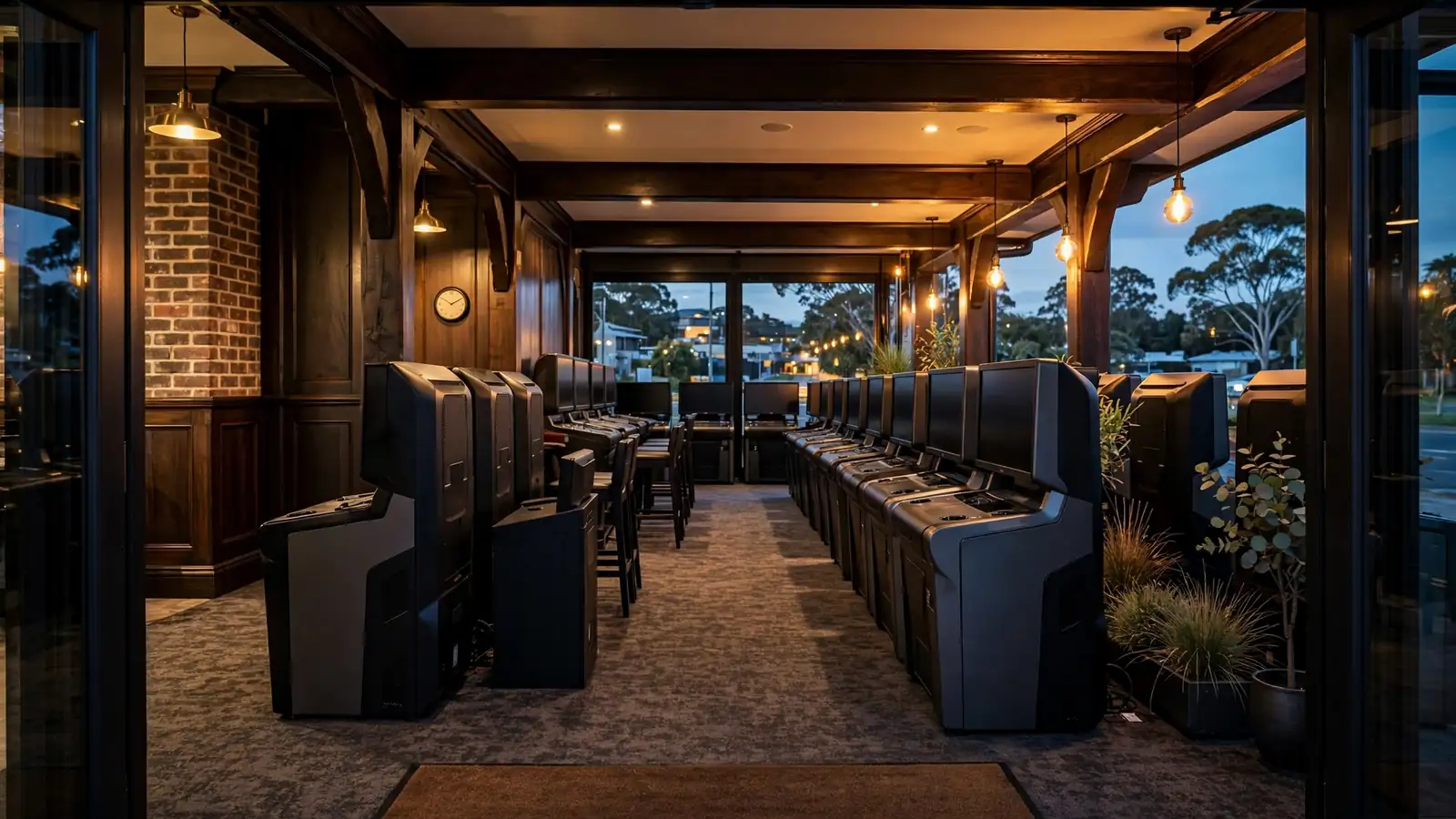
I have seen how a familiar title can become shorthand for a promise. “Popular” may mean that people recognise the game; it does not mean that it pays more. “High payout” can refer to a possible prize rather than the likelihood of reaching it. And “best” is incomplete unless the measure is clear. Long-run return, volatility, jackpot size and the chance of a particular outcome are not interchangeable descriptions.
The same caution applies to a claimed maximum cash payout. A maximum, if stated, would need to be tied to the particular machine and its applicable rules. A general venue name cannot supply that detail, and a search result should not be treated as confirmation of a current machine configuration. No useful comparison can be made from the venue label alone.
This is not a claim that Crown Perth has no particular machines or payout arrangements. It is a limit on what can responsibly be said without specific, current evidence. I would separate what is confirmed about a named game or machine from what is merely inferred from the casino’s reputation. The distinction is unglamorous. It is also the part that prevents a search for information from turning into an unsupported sales pitch.
For anyone weighing a payout claim, the meaningful evidence would be the game’s own published information and the applicable setting for that machine, not a venue name or a ranking headline. Even then, an RTP setting is not a forecast for the next spin. Each spin remains a random event. A percentage cannot identify when a return will occur, or promise that it will occur during a particular visit.
Crown Perth can be discussed as a destination people look up. Specific claims about its pokies, room rankings or maximum cash payouts require specific support. Without that, the honest answer is narrower than the wording of the search—and more useful than a confident guess.
Payout Claims
Attention: A game’s name alone does not establish its payout setting, as some providers allow casinos to choose between multiple RTP settings for the same title.
Online Pokies and Deposits: The Legal and Payment Reality
Online play is a different matter from visiting a Perth venue. Under the Interactive Gambling Act 2001, companies cannot lawfully provide real-money pokies to people in Australia. No Australian-licensed online casino exists. ACMA enforces the Act and blocks illegal offshore gambling sites, with internet service providers required to comply with its blocklist.
That legal position matters more than the familiar look of a website or the availability of a payment button. Offshore sites may still accept Australian customers, but access can be disrupted, and an Australian player has no legal recourse here if an offshore operator withholds winnings. I treat that as a central risk, not fine print. A payment method does not change the operator’s status or create a route to recover funds.
Deposits are not a reliability test
PayID is a transfer alias linked to the New Payments Platform, allowing payments through an email address, mobile number or ABN. It must first be connected to a bank account for online gambling deposits. Its presence says nothing about whether a site is licensed, whether a game is fair or whether the operator will honour a withdrawal.
Payment can also fail before a deposit reaches an operator. A specialist review reports that Australian banks and card companies are increasingly blocking transactions to known gambling sites. That is a reported trend, not a promise that a particular bank will block or approve a payment. A declined transfer does not make the underlying service lawful; nor does a successful one make it safe.
For any offshore transaction, the bigger issue is what happens after a win. Operators may require identity and address documents before the first withdrawal. That verification can delay or prevent payment if the submitted details do not meet the operator’s requirements. The site’s terms, not the deposit screen, govern those checks.
A bonus is a turnover condition
“No deposit” and “real money” describe marketing language, not a change in the law. A bonus can also carry a wagering requirement: a specialist review gives the example of a $500 bonus with a 40-times turnover condition, which would require $20,000 in bets before winnings become withdrawable. Where the condition applies to the deposit and bonus together, the same review illustrates a 35-times requirement on $1,000, producing $35,000 in required bets.
Those figures show the mechanics, not an offer to pursue. Free spins may have a cash-out cap, and withdrawal limits or other terms can further constrain what can be collected. The headline amount is not the amount available to withdraw.
BetStop is a self-exclusion service for Australian-licensed operators; it does not bind offshore sites. That distinction can leave a person who has excluded themselves from domestic services still exposed to offshore marketing or access. The practical safeguard is limited. No domestic licence, no domestic protection.
Why “24-Hour Pokies” Is Not a Verified Perth Opening Claim
A venue described as having 24-hour pokies would need to keep its gaming machines available around the clock. That is a claim about operating times, not just the venue’s general opening hours. The two can differ: a place may be open while its gaming floor is not operating. Without a confirmed timetable for a particular Perth venue, neither a round-the-clock schedule nor current availability can be stated.
Why “24-Hour” claims are unverified
A venue may be open while its gaming floor is not operating. Without a confirmed venue-specific timetable, general opening hours or the presence of a staffing requirement (like an RGO) do not prove continuous machine access.
I keep those claims separate because “open now” is time-sensitive. A listing can show a venue as open without establishing that its machines are operating at that moment. The reverse also cannot be assumed. A search result, an old directory entry or a general description of a venue does not confirm the hours of its gaming floor.
There is one relevant operating-duty change. A report by regionriverina.com.au says that, from 1 July, venues with more than 20 gaming machines are required to have a dedicated Responsible gambling officer (RGO) on duty whenever those machines are operating. That is a staffing requirement tied to machine operation. It does not establish when any Perth venue opens, when its machines are switched on, or whether it operates through the night.
This is the practical distinction I would make at the counter: a rule about what must be in place during operation is not a timetable. It tells a venue what duty applies while machines are running; it does not promise continuous access to them. No shortcut there.
The phrase “24-hour” can sound like a clear assurance, but it needs a venue-specific basis. General opening information is not enough to establish that pokies are available throughout the day and night, and a duty applying during operation cannot fill that gap. A responsible gambling officer being required while machines run is not evidence that they run continuously.
For Perth, the cautious reading is simple: treat any claim of all-night machine access as unconfirmed unless the venue itself provides current, specific information about gaming-floor hours. A venue’s general schedule and its pokies schedule should not be treated as interchangeable. The reported RGO requirement explains an obligation during operation—not the hours of operation.
Perth CBD Clubs and Responsible-Gambling Tools
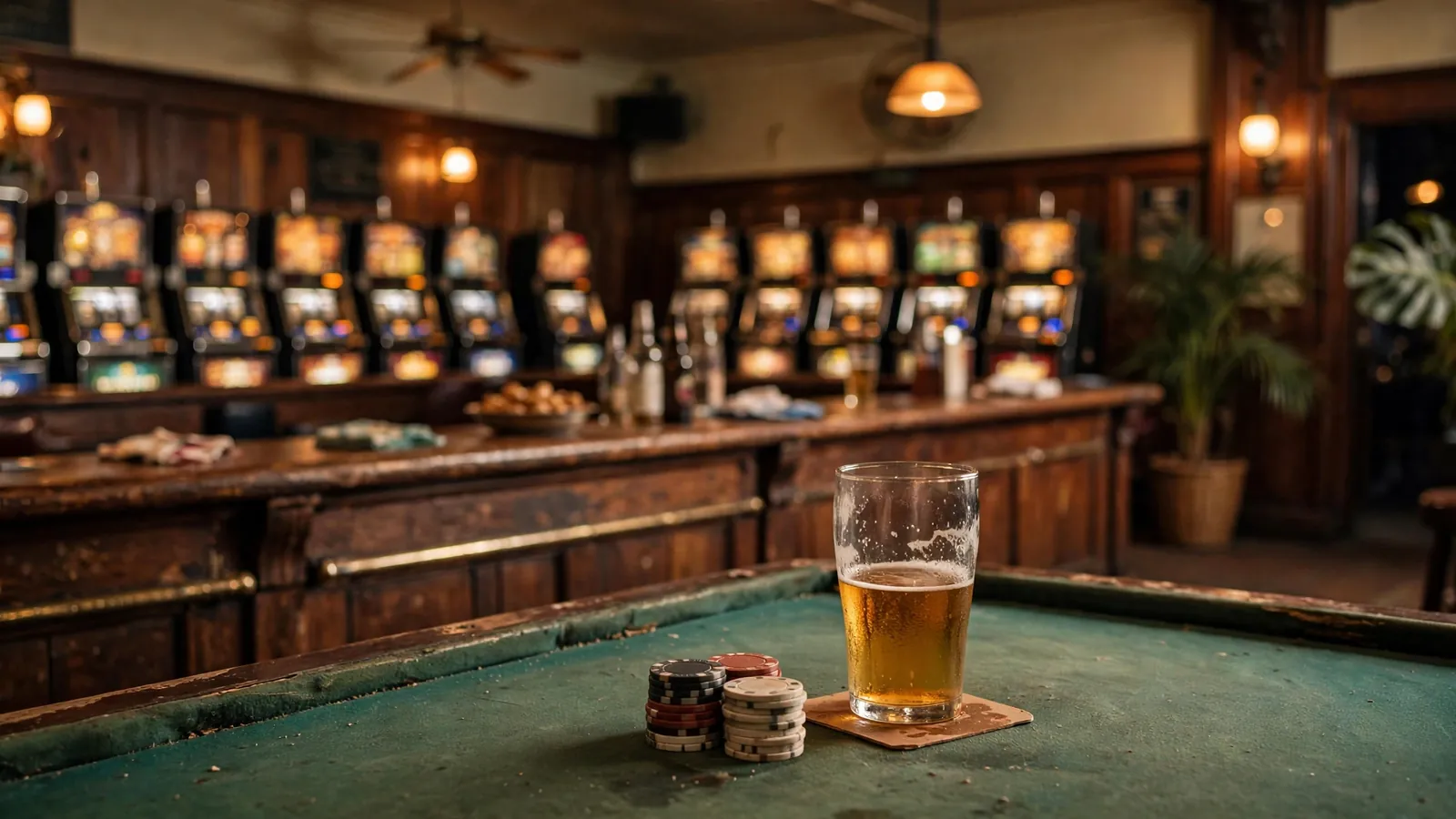
A club’s location or reputation says little about how its gambling safeguards work. I have seen “responsible” used as a reassuring label, but the useful detail is more practical: whether the available controls match the kind of risk they are meant to manage. A deposit limit controls money put in; a loss limit addresses losses; a session time limit puts a boundary around time spent playing. They are different controls, not interchangeable promises.
For pokies in Perth CBD clubs, those tools are best understood as ways to set boundaries, not as a way to make gambling safe or predictable. A limit may help contain a particular behaviour, but it does not change how a pokie works or guarantee that spending will stay within a planned amount. The setting matters. A limit that is difficult to understand, or that can be changed without friction, may not do the job its name suggests.
Self-exclusion is a more substantial step. It is intended to prevent access to gambling, rather than simply cap deposits, losses or time. The scope matters: an exclusion arrangement is only useful across the places and services it actually covers. BetStop applies to Australian-licensed operators; it does not bind offshore sites. It should not be mistaken for a universal block on gambling.
That distinction matters when a search for Perth clubs turns into a search for “best” pokies. A venue preference and a personal safeguard answer different questions. No club label can establish that a particular control is available, how it is set up, or whether it fits an individual situation. The sensible comparison is not a vague claim about the room or machines, but the presence and operation of the relevant tools.
Controls the amount of money put into the machines.
Addresses and caps the total losses incurred.
Sets a specific boundary around the time spent playing.
A more substantial step intended to prevent all access to gambling.
I would treat limits as part of the operating environment, not as a substitute for a decision to stop. Deposit, loss and time controls each address a separate pressure point; self-exclusion is for a different level of intervention. None is a payout feature. None improves the odds.
The small print matters. A safeguard is only as clear as its coverage and conditions. When those are unclear, the label does less work than it appears to.
Perth, Western Australia—not South Australia
Perth is in Western Australia; South Australia is a different state. The distinction matters because a reference to South Australian pokies does not describe a venue in Perth. Combining the places in one phrase may reflect uncertainty about geography, but it does not make their venue arrangements interchangeable.
I have seen how a broad label can do too much work. “Australia” identifies the country, not a particular city or state. “Pokies in Perth” points to a physical location in Western Australia; “South Australian pokies” points elsewhere. An opening-hours phrase attached to the second does not establish when a Perth venue operates. Geography first.
There is a national baseline that applies across Australia: the legal age for gambling, including online pokies, is 18. That age threshold is not a venue recommendation, nor does it tell anyone whether a particular place is open.
The national regulator also has a defined role. The Australian Communications and Media Authority (ACMA) enforces the Interactive Gambling Act 2001. That is the relevant national reference when considering the law governing interactive gambling services. It should not be confused with a claim that ACMA sets the opening times of Perth venues or supplies a list of local machines.
In practice, I separate three questions that are often compressed into one: which state is meant, whether the subject is a physical venue or an online service, and which national rules apply. The wording “Perth, Australia” resolves the first point to Western Australia; it does not, by itself, establish a venue’s hours or describe its machines. South Australia remains a separate location, not a shorthand for Perth.
That distinction keeps the answer accurate. A national age rule can be stated nationally, and ACMA’s enforcement role can be named without attaching South Australian venue details to Western Australia. The state label matters.
Cashless Pokies and the Perth–Newcastle Search Mix-Up
“Cashless” can describe different things: how money is loaded, how a machine accepts funds, or whether a venue uses a broader cashless system. Those are not interchangeable claims. A payment method associated with online gambling says nothing about the equipment or payment arrangements inside a Perth venue.
PayID, for instance, is an alias service built on Australia’s New Payments Platform. It can move money through details such as a mobile number, email address or ABN, but that does not establish that a land-based pokie accepts cashless play. It also says nothing about a venue’s licensing, a game’s fairness or its RTP. The connection is easy to overstate. It is only a payment rail.
I have seen product language blur those distinctions because “cashless” sounds like a single feature. In practice, the label needs a precise subject: cashless deposits to what, cashless play on which machines, or cashless transactions across which venue? Without that detail, it is not a useful description of a particular Perth gaming floor.
The Perth–Newcastle wording creates a separate problem. Perth and Newcastle are different places, and the combined phrase does not establish that a comparison has been made or that the same machine feature is available in both. No venue recommendation follows from the wording alone. A location needs to be identified before its machines or payment arrangements can be assessed.
So the careful distinction is straightforward: cashless payment technology is not proof of cashless pokies, and a mention of Newcastle is not evidence about Perth. Treat each claim as specific to a named venue and a clearly described service. Without that, the label does not tell the whole story.
What is the legal age for online gambling in Australia?
You must be 18 or older to gamble online in Australia.
Are online pokies legal for Australian players?
Australian companies cannot legally offer real-money online pokies without a domestic licence, and no such licences have been issued. The law targets operators rather than players, so Australians can play on offshore sites that accept them, but they have no legal recourse in Australia if a site refuses to pay.
Are online pokies rigged?
Each spin is an independent event determined by a random number generator. Some providers also let casinos choose between different RTP settings for the same game, so the return percentage can vary between casinos.
Can casinos change the RTP of their games?
Yes. Some providers let casinos choose from multiple RTP settings for a game, so the same pokie may have a different return percentage at different casinos.
Prepared by the Malina Casino editorial staff.