
Online Pokies in Australia: Real Money and No Deposit
 Available in AU
Australian law distinguishes the operator providing an online casino service from the individual using it, while an offer does not make that service locally licensed.

- The Legal Line Behind “No Deposit” Play
- Free Spins, Virtual Credits and the Real-Money Catch
- When a “Bonus” Is Really a Wagering Obligation
- Australian and Aristocrat Labels: What They Do—and Don’t—Tell You
- PayID Deposits and the Longer Road to a Withdrawal
- Lightning Link Searches, Mobile Friction and Playing Limits
The Legal Line Behind “No Deposit” Play
The phrase “real money, no deposit” can make an offshore offer sound like a harmless exception to the usual rules. It is not. The legal distinction is between the operator providing the service and the individual using it. Under the Interactive Gambling Act 2001, an operator must not provide online casino-style games to people physically in Australia. That includes pokies and other casino games played for money. The Act does not make an individual Australian player’s use of an offshore casino an offence.
That difference is easy to miss in advertising. A page may present registration, a bonus and a game lobby as one smooth process, but the operator is still outside Australia and the service is not locally licensed. The law places the prohibition on providing the service, not on the individual punter who accesses it. That does not turn the offer into an approved Australian product, or give the operator permission to serve local customers.
I have seen how a “no deposit” headline does its work: it puts the apparent cost of entry in the foreground, while the operator’s location and the status of the service sit further down the page. The label tells little about the legal position. A casino offering such promotions to Australians is an offshore, crypto-friendly casino, not an Australian online casino operating under a domestic gambling licence.
For Australian players exploring real-money online pokies and no-deposit offers in 2026, the details behind an operator can help set expectations before signing up. Use these concise notes as a starting point, and check each casino’s current offer terms before playing.
Payout speed: crypto 30-120 minutes, fiat 24-72 hours · Min. deposit: A$30 MrPacho lists crypto payouts at 30–120 minutes and fiat payouts at 24–72 hours. Its minimum deposit is A$30.
License: Curacao eGaming (Hollycorn N.V., since 2017) · Min. deposit: A$20-30 (depends on the offer) Playfina Casino is operated by Hollycorn N.V. and has held a Curacao eGaming license since 2017. Its minimum deposit is A$20–30, depending on the offer.
License: Curacao Gaming Control Board OGL/2023/174/0082 (Dama N.V.) SpinsUp is licensed by the Curacao Gaming Control Board under OGL/2023/174/0082, with Dama N.V. named as the operator.
License: Curacao Gaming Control Board JustCasino is licensed by the Curacao Gaming Control Board.
License: Curacao eGaming OGL/2024/923/0383 (Antillephone N.V.) · Min. deposit: A$30 WinSpirit Casino holds Curacao eGaming license OGL/2024/923/0383, issued to Antillephone N.V. Its minimum deposit is A$30.
License: Curacao eGaming (Roby Games Ltd) Roby Casino is licensed by Curacao eGaming, with Roby Games Ltd named in its licensing details.
License: Curacao Gaming Control Board (TechSolutions Group N.V.) Bizzo Casino is licensed by the Curacao Gaming Control Board, with TechSolutions Group N.V. named as the operator.
License: Curacao · Min. deposit: A$20 (POLi) Lucky Dreams lists a A$20 minimum deposit via POLi and identifies Curacao as its licensing jurisdiction.
License: Curacao · Payout speed: crypto 30-60 minutes, fiat 1-5 days · Min. deposit: A$10 Wild Tokyo lists crypto payout times of 30–60 minutes and fiat payout times of 1–5 days. Its minimum deposit is A$10, and it identifies Curacao as its licensing jurisdiction.
License: Curacao – Antillephone N.V. (Versus Odds B.V.) · Min. deposit: EUR 20 Thor Casino identifies its license as Curacao—Antillephone N.V. (Versus Odds B.V.). Its listed minimum deposit is EUR 20.
Offshore licences are not Australian approval
Casinos that accept Australian customers may state that they hold a licence from an offshore jurisdiction. Curaçao, the Malta Gaming Authority and Gibraltar are among the jurisdictions associated with operators targeting international markets. A licence from one of those places is not an Australian licence, and it does not override the Interactive Gambling Act’s restriction on operators providing online casino games to people in Australia.
That distinction matters when an advertisement uses a licence badge as a shortcut for “safe” or “approved”. The badge may identify a regulator or licensing jurisdiction, but it does not establish that the service is permitted to operate for Australians. Nor does the presence of a licence remove the practical risks of dealing with a business beyond Australian oversight.
The Australian Communications and Media Authority blocks access to illegal gambling sites. As a result, an offshore casino’s website may not remain accessible from Australia. A working page at one moment is not proof of local approval or a promise of continued access. Blocks can make the route to a site unreliable, even before questions about the operator’s rules or payment practices arise.
I would treat location acceptance as a separate checkpoint, not something implied by an Australian flag, local currency or a page written for Australians. A site must confirm that it accepts the punter’s location before any deposit is made. If its terms exclude Australia, or its support gives no clear answer, a promotional headline does not resolve that uncertainty.

Access is not protection
Some operators or third parties may suggest using a VPN when a site is blocked. That advice carries its own risk. A VPN can make a connection appear to come from somewhere else, but it does not change the operator’s legal position or establish that the account is eligible. If the casino’s rules prohibit VPN access or require accurate location details, using one may lead to winnings being voided or the account being closed.
In practice, the operator’s terms govern the account relationship. A punter can find that access worked at the point of registration, yet later face a dispute over location or identity. The key point is not whether a VPN can open a page; it is whether the operator will honour the account under its own rules. No technical workaround supplies that assurance.
There is also a significant difference between a complaint about a local service and a dispute with an offshore business. If an offshore casino refuses to pay winnings, there is no Australian government body that can be approached as the local gambling regulator to compel payment. A foreign licence may provide a complaint route within its own system, but that is not the same as Australian consumer or gambling oversight, and it does not guarantee a favourable result.
No Local Protection
If an offshore casino refuses to pay winnings, there is no Australian government body that can be approached to compel payment.
That is the part the headline leaves out. “No deposit” describes an offer, not the standing of the operator, the stability of access or the availability of a remedy if a dispute arises. The low-friction entry point can sit alongside a very real gap in local protection.
Anyone registering and gambling in Australia must be at least 18. Beyond that threshold, the legal position should be read in two parts: the operator is prohibited from offering real-money online casino games to people in Australia, while the individual player is not made criminally liable by the Act for playing offshore. Neither point should be mistaken for endorsement. Offshore access remains exposed to blocking, operator terms and the limits of pursuing a payment dispute across borders. No local safety net.
Free Spins, Virtual Credits and the Real-Money Catch
“Free” can describe two different things in casino-style play. It can mean a game played with virtual credits, with no cash wager involved. Or it can describe an offer attached to real-money gambling, where a punter may be invited to play without making an initial deposit. The same word appears in both settings; the underlying value is not the same.
Social and free-play casino apps that use virtual credits are available through the Google Play Store and Apple App Store, and they are legal to use in Australia. That tells us what kind of product those apps are and where they can be obtained. It does not show that their credits can be exchanged for money, or that playing them creates a route to a cash withdrawal.

That distinction is easy to miss in a search for free spins or pokies that might pay real money without a deposit. A free-play app can look and feel like a casino game, with reels, prizes on screen and a balance displayed in credits. Those familiar visual cues do not turn virtual credits into Australian dollars. The interface can resemble a cash game while the credit remains part of the app’s free-play system.
I learned to separate the screen from the transaction. A number beside a game is only a balance in the system that issued it. The important question is not whether the game calls that number a win, but whether the product is explicitly operating with money that can be withdrawn. An app-store listing for a free-play game does not answer that question for a separate no-deposit offer.
What “free play” establishes
Free-play apps offer a way to use casino-style games with virtual credits. Their availability in mainstream app stores is a useful, specific distinction: these apps are not the same category as an offshore real-money casino simply because both use casino imagery or familiar game formats.
But the distinction cuts both ways. Finding a free app does not establish that a real-money casino will offer free spins, that such spins will be available to someone in Australia, or that any resulting balance can be withdrawn. Those are separate claims about a different product. A “free” label, by itself, settles none of them.
App Store Legality
Social and free-play casino apps using virtual credits are legal to use in Australia and available through the Google Play Store and Apple App Store.
The same applies to phrases such as “no deposit” and “real money.” “No deposit” describes the absence of an initial deposit in the offer as presented; it does not, on its own, prove that a cashable prize will follow. “Real money” describes the kind of value being discussed, but it is not evidence that a particular offer is accessible, valid, or payable. Combining the phrases in an advertisement does not remove the need to distinguish a virtual-credit app from real-money gambling.
There is a practical reason the wording can feel more definite than it is. Promotional language compresses several separate ideas into one headline: a game, an introductory offer, and the possibility of a prize. The headline attracts attention; it is not a complete description of what the credit represents. I treat the label as a starting point, not proof of a cash outcome.
A win on screen is not a withdrawal
In free-play, a win can mean that the app has added virtual credits to its displayed balance. That result may matter within the app, but it should not be read as evidence of cash winnings. The existence of an accumulated balance does not establish that the credits have a cash value or can be transferred out.

Likewise, seeing free spins promoted alongside real-money language does not establish that the spins produce withdrawable cash. The word “spin” describes an action in a game. The words around it may describe a promotion, a free-play feature, or an offer associated with gambling. Those meanings should not be collapsed into one.
This is where a casual comparison can mislead. A free-play app being legal and available from an app store says something about that app category. It says nothing definitive about the legal status, location access, or payment of an offshore casino offer. Nor does it make an offshore offer an extension of the app-store product. Separate products require separate scrutiny.
I keep the distinction plain: virtual credits belong to the free-play experience unless the product clearly establishes otherwise; an advertised no-deposit offer is not automatically a cash prize. The words “free spins” do not bridge that gap.
For offshore real-money offers, access and payment carry separate risks. An offshore casino may be crypto-friendly, but that does not establish that it accepts a punter’s location; location acceptance must be confirmed before depositing. There is no Australian government body to complain to if an offshore casino refuses to pay winnings. Free-play app availability does not change either point.
The useful takeaway is narrow, not dramatic. App-store availability confirms that social and free-play casino apps using virtual credits can be used in Australia. It does not confirm a path from those credits to cash, and it does not validate a separate promise of real-money spins with no deposit. Different products. Different value.
Virtual vs Real Money
- Free-play apps using virtual credits are distinct from real-money offshore casinos.
- App-store availability does not validate a separate promise of real-money spins.
- Virtual credits do not have an inherent cash value or a guaranteed path to withdrawal.
When a “Bonus” Is Really a Wagering Obligation
“Free” is a headline, not a description of the full deal. In bonus terms, the useful questions are what must be wagered, which games count, how long the offer remains active and whether a cashout cap limits any resulting balance. A no-deposit label answers only one narrow question: whether a deposit is required to receive the offer. It does not establish that the bonus can be turned into withdrawable cash, or that doing so is practical.
The wording can make a large bonus look generous while shifting the real cost into play requirements. A wagering multiple is applied to a stated amount, but the terms must say whether that amount is the bonus alone or another figure. That distinction changes the total wagering obligation. Specialist casino reviews describe welcome-bonus requirements in the 30x to 50x range; they regard requirements above 40x as steep. Those figures are a guide to how such offers are discussed, not a promise that a particular offer carries those conditions. The operator’s own current terms control.
The arithmetic is easy to overlook when the offer is presented as a balance ready to play. A multiple does not mean a punter can wager the bonus once and withdraw what remains. It means the stipulated amount has to be wagered the required number of times before the bonus, or winnings associated with it, become eligible for withdrawal. If the terms are unclear about the calculation base, there is no sound way to judge the obligation from the headline.

A “no deposit” offer can still come with a minimum deposit condition elsewhere in its terms, or the advertised bonus may be available only after a qualifying deposit. The distinction between a no-deposit bonus and a welcome bonus matters: the latter may be tied to an initial payment even when the promotion is described as a bonus for new customers. The wording around the offer needs to be read alongside its eligibility rules, not treated as a complete statement of them.
Game restrictions can make the wagering target harder to reach than it first appears. Terms may specify which games contribute to wagering and whether some contribute less or do not count at all. A headline can refer broadly to pokies while the conditions narrow eligible play. The contribution rules matter because wagering on an excluded game may do nothing to clear the requirement. I have seen promotional copy make the offer sound simple, then leave the operative detail several lines down. Fine print does the work.
Expiry dates add another condition. Specialist review coverage describes many bonuses as having a clearance window of 7–10 days; if the stated deadline is missed, the bonus is lost. That is not a universal rule for every offer. It is a reason to check the specific expiry wording before accepting anything, including when the clock starts and what happens to associated winnings when time runs out. A short window can turn a large-looking bonus into an obligation that does not fit the punter’s available time.
Bonus Terms Check
- Verify the wagering multiple and the calculation base
- Check which games contribute to the wagering requirement
- Confirm the expiry date and when the clock starts
- Identify any cashout caps on bonus-related winnings
- Check for minimum deposit conditions required to activate the bonus
Then there is the cashout cap. A bonus may allow wagering to be completed yet limit how much can be withdrawn from bonus-related winnings. The cap can matter more than the advertised bonus size: clearing the wagering requirement does not necessarily mean the full balance is payable. The terms should identify what the cap applies to, whether it concerns winnings or the whole balance, and what happens to any amount above it. If that explanation is absent or ambiguous, the headline cannot fill the gap.
Taken together, the minimum deposit, wagering multiple, eligible games, expiry and cashout cap determine the offer’s practical value. None can be assessed in isolation. A low-looking multiple may sit beside restrictive game rules; a large headline may be offset by a short deadline or a modest cap. The operator sets the conditions, and the promotional wording is not a substitute for them.
Before any offer is accepted, the full terms should be checked for each of those conditions, including the precise wagering calculation and the consequences of missing the deadline. If the wording does not make the obligation clear, the responsible conclusion is not to assume the most favourable interpretation. A bonus that cannot be understood before acceptance is not a reliable basis for a money decision.
There is also a boundary the promotion itself may leave out. Real-money online casino games cannot lawfully be provided to people physically in Australia under the Interactive Gambling Act 2001. This explanation is not an endorsement or recommendation to use an offshore offer. Offshore crypto-friendly casinos may advertise bonuses, but the existence of an offer does not make the service lawful for operators to provide in Australia or make its terms safer. No headline can change that.
Australian and Aristocrat Labels: What They Do—and Don’t—Tell You
“Australian pokies” can describe a style, a theme or simply the audience an offer is aimed at. It does not, by itself, establish where a game was made, which titles a casino carries or whether a particular game can be opened from Australia. The same caution applies to the Aristocrat name: seeing it in a heading or promotional description is not proof of a complete catalogue, or even of access to a particular title.
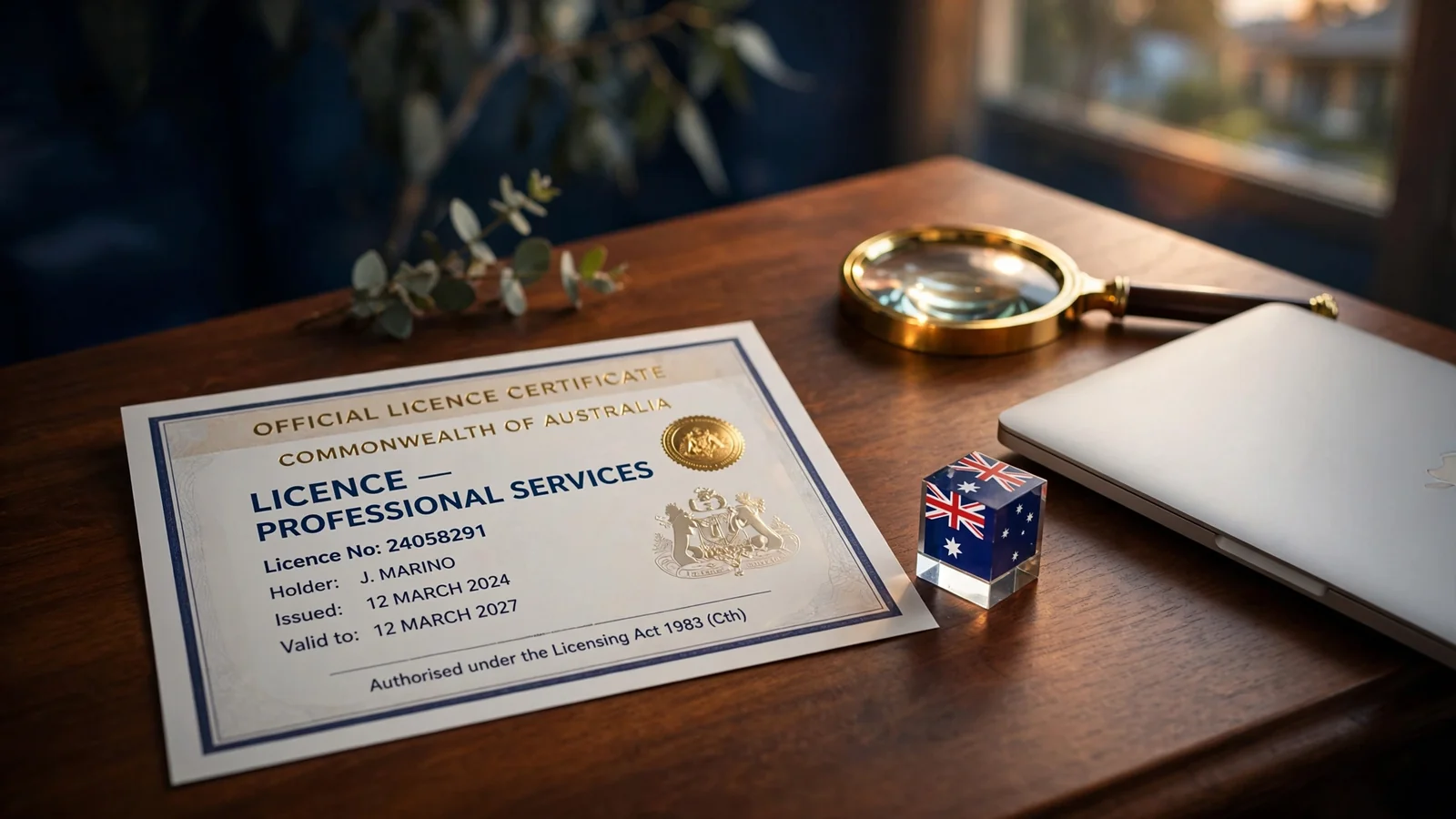
I have seen labels do more work than the details beneath them. A familiar word catches attention; the actual game list and access route are separate questions. Without a confirmed catalogue, it would be misleading to promise that any named Aristocrat game is available. A search for real-money play without a deposit does not change that. The wording of an offer cannot verify the games behind it.
The useful distinction is between the label and the product. A page may use “Australian” to signal its intended market, while the games themselves are accessed through an offshore crypto-friendly casino. That description does not establish that a particular title is present or that the site will accept a person’s location. Nor does an Australian theme turn a web page into an Australian app. The label is not a catalogue.
Browser play is the usual route
For mobile access, the practical pattern is less about a game’s country label and more about how the casino website is delivered. Casinos that accept Australians commonly rely on a mobile browser or a Progressive Web App, rather than a conventional app installed from an app store. In most cases, the mobile browser is the straightforward route, and the account used there is the same one used on desktop.
That continuity matters. A browser session is not a separate mobile account or a special version of a game catalogue. It is the casino website opened on a smaller screen. Any availability shown on desktop should still be checked on the mobile site; a label or a result on one page is not a guarantee that every title will display or run on another device.
Casino apps are seldom found in the Australian Google Play or Apple App Store. That is why browser access is the default rather than an unusual workaround. A native app listing is not a reliable test of whether a casino website exists, and an absent listing does not confirm that the site offers a PWA. The formats are different.

A Progressive Web App is essentially a website saved to the phone’s home screen, with an app-like appearance and behaviour. It remains tied to the casino website rather than becoming a conventional store-downloaded app. To add one, the casino site presents an install or add-to-home-screen prompt; tapping it and confirming adds the shortcut to the device. The exact prompt can depend on the device and browser, so the option may not appear in the same place on every phone.
There is a distinction worth keeping clear: installing a PWA from a website is not the same thing as downloading an app package from an unknown source. Sideloaded casino apps carry security risks, and their safety depends on the operator. An app-like icon alone proves neither that software is trustworthy nor that it is a native app. Browser access avoids the separate step of installing an unverified package, though it does not make the operator itself safe.
What a label cannot settle
When a page claims Australian pokies or Aristocrat content, the sensible check is the actual game information on the site, not the headline. A brand reference may be broad, outdated or attached to a page that does not show the named game at all. I treat a title as confirmed only when it appears in the available game list and can be opened through the site’s own interface. A search phrase is not evidence of availability.
The same discipline applies to “no deposit” wording. It describes an offer’s framing, not the presence of a specific Australian-themed game or Aristocrat title. Those are separate claims and need separate confirmation. Combining them in one banner can make the promise feel more specific than it is. The details matter.
On a phone, the simplest way to establish what is actually accessible is to open the casino website in its mobile browser and inspect its own catalogue. If the site offers a PWA, the installation prompt provides a shortcut to that website; it does not independently verify the game list. If no prompt appears, the browser remains the normal access method. The format is secondary. Availability is the point.
- Use a mobile browser for the most straightforward access
- Confirm game availability in the site’s own catalogue
- Use PWA shortcuts provided by the casino website
- Rely on marketing labels as proof of a game catalogue
- Download app packages from unknown sources
- Assume a desktop game is guaranteed to run on mobile
In practice, the Australian and Aristocrat labels are clues to what a page wants to signal, not proof of a particular catalogue or app. Browser play and PWAs explain how mobile access is commonly arranged; they do not validate a game claim. Separate the marketing label from the delivery method, and the gap becomes easier to see.
PayID Deposits and the Longer Road to a Withdrawal
A deposit and a withdrawal are separate stages, governed by different checks. A payment option shown on a casino’s cashier page may make it simple to move money in, but that does not establish how quickly winnings can be taken out—or whether the same route works in reverse. I treat the cashier as a set of operator-specific rules, not a promise that a payment method will work the same way everywhere.
PayID is presented in a specialist review as a near-instant deposit route that is typically free. That description concerns the incoming payment, not the full account-to-account journey. Availability, processing and any applicable conditions depend on the operator and the payment provider, so the cashier’s current instructions matter more than a general claim about speed. A payment can appear to go through promptly while a later withdrawal is held for checks or operator processing.
Mobile casino reviews describe PayID, BPAY, cards and cryptocurrency among the deposit methods offered, with processing times differing by route and operator. These are offshore crypto-friendly casinos, not Australian-licensed services. A method appearing on a mobile cashier does not prove that a site accepts a particular punter’s location: that must be confirmed before depositing. Offshore sites may also be blocked in Australia. Using a VPN to get around a block can breach an operator’s rules, risking voided winnings or account closure.

POLi is a different case. Its Australian operations closed in September 2023, and it no longer processes local transactions. A cashier or older article that still presents POLi as a working local option may be out of date. The name can linger in payment discussions after the service itself has stopped operating here. Check the live cashier rather than relying on a saved list.
Why cashing out takes longer
The first withdrawal is often where the distinction between a displayed balance and money received becomes clear. Casinos commonly require identity checks before approving it. This KYC process may include a selfie or identity document and proof of address. If the documents are incomplete, unclear or inconsistent with account details, review can take longer. Submitting a withdrawal request does not, by itself, mean that the operator has finished checking it.
There can also be an operator-side pending period before a payment is sent. A specialist review reports that e-wallet withdrawals such as MiFinity, Skrill and Neteller may arrive within 24 hours after that pending period. The timing is not a guarantee: the pending stage comes first, and verification or an operator’s own processing can extend the wait. The distinction matters. “Within 24 hours” after processing begins is not the same as 24 hours from the moment a withdrawal is requested.
Withdrawal Delays
Attention: Withdrawal times can be extended by mandatory KYC identity checks and operator-side pending periods before funds are sent.
Bank transfers involve another stage after approval: the receiving bank’s processing. A specialist review gives a possible withdrawal window of up to five business days for bank transfers. That is a reported upper timeframe, not a fixed arrival date for every transaction. Weekends, public holidays and the operator’s own handling can affect when funds are sent or received. I would not read a payment logo as a payout clock.
E-wallets are used for both deposits and withdrawals, but not every cashier permits every method for both directions. A specialist review notes that some operators require a withdrawal to return through the deposit method, while others make certain routes deposit-only. The available choices can therefore depend on how the account was funded. Before depositing, it is worth checking the withdrawal rules as well as the list of deposit buttons; otherwise the route out may be narrower than the route in.
Card payments have their own uncertainty. A specialist review reports that some Australian banks block or flag gambling-related card charges, which can cause a deposit to fail. A declined payment is not necessarily proof that the casino account is at fault, and repeatedly retrying it may not solve the issue. Payment rules can also change, so the operator’s current cashier and the bank’s own guidance are more useful than a general assumption that a card will work.
A failed deposit and a delayed withdrawal are different problems. For the former, check whether the bank or payment provider rejected the transaction and whether the casino recorded it. For the latter, establish whether identity checks are still pending, the operator has approved the request, or the payment has been sent. Keep transaction records and operator correspondence. If an offshore casino refuses to pay, there is no Australian government body that can resolve the dispute as a local casino regulator would.
This is the practical boundary of the “instant” label: it may describe only the first leg. Offshore access, payment availability and withdrawal approval are separate questions, and none is settled by a fast deposit alone.
Lightning Link Searches, Mobile Friction and Playing Limits
A request for Lightning Link is a request for a particular game, not evidence that a particular offshore casino carries it or that it can be played for real money from Australia. I would not treat a familiar title name as confirmation of availability. A catalogue can differ by operator, location and access method, and a game displayed in a search result may not be accessible once the site is opened. The label alone settles nothing.
That distinction matters on a phone, where a page can appear to load while the game itself fails to start or stops responding. In a specialist review, the recurring technical causes identified for mobile casino play include a weak internet connection, limited device memory, an outdated browser and too many apps running in the background. Those are practical troubleshooting points, not a promise that changing a setting will make a game available or suitable.
Mobile Troubleshooting
Verify the internet connection is stable and not dropping or slowing.
Ensure the mobile browser is updated to the latest version to support current site features.
Close unused background apps to free up device memory and improve responsiveness.
When a page stalls, I start with the simple causes rather than assuming the operator has changed the catalogue. A connection that drops or slows can interrupt loading; a browser that has not been updated may struggle with a site’s current features. Low available memory and competing background apps can also make a device less responsive. Closing unused apps, checking the connection and updating the browser may help isolate the problem. If the same fault continues, repeatedly refreshing or opening more tabs is unlikely to clarify what is happening.
The format of access can add another layer. Most Australian mobile casino access is through a browser, and some operators offer a Progressive Web App: a shortcut installed from the casino website that behaves more like an app. Neither format removes the underlying dependence on the device, browser and connection. Nor does a successful installation prove that the operator or its games are safe. Sideloaded casino apps carry security risks, and their safety depends on the operator. That is a substantial trade-off for an app-like icon.
There is a larger limit behind the technical one. Real-money online casino games are prohibited services when operators provide them to people in Australia. Offshore crypto-friendly casinos may still present themselves to Australians, but their presence online is not local approval. ACMA blocks access to illegal gambling sites, so a page that opens today may not remain accessible. Before making any deposit, the site’s acceptance of the punter’s location must be confirmed. Using a VPN to get around a block can breach the operator’s rules, void winnings or lead to an account being closed. If an offshore casino refuses to pay, there is no Australian government body that can be relied on to resolve the complaint.
That is not a minor footnote. An unstable session can interrupt play, but access itself is uncertain, and the legal protection available against an offshore operator is limited. I have seen the word “available” do too much work in gambling copy: it may mean a title is visible in a catalogue, not that a punter can safely access it or withdraw money from play. Technical access and dependable recourse are different things.
Limits are a separate form of friction, and they are worth checking before any gambling begins. A specialist review describes the controls offered by some casino platforms as including caps on deposits, losses and wagering, session-time restrictions, and self-exclusion. These tools do different jobs. A deposit cap can restrict funds added to an account; a loss limit can constrain losses; a wager limit can set a ceiling on stakes. A session timer addresses time spent, while self-exclusion is intended to block access rather than simply interrupt a session.
The details matter more than the control’s name. A limit may apply over a period chosen by the operator, and the platform’s wording should explain when it takes effect and how it can be changed. Self-exclusion should not be treated as equivalent to a reminder or a short break. Where a platform makes the controls difficult to find, unclear or easy to reverse, that is relevant information about how much practical control the punter has. Setting a limit is not a guarantee against harm, but it can make a boundary explicit before play starts.
I would not use a game title, smooth mobile interface or “no deposit” wording as a substitute for those checks. A game can be advertised without being confirmed for Australian access; a page can work without providing reliable protection; and a control can exist without being easy to understand. For anyone already finding gambling difficult to control, stopping access is more meaningful than troubleshooting the screen. Keep the distinction clear.
Can I play for free at Australian mobile casinos?
Yes. Social casino apps with virtual credits are available in Australia, but those credits cannot be treated as cash or a way to withdraw money.
Can I play mobile casinos for real money without an app?
Yes. Most are accessed through a mobile browser, using the same account as on desktop. Some offer a Progressive Web App shortcut that can be added to your home screen.
Can players use real-money mobile casinos in Australia?
Australian players are not made criminally liable for playing at offshore casinos under the Interactive Gambling Act 2001. However, operators are prohibited from offering online casino games to people in Australia, and access to offshore sites may be blocked.
Is it safe to play at mobile casinos in Australia?
Offshore casinos do not have the same local oversight or dispute remedies as Australian-regulated services. A foreign licence does not mean a casino is approved to operate in Australia or guarantee that a dispute will be resolved in your favour.
Is mobile casino gambling legal in Australia?
The Interactive Gambling Act 2001 prohibits operators from offering online casino-style games to people in Australia, but it does not make individual players criminally liable for playing at offshore casinos. Players must be at least 18.
Published by the Malina Casino team.