
Real-Money Casino Table Games in Australia
 Available in AU
The guide distinguishes RNG outcomes from streamed dealers and explains what those formats do not establish about real-money access in Australia.

- Online Table Games: Random Outcomes, Live Dealers and the Australian Legal Boundary
- Bitcoin at the Table: What the Available Facts Do—and Don’t—Establish
- Odds and Payout Claims: What Can Be Verified About Table-Game Returns
- How Table-Game Play Works: Hands, Bets and Dice Outcomes
- Searching for a Nearby Casino: What This Guide Can’t Verify
- What Counts as a Casino Table Game?
- Table-Game Formats: Live Dealer or RNG
- Card-Game Mechanics: Hands, the Dealer and Betting Positions
- Roulette Rules and Wheel Variants
- Poker: Building a Hand Against Other Players
Online Table Games: Random Outcomes, Live Dealers and the Australian Legal Boundary
“Real-money table games online” sounds like one category, but the phrase covers different ways an outcome can be produced. In a software version, a Random Number Generator (RNG) determines the result. In a live-dealer version, a real dealer uses casino equipment and a video stream carries the game to viewers. The screen may look similar; the mechanics behind it are not.
An RNG is software that selects outcomes, such as the cards dealt or the point at which a roulette ball lands. A live stream instead shows physical equipment and a dealer performing the game. The stream is live, but the presence of a dealer does not turn the online service into a locally offered casino. The distinction is about how the game is presented and how its outcome is produced—not whether real-money access is lawful in Australia.
That distinction matters because words such as “live” and “real” can blur the boundary. “Live” describes the streamed dealer and equipment. It does not establish that a service is authorised to offer real-money interactive gambling to people in Australia. Nor does a convincing video feed, by itself, establish anything about the legal status of the service behind it.
The Australian boundary
The Interactive Gambling Act 2001 (IGA) prohibits operators based in Australia from providing real-money interactive casino games to residents. Section 5 is part of that framework. The Act also treats online casino-style games, including table games, as prohibited interactive gambling services when provided to customers in Australia. The Australian Communications and Media Authority (ACMA) enforces the rules and blocks unlicensed domestic platforms.
This is not a matter of choosing between a locally licensed casino site and an offshore one. Australia does not provide a local licence for real-money online casinos, and offshore casino services are also subject to active blocking and enforcement. A platform’s location, branding or technical format does not erase the restriction on providing the service to people physically in Australia. The legal boundary is firm.

That can be obscured by familiar industry language. “Available” may mean that a page can be found or a stream can load; it is not the same as lawful provision. “Live dealer” is a format label, not a regulatory status. I have seen how these labels do their work: they make the product sound concrete while leaving the central legal question off the screen. Different things.
Bonuses are a separate set of rules
Bonus terms do not change how a card or roulette outcome is generated. They set conditions on promotional funds and on when associated winnings can be withdrawn. That distinction often gets lost in the word “bonus”, which sounds like extra money without qualification. In practice, the terms determine what must happen before cashing out.
A specialist review gives a worked illustration: an A$100 bonus with a 30x wagering requirement calls for A$3,000 in total bets before cash-out. The total is not a prediction of what a player will lose or win; it is the turnover condition attached to that offer. Its significance depends on the actual terms, including which games count and how much each bet contributes.

The same kind of review reports that table games such as blackjack or roulette may contribute only 10–20% toward wagering, while some titles may be excluded. Those figures are not universal rules. The operator’s terms define the contribution for a particular offer, and a game that contributes less can take longer to meet the stated turnover than a game counted in full. A contribution table is the relevant detail—not the promotional headline.
This is why “best” is a poor shortcut for judging a promotion. A larger headline offer can come with conditions that make it less useful for a particular game, and an apparently suitable title may not count at all. A specialist review can describe the mechanics, but it does not replace the terms attached to the offer. Read the contribution table as part of the condition, not as fine print after the decision.
Free-play access is also a different matter from real-money access. A demonstration mode does not itself establish permission to provide real-money casino games in Australia, and a free label should not be read as a legal endorsement of a real-money service. The format may be RNG-based or streamed; the legal restriction concerns the provision of the prohibited gambling service.
Legal Prohibition
The Interactive Gambling Act 2001 prohibits operators from providing real-money interactive casino games to residents in Australia.
The practical distinction is straightforward: software generates outcomes in RNG versions; a dealer and equipment appear in live streams; promotional wagering is governed by separate terms. None of those descriptions changes the Australian legal boundary.
Bitcoin at the Table: What the Available Facts Do—and Don’t—Establish
“Bitcoin table games” can describe two different things: table games associated with a Bitcoin payment option, or games whose rules or play are somehow specific to Bitcoin. Those are not interchangeable. Bitcoin is a payment method; it does not, by itself, define a game, its betting positions or the way an outcome is determined.
That distinction matters when comparing Bitcoin-labelled games with ordinary casino table games. A payment label does not establish that the underlying game is different. Nor does it establish that a particular table accepts Bitcoin, that a game has a Bitcoin-only feature, or that using Bitcoin changes the chance of a particular result. The payment method and the game’s rules are separate questions.
The same applies to phrases such as “top Bitcoin table games” or “best table games for Bitcoin”. A label may group games by a claimed payment option, but it does not show that one game is better suited to that payment method. I would treat “Bitcoin casino” as a description of a payment claim, not as a meaningful category of table-game design.
There is also a difference between a game being listed and a payment method being available for it. Neither a table-game title nor a Bitcoin reference, on its own, confirms how a transaction would work. Terms about deposits, withdrawals, fees, processing, or conversion would need to be assessed separately; they cannot be inferred from the game name. No shortcut there.
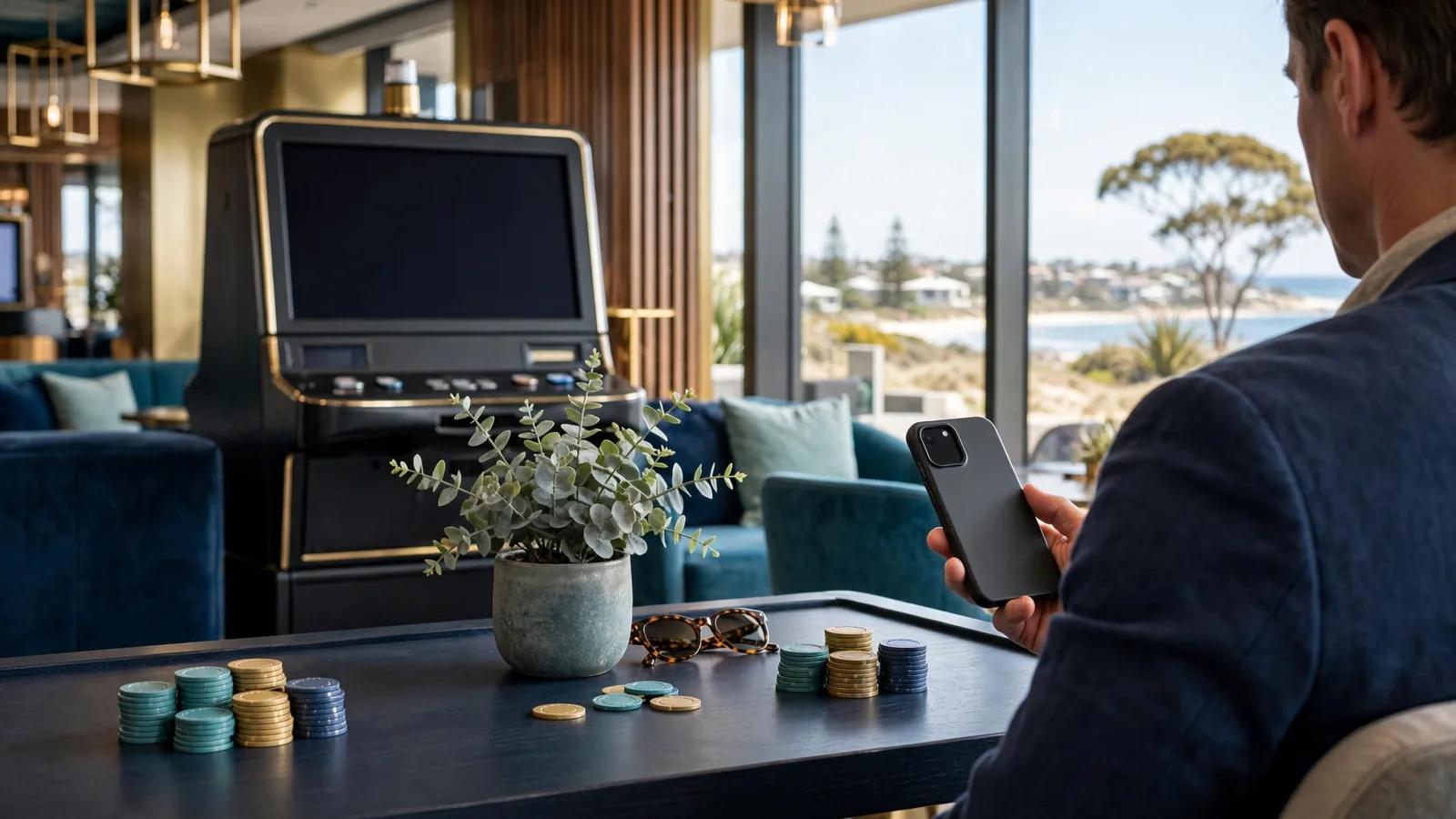
Bitcoin does not make a game’s odds better or worse by virtue of being Bitcoin. A claim about odds needs to concern the game itself and the conditions of play, not the currency mentioned alongside it. Likewise, a ranking of the best table games cannot be justified merely by grouping games under a Bitcoin heading. That would confuse a payment feature with a measure of game quality or return.
“Felt table” language points in another direction: it can refer to the physical surface or appearance of a casino table, not to a Bitcoin-specific format. A digital label, a streamed table and a real felt layout are different descriptions. None tells the full story about payment or rules.
The Australian legal boundary remains the decisive context. Under the Interactive Gambling Act 2001, operators are prohibited from providing real-money online casino-style games, including table games, to people in Australia. A cryptocurrency label does not create an exception to that restriction. The Australian Communications and Media Authority enforces the rules, including action against prohibited services. Bitcoin does not turn an online casino table into a legally permitted one.
That point is easy to lose in promotional wording. “Crypto-friendly” may sound like a practical distinction, but it says nothing about whether the service may lawfully offer real-money casino games in Australia. It also says nothing reliable about the game’s rules, odds or payout terms. The label does not settle any of those questions.
So the useful comparison is narrow: Bitcoin is a payment method, while a table game is defined by its own rules and play. A Bitcoin reference alone cannot establish a special game, a better deal, or an advantage at the table. The legal position in Australia is separate—and unchanged by the currency named in an advertisement.
Bitcoin vs Games
Bitcoin is a payment method and does not define a game’s rules, betting positions, or the way an outcome is determined.
Odds and Payout Claims: What Can Be Verified About Table-Game Returns
A claim that one table game has “the best odds” sounds precise, but it needs more than a game name. Odds describe the likelihood of an outcome; a payout describes what is returned when that outcome occurs. A useful comparison has to connect both. Without that connection, a ranking or house-edge chart can look authoritative while leaving out the terms that determine what the figures mean.
For online table games, software using a Random Number Generator (RNG) determines outcomes such as the cards dealt or where a roulette ball lands. That explains how an outcome is selected. It does not, by itself, establish the probability assigned to each possible result, the payout attached to a winning result, or the overall return to a player. Those are separate questions.
This distinction matters when comparing casino table-game odds. A headline figure is only meaningful if its assumptions are clear: which version of the game it describes, which bets are included, and how returns are calculated. Change the rules or the bet being assessed and the comparison may no longer apply. A single label such as “best” hides those conditions.
I have seen return claims do their work through presentation rather than explanation. A chart can put several games in neat rows and make the numbers appear directly comparable. But unless the underlying rules and calculation method are stated, the tidy layout is not evidence. The missing detail is the point.

Why a house-edge chart needs support
A house-edge figure is a way of expressing an expected long-run advantage under specified rules and betting conditions. It is not a promise about an individual result, and an RNG description cannot supply the figure on its own. To support a chart, there would need to be reliable game-specific information linking possible outcomes to their probabilities and payouts.
The same caution applies to claims about the worst odds. Calling a game the worst requires a defined comparison set and a consistent method. Otherwise, the label may refer to one particular bet, one ruleset, or a marketing summary that does not say which. Without those details, neither a “best” list nor a “worst” list gives a sound basis for comparison.
There is also a difference between a random result and a favourable return. Random selection describes how an outcome is produced; it does not mean that every bet has equal chances, that payouts match the chance of winning, or that a particular result is due after a run of earlier results. Those conclusions need information beyond the fact that software selects outcomes.
For a return claim to be checkable, the relevant game rules, available bets, outcome probabilities and payout terms must all be identifiable. A displayed percentage without that context is not enough to establish which table game offers better odds. No shortcut.
How Table-Game Play Works: Hands, Bets and Dice Outcomes
Table-game mechanics are easiest to separate into two parts: what happens during the game and what a wager refers to. A hand-based game centres on comparing cards or hands. Other formats can make the bet itself about a stated outcome, such as the result of rolling dice. The details vary, so knowing the broad structure is not the same as knowing every rule.
Centred on comparing cards or hands, such as measuring a player’s hand against a dealer’s target.
Wagers placed on a specific stated outcome, such as the result of rolling dice.
Wagers attached to named outcomes, such as the Banker’s hand, the player’s hand, or a tie.
In Blackjack, the player’s hand is measured against the dealer’s. The aim is to finish with a hand value closer to 21 than the dealer’s hand. That comparison is the core contest. It is not a contest to build the highest possible value without limit: the stated target is proximity to 21. The player’s hand and the dealer’s hand are therefore evaluated in relation to one another.
That is the part of the game mechanics that can be described without adding house rules. Decisions such as which cards are dealt, what actions are available during a hand, and how a hand is settled depend on rules not covered by this basic outline. Those details matter in practice. A familiar game name is not a complete rulebook.
A different betting structure lets players wager on a hand, the Banker’s hand, or a tie. Here the bet identifies which result the wager is attached to. A bet on a hand is not the same position as a bet on the Banker’s hand, and a tie is a separate possible selection. The central point is the placement: the player chooses among named outcomes rather than simply competing against a dealer for a hand nearer 21.
The labels can sound self-explanatory, but their meaning comes from the particular game’s rules. They identify betting positions; by themselves, they do not explain how cards are dealt or how the result is determined. It is useful to keep those questions separate. Bet first, settlement rule second.
Dice-based play has another basic shape. Players roll a pair of dice and place a wager on the outcome. The dice produce the event on which the bet depends; the wager is tied to that result. This describes the basic action, not the full menu of possible bets or the way each one is settled. Those specifics should not be inferred from the presence of two dice alone.

In all three structures, the word “bet” can refer to different things: a hand measured against a dealer’s, one of several named hands or a tie, or the outcome of a dice roll. The distinction is practical. It tells what the wager is attached to, while the game’s rules determine how the contest proceeds and what counts as a result.
I have seen players treat a recognisable label as if it settled the rules. It does not. A short description can explain the basic mechanic, but it cannot establish every permitted action, card value, dice outcome or settlement condition. Those particulars belong to the rules for the specific game.
There is also a difference between describing how a table game works and suggesting that it is available to play. Australian law prohibits operators from providing real-money online casino games to people in Australia. Mechanics are not an invitation. The boundary matters.
Searching for a Nearby Casino: What This Guide Can’t Verify
“Nearby” is a claim about a physical place: distance, access and what is actually available at that venue. An online page offering table games does not establish any of those things. It may describe software or a streamed game, but that is not evidence of a casino close to a particular address.
Attention: A page labelled for a specific city or country does not prove that a land-based casino operates there or that table games are available nearby.
I keep that distinction clear because location wording can make a service sound more local than it is. A page labelled for a city, state or country does not by itself show that a land-based casino operates there, or that table games are available at a nearby venue. Search results can mix venue listings, general game explanations and online gambling pages. They are different things, even when they use similar language.
The Australian legal position also matters. Under the Interactive Gambling Act 2001, operators are prohibited from providing real-money online casino games to people physically in Australia. Casino-style games such as blackjack, roulette and poker fall within that prohibition. The Australian Communications and Media Authority enforces the rules and blocks unlicensed domestic platforms. A page that appears accessible, or describes itself as serving Australian players, does not turn an online casino into a lawful local venue.
That boundary is easy to blur in promotional language. “Local” may refer to a target audience rather than a physical address; “live” may mean a video stream rather than a room open to visitors. Neither word establishes that a brick-and-mortar casino is nearby. Nor does a list of table-game titles show where those games can be played in person.

Some location phrases point outside Australia altogether. A reference to Miami or Ohio, for instance, identifies places in the United States, not Australian destinations. It cannot substantiate a claim about a casino near an Australian reader. Likewise, a general page about table games offers no reliable basis for naming a venue, describing its facilities or estimating travel distance.
I would not fill that gap with plausible-sounding names or imply that online services are substitutes for local casinos. Without a confirmed address and venue information, claims about the nearest table-game casino would be guesswork. That is not a minor detail: location is the central part of the request.
For Australians, the practical distinction is between a physical venue and a real-money online casino service. The former is a place; the latter is an online gambling service subject to the federal prohibition when offered to people in Australia. A page’s wording cannot erase that difference. Nor can it establish that a particular venue has a table-game floor.
So the phrase “casino near me” should not be treated as proof of a nearby venue or a lawful online option. Location needs evidence of a real address; game descriptions and city-targeted pages are not enough. No invented shortlist. No borrowed location claims.
What Counts as a Casino Table Game?
When choosing real-money casino table games in Australia, it helps to check the practical details an operator makes available, such as licensing, deposit minimums and payout timing. Use this list as a starting point for reviewing those details before deciding where to play.
Payout speed: crypto 30-120 minutes, fiat 24-72 hours · Min. deposit: A$30 MrPacho lists a A$30 minimum deposit. Its stated payout times are 30–120 minutes for crypto and 24–72 hours for fiat.
License: Curacao eGaming (Hollycorn N.V., since 2017) · Min. deposit: A$20-30 (depends on the offer) Playfina Casino is listed with a Curacao eGaming license held by Hollycorn N.V. since 2017. Its minimum deposit is A$20–30, depending on the offer.
License: Curacao Gaming Control Board OGL/2023/174/0082 (Dama N.V.) SpinsUp is listed with a Curacao Gaming Control Board license, OGL/2023/174/0082, held by Dama N.V.
License: Curacao Gaming Control Board JustCasino is listed with a Curacao Gaming Control Board license.
License: Curacao eGaming OGL/2024/923/0383 (Antillephone N.V.) · Min. deposit: A$30 WinSpirit Casino is listed with a Curacao eGaming license, OGL/2024/923/0383, held by Antillephone N.V. Its minimum deposit is A$30.
License: Curacao eGaming (Roby Games Ltd) Roby Casino is listed with a Curacao eGaming license held by Roby Games Ltd.
License: Curacao Gaming Control Board (TechSolutions Group N.V.) Bizzo Casino is listed with a Curacao Gaming Control Board license held by TechSolutions Group N.V.
License: Curacao · Min. deposit: A$20 (POLi) Lucky Dreams is listed with a Curacao license. Its stated minimum deposit is A$20 using POLi.
License: Curacao · Payout speed: crypto 30-60 minutes, fiat 1-5 days · Min. deposit: A$10 Wild Tokyo is listed with a Curacao license and a A$10 minimum deposit. Stated payout times are 30–60 minutes for crypto and 1–5 days for fiat.
License: Curacao – Antillephone N.V. (Versus Odds B.V.) · Min. deposit: EUR 20 Thor Casino is listed with a Curacao license from Antillephone N.V. (Versus Odds B.V.). Its stated minimum deposit is EUR 20.
A casino table game is a game built around a table-style activity, with outcomes linked either to real casino equipment or to software reproducing part of that process. The label describes a broad category, not one particular way of playing. In an online setting, the important distinction is whether a live dealer and physical equipment are involved, or whether software determines the result.
I have found that the word “table” can make an online game sound more physical than it is. In a live-dealer game, there is a real dealer and real casino equipment. A video stream carries that activity to players. The screen is showing a live process, rather than simply displaying an outcome created by a game’s random number generator.
That does not mean every online game presented at a table uses a live dealer. An online version can instead use a Random Number Generator, or RNG, to determine the result. For cards, the software determines which cards are dealt; for roulette, it determines where the ball lands. The table-like display is the interface, while the result comes from the software.
- Identify the underlying method (RNG or Live Dealer)
- Check for real equipment in live streams
- Rely on visual presentation alone
- Assume a digital table implies a physical venue
That distinction matters because visual presentation alone does not identify how a game works. A digital table, dealer image or animated wheel does not establish that real equipment is being used. Conversely, a live video feed indicates that a real dealer and casino equipment are part of the presentation. The two formats may occupy similar screens, but their outcomes are produced differently.
In my experience, this is where the category gets muddled in promotional language. “Live” can sound like a quality claim; in practical terms, it refers to the streamed dealer and equipment. “Table game” can sound as if every version involves a physical table; online RNG games show why that interpretation is too narrow. A format label, not a promise. The process matters.
So, when asking what counts as a casino table game, the useful starting point is not the look of the screen but the underlying method. A live-dealer version shows a real dealer using real casino equipment through a live stream. An online version may instead use an RNG to determine card or roulette outcomes. Both fit the broad table-game category, but they are not the same kind of experience.
This definition also sets a limit on what the category tells anyone. The phrase alone does not specify how a game is played, what choices are available, or how a particular site operates. Those details depend on the game and its implementation. Nor does calling something a table game make it a physical venue: an online presentation remains online, whether its result comes from a streamed table or software.

In Australia, that distinction is descriptive, not an invitation to play. The Interactive Gambling Act 2001 prohibits operators from providing real-money online casino games to people located in the country. The mechanics can be described without treating online access as a lawful local casino service.
Table-Game Formats: Live Dealer or RNG
The main difference between live-dealer and RNG table games is how the play is produced. One sends video of a real dealer using casino equipment; the other uses software to determine the outcome. The screen may look similar, but the underlying process is not.
In a live-dealer format, a dealer and physical equipment are filmed, and the video is streamed to players. The cards or roulette wheel are part of a real casino setup rather than images generated as the outcome. In my experience, “live” describes the source of the video. It does not, by itself, tell anyone how a game is regulated or whether a particular service may legally be offered in Australia.
An RNG format works differently. A Random Number Generator is software that selects an outcome. In an online card game, it determines which cards are dealt; in roulette, it determines where the ball lands. There is no live wheel or dealer whose actions produce the result on screen. The displayed play represents the software’s outcome.
That distinction is useful when comparing descriptions of casino table games, but it is not a catalogue of titles. The format alone does not establish which games a particular service offers, what rules apply, or whether a service is available in a given place. A label such as “live table games” describes a delivery method, not a guarantee about the wider service.
Difference between Live and RNG
Live-dealer formats stream video of a real dealer using physical equipment. RNG formats use software (Random Number Generators) to select outcomes, such as card deals or roulette ball landings, without a physical dealer.
The word “real” can also blur the line. In a live stream, the dealer and equipment are real; in an RNG game, the outcome is generated by software. Neither description should be stretched into a claim about the quality or reliability of a service. Those are separate questions.
A table-game list can therefore be organised by format rather than by game name: live video with a dealer and physical equipment, or software-generated outcomes. For card games and roulette, the difference is whether the cards or ball outcome comes from the live setup or the RNG. The same on-screen layout can conceal that difference.
The interface is not the mechanism. A video feed shows a live session; an animated table can display a software-selected result. Knowing which format is being described makes the terminology clearer, without implying that either format is legally available to Australian residents. The distinction is technical, not an endorsement.
Card-Game Mechanics: Hands, the Dealer and Betting Positions
Card games at a casino table can ask for different kinds of decisions. In blackjack, the central comparison is between the player’s hand and the dealer’s: the aim is to finish with a hand value closer to 21. The dealer is not simply another player with an equal objective; the hand is measured against that target. That distinction shapes the bet. The wager concerns how the player’s hand fares against the dealer’s, rather than which of several named positions wins.

A different card-table structure offers bets on the player’s hand, the Banker’s hand or a tie. These are separate positions on the same comparison. A bet on the player’s hand backs that side; a Banker bet backs the other; a tie bet selects the drawn result. The important mechanical point is that the choice is about which outcome the wager names. It is not the same decision as trying to make a blackjack hand closer to 21.
From the other side of the counter, I found that the labels matter because they make the bet legible before cards are compared. “Banker” can sound like a person or a financial role, but at the table it identifies a hand position. The player position does the same for the opposing hand, while tie names the possibility that neither side is ahead. Plain labels. Distinct bets.
These formats should not be blended into one generic idea of a card game. Blackjack is framed around a player’s hand and the dealer’s target. The Banker/player/tie arrangement defines three possible betting positions. The common feature is that cards produce hands whose outcomes are compared; the wager then identifies which result is being backed.
That is the useful way to read card-game mechanics at a table: first identify what the hand is being compared with, then identify what the bet refers to. A dealer comparison and a Banker-versus-player bet may both involve hands, but they do not describe the same betting choice. The wording on the table carries the structure. It tells the player which side or result the wager is attached to, not a universal rule shared by every card game.
No single label covers every card table. The hand comparison sets the game’s frame; the betting position sets the wager’s focus.
Card Game Mechanics
- Blackjack is a contest of proximity to a target value (21) against a dealer.
- Some games use specific betting positions like Banker, Player, or Tie.
- The wager identifies the result being backed, while the rules determine the contest.
Roulette Rules and Wheel Variants
Roulette is recognised by its numbered wheel and the ball’s eventual resting place. The main versions are European, French and American. Their names are not just labels for different table layouts: the wheel’s green zero markings distinguish the variants.
European and French roulette each have numbers from 1 to 36 and a green 0. The American wheel has a green 0 and a green 00. That additional marked space is the clearest structural difference between the American version and the other two. The colour matters because it identifies the zero positions; it does not turn them into numbered pockets.
At a table, the wheel itself is the practical point of comparison. A layout or game title may identify a version, but the markings show what is present on the wheel: a single green zero, or both zero and double zero. European and French roulette share the stated number range and single-zero structure. American roulette is distinguished by the double-zero marking as well.
That distinction is easy to overlook when several roulette tables appear side by side. I have found that names can draw attention to the supposed character of a game, while the wheel gives a more concrete description. Read the labels, then check the green markings. Simple check.
The word “variant” can also suggest a larger difference in how a round works. Here, the useful comparison is narrower: the versions named above are separated by their wheel markings, and the American wheel includes an additional zero marking. No special rule needs to be inferred from the French name alone.
Roulette remains a table game built around the wheel’s numbered and green spaces. Knowing which version is shown helps make sense of the equipment and the table’s terminology. It does not, by itself, establish a return advantage or make one version a better choice. Those are separate claims, not conclusions supplied by the wheel description.

In Australia, descriptions of roulette should also be kept distinct from invitations to play. The names and markings explain the game format; they are not a recommendation to use an online casino service. A factual account starts with what can be seen on the wheel, and stops before turning that description into a promise.
Poker: Building a Hand Against Other Players
Poker is built around a contest between players: each aims to assemble the strongest possible hand. That is the defining idea behind casino poker table games, rather than a player trying to finish nearer a target set by a dealer. The table is a shared contest, and the hand is the basis on which players compete.
I have seen descriptions make the game sound like a simple test of who receives the best cards. That misses the point of the format. The objective is to build the best possible poker hand, but a description of that objective alone does not specify how a particular version deals cards, defines hand strength or runs a round. Those details belong to the rules of the individual game. “Classic” is not a rulebook.

This distinction matters when the label is broad. Poker table games at a casino can refer to a category, not one uniform set of instructions. A name that includes “Poker” does not, by itself, establish how the game is played or whether its rules match another poker format. Pai Gow Poker, for instance, should not be treated as interchangeable with every other casino poker game merely because the names share a word; the title alone cannot explain its mechanics.
There is also a legal boundary around real-money play in Australia. The Interactive Gambling Act 2001 prohibits operators from providing online poker to people physically located in the country. Describing poker as a player-versus-player hand-building contest is not an invitation to use an online service.
The useful distinction is narrow but clear: poker centres on players competing to form the best hand. Any more detailed account needs the rules of a named variant, not assumptions drawn from the general label. No shortcut.
What is the legal status of online table games for Australian players in 2026?
Australia’s Interactive Gambling Act 2001 prohibits operators based in Australia from offering real-money online casino table games to residents. Offshore services are also subject to ACMA enforcement and blocking.
Can you play table games online for real money?
Some offshore platforms may accept Australian players, but offering real-money online casino games to people in Australia is prohibited and services are subject to blocking. A live dealer or accessible website does not make the service authorised.
Can you legally gamble online in Australia?
Real-money online casino games, including table games, cannot lawfully be offered to Australians by operators. The Interactive Gambling Act 2001 sets this boundary, and ACMA enforces it.
How long do withdrawals typically take from offshore casinos to Australian bank accounts?
Direct bank transfers can take 3–7 business days. PayID withdrawals average 1–4 hours, while e-wallet withdrawals typically take 2–24 hours; the timing depends on the payment method.
Prepared by the Malina Casino editorial staff.