
Pay by Phone Casinos in Australia: Payment Routes
 Available in AU
PayID uses a banking app to send money from a bank account; using a phone does not make the payment a mobile-bill charge.

- Pay by Phone in Australia: The Billing Route and the PayID Distinction
- Mobile Deposits: What PayID Can—and Cannot—Tell Us About Phone-Bill Slots
- How a PayID Deposit Reaches a Casino Account
- Comparing Pay-by-Phone Casino Claims Without a Verified Operator List
- Bonus Terms Are Separate from the Payment Method
- BetStop Searches, Phone-Bill Claims and the Withdrawal Route
- Slots and Casino Games Do Not Change the Payment Rail
- Online Casino Payment Claims Across Different Markets
- PayID Is Not a Credit-Card Deposit
- Free Spins, Credit Offers and What the Payment Facts Do Not Prove
Pay by Phone in Australia: The Billing Route and the PayID Distinction
“Pay by phone” can describe two different payment routes. In one, a purchase is charged to a mobile account or added to a phone bill. In the other, a banking payment is authorised in an app on a phone. The device may be the same; the account being charged is not. That distinction matters when a casino payment page uses loose wording.
The Australian payment details relevant here concern PayID, not carrier billing. PayID does not turn a casino payment into a charge on a mobile bill. It is a way to send money from a bank account through a banking app, using an identifier linked to the recipient. That identifier may be a mobile number or an email address. The phone can be involved in identifying the payee and approving the transfer, but the payment travels through the banking system.
I have seen the wording around mobile payments blur these steps. “Phone payment” sounds like a single product, yet it can refer either to a carrier collecting money through a phone account or to a customer using a phone to access a bank. Those are separate arrangements. A page that mentions a mobile number does not, by that fact alone, describe phone-bill billing.
When looking for a casino to pay by phone in Australia, check whether the available payment methods suit you before depositing. This list offers a concise reference to the details provided for each operator.
Payout speed: crypto 30-120 minutes, fiat 24-72 hours · Min. deposit: A$30 MrPacho lists a A$30 minimum deposit. Its stated payout times are 30–120 minutes for crypto and 24–72 hours for fiat.
License: Curacao eGaming (Hollycorn N.V., since 2017) · Min. deposit: A$20-30 (depends on the offer) Playfina Casino is licensed by Curacao eGaming under Hollycorn N.V., with the license stated as active since 2017. Its minimum deposit is A$20–30, depending on the offer.
License: Curacao Gaming Control Board OGL/2023/174/0082 (Dama N.V.) SpinsUp is listed with a Curacao Gaming Control Board license, OGL/2023/174/0082, held by Dama N.V.
License: Curacao Gaming Control Board JustCasino is listed as licensed by the Curacao Gaming Control Board.
License: Curacao eGaming OGL/2024/923/0383 (Antillephone N.V.) · Min. deposit: A$30 WinSpirit Casino is listed with Curacao eGaming license OGL/2024/923/0383, held by Antillephone N.V. Its minimum deposit is A$30.
License: Curacao eGaming (Roby Games Ltd) Roby Casino is listed as licensed by Curacao eGaming, with Roby Games Ltd named as the license holder.
License: Curacao Gaming Control Board (TechSolutions Group N.V.) Bizzo Casino is listed with a Curacao Gaming Control Board license, held by TechSolutions Group N.V.
License: Curacao · Min. deposit: A$20 (POLi) Lucky Dreams is listed as licensed in Curacao. Its stated minimum deposit is A$20 when using POLi.
License: Curacao · Payout speed: crypto 30-60 minutes, fiat 1-5 days · Min. deposit: A$10 Wild Tokyo is listed as licensed in Curacao and has a A$10 minimum deposit. Its stated payout times are 30–60 minutes for crypto and 1–5 days for fiat.
License: Curacao – Antillephone N.V. (Versus Odds B.V.) · Min. deposit: EUR 20 Thor Casino is listed with a Curacao license from Antillephone N.V., with Versus Odds B.V. also specified. Its minimum deposit is EUR 20.
What PayID actually does
PayID is a payment service operating through Australia’s New Payments Platform (NPP). Instead of relying only on account details, the sender can use a registered identifier, such as a mobile number or email address, to direct a payment. The identifier points to a bank account; it is not itself the payment source.
Transfers through PayID settle in real time via the NPP. In practical terms, the banking route is designed to move money between accounts without treating the transaction as a purchase charged to a telecommunications provider. The phone may be where the banking app is opened, but the bank account remains the source of funds.
That is the useful distinction behind the phrase “pay by phone casino”: it may describe how a person accesses a payment, rather than the rail carrying the money. A mobile number can serve as a PayID identifier, but that does not mean the amount appears on a phone bill. Different mechanism. Different account.
Why the wording matters in Australia
The distinction is not merely technical. Payment labels can make a route sound familiar while obscuring who handles the funds. Carrier billing involves a telecommunications account; PayID involves a bank payment initiated through the banking app. Calling both “phone payments” may be convenient shorthand, but it can create the wrong expectation about where a debit will appear.

There is also a legal boundary that promotional payment language cannot change. Under Australia’s Interactive Gambling Act 2001, operators are prohibited from providing real-money online casino games to people located in Australia. A payment option, whether described as phone billing or PayID, does not alter that rule or establish that a real-money casino service is lawful to offer in the country.
For anyone interpreting payment wording, the practical test is to identify the account being debited and the service processing the transfer. If the payment is confirmed in a bank’s app and uses a PayID identifier, it is a bank-account transfer through the NPP. If a claim specifically promises a charge to a mobile bill, that is a different billing route and should not be inferred from the mention of PayID or a mobile number.
The labels are easy to confuse. The rails are not.
Mobile Deposits: What PayID Can—and Cannot—Tell Us About Phone-Bill Slots
A mobile number can appear in two very different payment arrangements. In carrier billing, a purchase is charged through a mobile account. With PayID, the number can instead act as an identifier for a bank payment. The shared word “mobile” describes different parts of the process; it does not make the payment rails interchangeable.
That distinction matters when a payment option is described as a way to fund mobile casino games. PayID is provided through the New Payments Platform (NPP), where an identifier such as a mobile number or email address can be used to send or receive a payment. The number points to a payment destination. It does not mean the amount is added to a phone bill.
A phone number used for PayID acts as an identifier to direct a payment to a bank account; it is not a carrier account used for phone-bill billing.
I separate the identifier from the source of funds. A phone number used for PayID is not functioning as a carrier account number. The payment is initiated and confirmed in the player’s banking app. That is the concrete mobile connection: a phone number may identify the PayID recipient, while the bank app handles the transaction.
“Pay by phone” can describe two separate routes
A phrase such as “pay by phone” is ambiguous unless it explains what happens behind the button. It might suggest that a charge goes through a mobile provider, or it might simply mean that a payment is made on a phone using a banking app. Those are not equivalent.
For a PayID deposit, the described steps are to select PayID, enter an amount and confirm the payment in the banking app. Using a phone to open that app does not turn the bank payment into a phone-bill charge. Nor does entering a mobile number as an identifier establish that a carrier is involved.
The distinction is more than wording. A payment label can make a process sound simpler or broader than it is. “Mobile” may describe the device used, the identifier supplied, or the account billed. Without knowing which one, the label says little about how the money actually moves. Small wording. Different route.
In my experience of reading payment descriptions, the useful question is not whether a phone appears somewhere in the process. It is what account authorises the payment. With PayID, that authorisation happens in the banking app. The phone number, if used, is an identifier within the payment service—not evidence of a charge to a mobile account.

What the mobile wording does not establish
A reference to mobile deposits does not, by itself, show that a casino accepts carrier billing. It also does not show that every deposit can be completed on a phone, or that a particular mobile game has a phone-bill payment option. Those are separate claims about a service and its terms; they cannot be inferred from the fact that PayID supports a mobile-number identifier.
The distinction also applies to descriptions of pokies or other casino games as playable on mobile. A game being presented for a mobile screen says nothing about its payment method. The interface and the payment rail are separate parts of the arrangement.
There is a more fundamental Australian context. Under the Interactive Gambling Act 2001, operators cannot legally provide real-money online casino games, including slots, to people physically located in Australia. A payment description should not be read as evidence that a real-money casino service is available to Australian residents or that the service is lawful. The payment mechanics do not change that position.
So the narrow, accurate reading of PayID’s mobile connection is straightforward: an eligible identifier may be a mobile number, and a deposit is confirmed through a banking app. That is not the same as paying for casino play through a phone bill. A mobile screen, a mobile-number identifier and carrier billing are three distinct ideas; combining them in one promotional phrase does not make them one payment method.
Legal Warning
Under the Interactive Gambling Act 2001, operators are prohibited from providing real-money online casino games to people physically located in Australia.
When a payment description uses “phone” without naming what account is charged, the wording leaves an important detail unresolved. PayID’s process identifies that detail: the player confirms a bank payment in the app. The phone may be involved, but the bill is not the payment rail.
How a PayID Deposit Reaches a Casino Account
A PayID payment and a credit to an account are two separate events. The payment is initiated in a banking app; an operator’s system then has to match the incoming transfer to the right account. That distinction explains why a transfer can leave a bank account promptly yet not appear as an available balance immediately.
There is an important legal context in Australia. Real-money online casino services, including pokies and table games, are prohibited when offered to people in the country. The process below describes how PayID deposits work as a payment mechanism; it is not a recommendation to use an online casino.
From the payment screen to the banking app
In a service that offers PayID, the deposit flow begins by choosing that method and entering an amount. The next step takes place in the player’s banking app, where the payment is reviewed and confirmed. PayID itself uses an identifier—such as a mobile number or email address—to direct a payment through the New Payments Platform (NPP).
I separate those stages because “deposit” can describe both the bank transfer and the account credit, even though they are not the same action. Confirming a payment in a banking app sends the money; it does not, by itself, prove that the receiving account has been credited correctly. The receiving service must identify what the payment relates to.
A useful check before confirmation is that the PayID recipient details shown by the bank match the details supplied for the payment. The payment reference also matters. Where an operator requires a player ID or username in that field, leaving it out—or entering it incorrectly—can prevent the system from matching the transfer automatically.
Why a reference can affect the credit
A reference is not merely a note for the payer’s records. It can function as the matching information that connects a transfer to an account. If the required player ID or username is present and recognised, an automated process may be able to assign the payment. If that detail is absent, the transfer may instead remain pending while support staff investigate and process it manually.
That is an administrative delay, not necessarily a failure of the bank transfer. The payment can have been sent while the account balance has not yet changed. In practice, this is why the account credit should not be treated as confirmed just because the banking app shows that the payment was made.
The payment description needs care. A correct amount cannot compensate for a missing reference if the system relies on that reference to identify the account. Conversely, a reference that does not match the required format may also make automatic matching harder. The receiving service’s instructions determine which identifier is needed; guessing at a reference is not a reliable substitute.
PayID Deposit Process
Choose PayID as the deposit method and enter the desired amount.
Open the banking app to review and confirm the payment using a PayID identifier.
Include the required player ID or username in the payment reference to allow the system to match the transfer to the account.
The arrival window
PayID deposits are reported as reaching casino accounts within seconds, commonly in a window of three to fifteen seconds. That describes the short transfer-and-credit process when the payment details are recognised and the system completes its match. It is not a guarantee that every payment will appear on screen within that interval.
The NPP is designed for real-time payments, but the customer-facing balance depends on more than the payment rail. The bank app must release the payment, and the receiving service must associate it with the correct account. A missing or incorrect reference can interrupt that second part and leave the deposit pending for manual handling.
This is a useful distinction when interpreting a delay. A bank confirmation shows the status of the payment from the bank’s side; an account balance shows whether the receiving service has credited it. Those records answer different questions. Neither should be substituted for the other.

What the workflow does—and does not—show
The visible steps are straightforward: select PayID, enter the amount, continue to the banking app, and confirm the transfer there. Behind that sequence sits an account-matching step, and the payment reference can be decisive for automatic crediting. Fast settlement does not remove the need for accurate payment details.
I have seen payment complaints arise from treating a pending account credit as proof that the transfer itself has failed. The reverse assumption is just as weak: a successful bank confirmation does not establish that the receiving account has been updated. The reference and the account record still need to line up.
For Australian readers, that operational explanation does not change the legal position: providing real-money online casino games to people physically in Australia is prohibited under the Interactive Gambling Act 2001. PayID’s mechanics describe how a bank payment is initiated and matched; they do not establish that a casino service is lawful or available.
Comparing Pay-by-Phone Casino Claims Without a Verified Operator List
A “best” label only means something when the options can be compared on a sound basis. For Australian readers, naming or ranking real-money online casinos would imply that such services are available to use here. The Interactive Gambling Act 2001 prohibits operators from providing online casino games, including pokies, to people physically located in Australia. A payment label does not change that position.
The distinction matters because promotional language can make separate claims appear to be one. A page may mention phone payments, PayID, pokies and a deposit offer together, but that does not establish that an Australian operator provides those services. Nor does a game supplier’s name establish a payment option: the payment route and the games are separate parts of a product.
I would not turn those phrases into a league table. Without a basis for comparing named operators, a ranking would dress up an unverified claim as consumer guidance. “Best” is a sales word, not a payment specification.
What can be compared is the PayID mechanism itself. Its transaction limits are set by the bank holding the player’s account, and they differ between banks. A casino cannot make a bank’s limit uniform simply by displaying PayID as a deposit option. A limit shown in a bank app therefore reflects that bank’s controls, not a general casino-wide allowance.
Commonly begin in the AUD 10–20 range, with limits set by the individual’s bank.
Some bank-transfer options accept lower minimum deposits starting from AUD 5.
Deposit minimums are another useful point of comparison, but they should not be confused with proof that a particular casino is available in Australia. PayID casino deposits commonly begin in the AUD 10–20 range. Some bank-transfer options accept deposits from AUD 5. Those figures describe reported entry points for payment options; they do not establish a universal minimum, an operator’s standing, or permission to offer online casino games to Australians.
That distinction is easy to lose in a comparison table. A minimum deposit tells little about whether the service is legally available to someone in Australia. A bank-set transaction limit says nothing about a casino’s quality. And a label such as “phone deposit” does not, by itself, identify the underlying payment rail.
The useful question is narrower: what payment method is actually being described, and which institution controls its limits? With PayID, the bank sets the transaction ceiling; the casino’s displayed minimum is a separate condition. Neither figure can support a claim that one named operator is the best choice for Australian residents.
So there is no sound Australian “best pay-by-phone casino” ranking to give here. The meaningful comparison is between payment mechanics, not brands: bank-set limits vary, while deposit minimums can sit in the AUD 10–20 range, with some bank-transfer options accepting AUD 5. The rest is presentation.
Bonus Terms Are Separate from the Payment Method
A payment label does not explain a promotion. “No wagering” describes a bonus condition, not how a deposit is made. A payment route cannot establish whether a bonus has wagering requirements, which games count towards them, or what happens to winnings after the conditions are met.
There is a more basic point for Australia: real-money online casino games and their associated offers cannot lawfully be provided to people in the country. The Interactive Gambling Act 2001 prohibits operators from offering online casino games, including pokies, to Australians. A page describing a phone-bill deposit, PayID or a no-deposit bonus does not change that position or establish that the offer is available here.
When casino bonuses are discussed in markets where they may lawfully be offered, the headline is only the start. “No wagering” may mean winnings can be withdrawn without meeting a play-through condition, but the exact terms matter. A so-called no-deposit offer may still carry restrictions on eligible games, maximum stakes, expiry, or the amount that can be cashed out. The label alone does not settle any of those points.
I have seen payment and promotion language placed side by side as if one confirms the other. It does not. A phone-related payment claim says nothing by itself about whether an offer is real, who qualifies, or whether a payment method is required to activate it. The same applies to searches for a no-deposit offer: the absence of a deposit requirement does not mean the offer has no other conditions.
If a bonus is being assessed in a lawful context, its terms should be read as a set: wagering requirements, maximum bets, game weighting, time limits and cash-out caps. These clauses determine what the promotion actually permits. A game excluded from contribution, a stake above the permitted maximum, or an expired offer can affect the outcome even when the headline sounds unrestricted. Fine print, not the payment badge.
- Review wagering requirements and cash-out caps
- Check eligible games and maximum stakes
- Assume a payment badge confirms a bonus offer
- Rely on a headline without reading the fine print
Deposit thresholds are a separate matter again. PayID casino deposits commonly begin at AUD 10–20, while some bank-transfer options accept AUD 5. Those figures describe deposit amounts, not bonus eligibility, wagering rules or a promise that an offer exists. A payment minimum cannot be read as a promotion condition.
The practical distinction is simple: payment mechanics govern how money is transferred; bonus terms govern whether an offer applies and what restrictions attach to it. Neither one proves the other. In Australia, claims about real-money online casino bonuses also need to be understood against the prohibition on providing those services to people located here.
BetStop Searches, Phone-Bill Claims and the Withdrawal Route
A phone-bill payment label says nothing, by itself, about how winnings could be withdrawn. Nor does a reference to BetStop establish whether a particular operator participates in, or is affected by, any exclusion arrangement. Those are separate claims, and neither follows from a payment option shown on a page.
There is also a legal boundary that matters in Australia: the Interactive Gambling Act 2001 prohibits operators from providing real-money online casino games to people physically located in the country. A page describing phone-bill casino deposits or real-money pokies does not change that position. I treat such descriptions as claims, not proof that a service can lawfully be provided here.
Withdrawal rules can make the payment label less straightforward than it first appears. An operator may require a payout to go back through the deposit method when that route is available. A specialist review has described this as a possible operator requirement, not a universal rule; the wording matters because payment systems and account arrangements differ. A deposit route should therefore not be read as a promise that the same route can carry money out.

POLi is a useful example of why the distinction matters. It is primarily a deposit method, so its presence on a payment page should not be taken to mean that it also handles withdrawals. The payout route may be different, and the operator’s stated process—not the deposit button—determines what happens after a withdrawal request.
Phone-bill claims can create a similar gap between the headline and the mechanics. A billing method might describe how a deposit is charged, but it does not establish whether a withdrawal is possible through that channel, whether another method is required, or how the operator treats an account linked to an exclusion. Those details need explicit terms; a promotional label cannot supply them.
In practical terms, the BetStop wording and the withdrawal wording answer different questions. One does not verify the other. I have seen payment pages compress both into a few reassuring badges, while the actual conditions sit elsewhere. That is where the distinction gets lost.
No shared route.
Slots and Casino Games Do Not Change the Payment Rail
A payment method and a game are separate parts of a service. A search for pokies that can be funded “by phone” does not establish that a particular title accepts a particular payment method. The game does not set the payment limit; for PayID, that limit is set by the player’s bank and varies between banks.
Attention: A “mobile-friendly” interface or a phone-funded payment option does not establish the legal status of a service or the availability of specific games in Australia.
That distinction matters because promotional language can make the payment option sound like a feature of the game. It is not. A payment rail handles a transfer; it does not determine which games are offered or whether a promotion applies. Claims about a casino bonus therefore need to be assessed separately from claims about payment processing. One does not prove the other.
There is also a more basic issue in Australia. Under the Interactive Gambling Act 2001, operators cannot provide real-money online casino games, including slots, poker and table games, to people physically located in Australia. Descriptions of phone-funded casino games or sites should not be read as confirmation that those services may lawfully be offered to Australian customers. A payment option does not change that position.
From the operational side, the bank’s role is the relevant detail for PayID limits. Banks set their own transaction limits, so the amount available for a transfer can differ between customers. A game title, category or bonus label does not override a bank’s limit. No special limit for a particular slot or game follows from the payment method.
“Mobile-friendly” is another phrase that can blur separate things: it may describe how a site is displayed, while saying nothing about the payment route or the legal status of the service. Those are different claims. Keep them separate.
The line is simple. Games describe what is played; payment methods describe how a transfer is handled. Neither label establishes the other.
Online Casino Payment Claims Across Different Markets
A payment label can travel across borders more easily than the service it describes. A page discussing phone-bill deposits in Curaçao or Germany does not establish that the same arrangement is available in Australia, or that an overseas casino may lawfully offer real-money games to people here. Market wording is not a local approval.
The distinction matters because Australia’s Interactive Gambling Act 2001 prohibits operators from providing real-money online casino games to people located in the country. That covers pokies as well as other casino-style games. A foreign payment option, translated page or Australian-dollar price does not change the restriction. I have seen how easily a payment claim can be mistaken for evidence that the whole service is available. It is not.
For Australian PayID deposits, the concrete point is the entry amount: casino deposits commonly begin at AUD 10–20. Some bank-transfer options may accept AUD 5, but that is a separate payment route and should not be presented as a PayID minimum. The figures describe deposit thresholds, not proof that a particular overseas casino accepts Australian customers.
“Top” is often doing more work than the payment detail. It can make a page sound like a local recommendation when the underlying claim may refer to another market, another payment setup or an operator that cannot lawfully provide online casino games in Australia. A phone-bill option advertised overseas should not be read as an Australian casino payment service.
Payment labels from foreign markets (e.g., Curaçao or Germany) do not imply that the same services or payment rails are available or lawful in Australia.
The useful comparison is narrower: what payment route is actually being described, and what deposit amount is attached to it? For PayID, the stated Australian range is AUD 10–20 at the common starting point; a bank transfer may begin at AUD 5. Those figures do not establish local availability of overseas online slots, nor do they turn a phone-bill claim into a PayID feature.
Different market. Different rules.
PayID Is Not a Credit-Card Deposit
PayID and a credit-card payment may sit beside each other in a cashier menu, but they do not draw on the same source of funds. PayID is a bank-account payment service: a transfer is made using an identifier, such as a mobile number or email address, through the New Payments Platform. A card deposit instead runs through a card network and is charged to a card account.
That distinction matters when a payment page uses broad labels such as “pay by phone” or “credit.” A mobile number can serve as a PayID identifier, but that does not turn the transfer into a charge on a phone bill or a credit-card transaction. The route still involves the bank account and the banking app.
European and Irish payment labels, including references to carrier billing, do not establish that the same route is available or lawful in Australia. The Australian legal position is different: the Interactive Gambling Act 2001 prohibits operators from providing real-money online casino games to people in Australia. Credit cards must not be accepted for online gambling services here. A payment logo or a familiar-sounding method name does not override that.
There is also a difference between using a card to deposit and receiving a withdrawal back to one. A specialist review describes Visa and Mastercard as widely used for deposits, while noting that card withdrawals can be slower or unavailable depending on the processor. That is a processor-dependent observation, not a promise that a card will work in either direction.
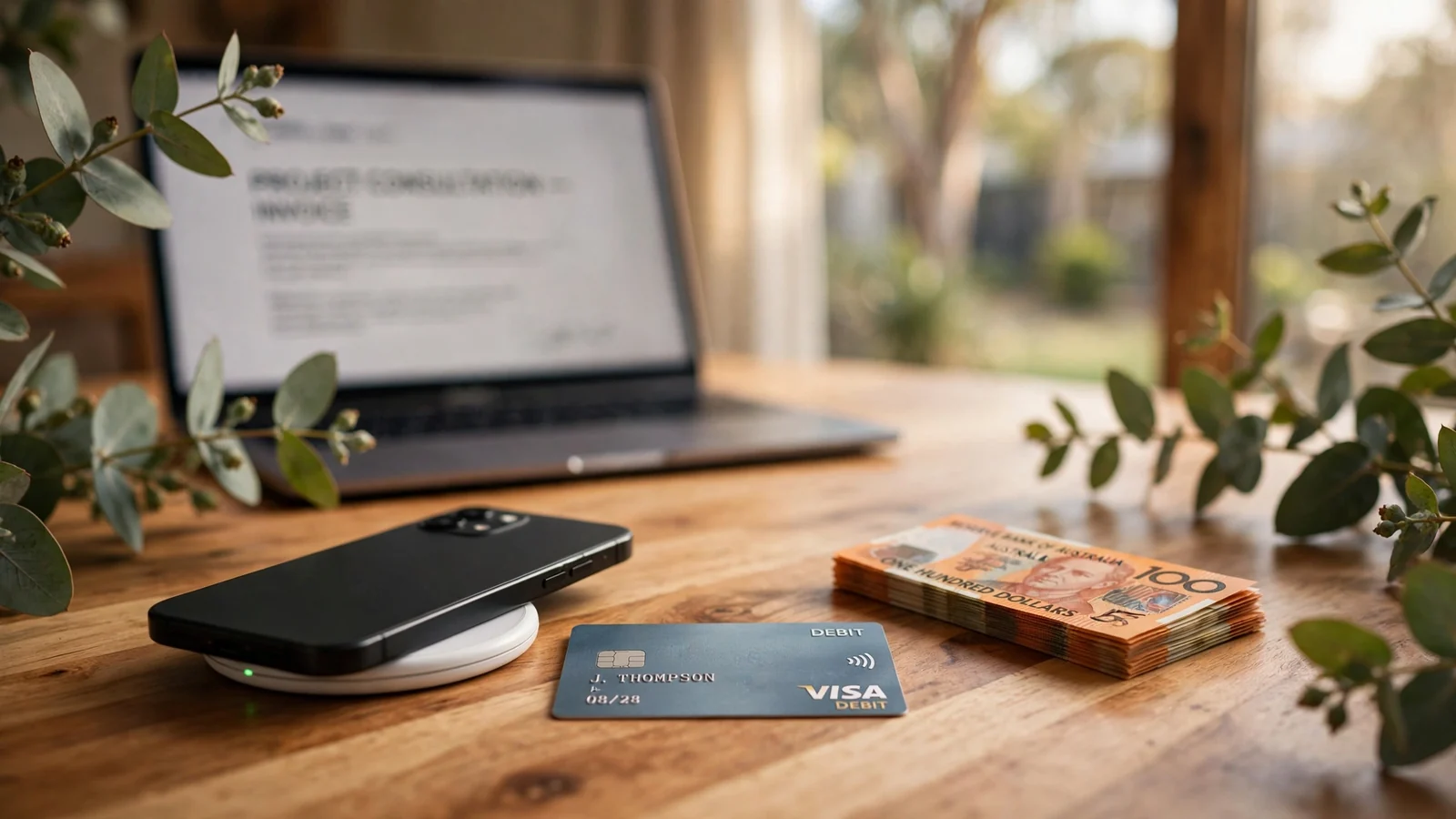
In practice, the cashier’s wording tells little about where money comes from or where it can go next. PayID is a bank transfer; card processing is a separate rail. Neither description makes prohibited online casino services lawful in Australia.
I have seen payment labels treated as if they were interchangeable because they appear in one menu. They are not. The funding source, the payment network and the rules applying in the customer’s location are separate questions. A name containing “phone” does not establish a phone-bill charge; a card brand does not establish withdrawal support; and PayID does not mean credit. Clear distinctions.
Free Spins, Credit Offers and What the Payment Facts Do Not Prove
A free-spin or credit headline is a promotion claim, not a description of how money moves. PayID does not create an offer or establish that one is available. Its role is narrower: a deposit is started by selecting PayID, entering an amount and confirming the transfer in the player’s banking app. The bank sets the transaction limits, which vary between banks.
That distinction matters because “credit” can sound like money already placed in a casino account. A payment method does not prove that credit has been granted, that spins are included, or that an offer can be claimed. Those are separate terms, and wording in an advertisement is not a substitute for the conditions attached to a specific promotion.
There is also a legal boundary that changes how these claims should be read in Australia. Under the Interactive Gambling Act 2001, operators may not provide real-money online casino games, including pokies, to people physically located in the country. A promotion attached to such a service should not be treated as evidence that the service is lawful or available to Australian residents.
I have seen payment language and promotional language placed side by side as if one confirms the other. It does not. PayID describes a bank-initiated transaction; it says nothing about free spins, bonus credit or eligibility. Separate claims. Separate questions.
Do Australian online casinos support PayID withdrawals?
Some casinos offer PayID withdrawals. After the casino approves a request, the transfer can arrive within minutes; internal review is often the main delay.
Which banks support PayID?
Most major Australian banks support PayID transactions, though transaction limits vary by bank.
What are the minimum and maximum deposit limits at PayID casinos?
PayID casino deposits commonly start at AUD 10–20, with some accepting as little as AUD 5 by bank transfer. Bank-set PayID limits vary; most major Australian banks allow AUD 1,000–5,000 per transaction, with daily limits of AUD 10,000–20,000.
What is the minimum PayID deposit?
The minimum is commonly AUD 10–20, although some casinos accept deposits as low as AUD 5 via bank transfer.
How long do PayID deposits take?
PayID deposits typically reach a casino within 3–15 seconds. If the player ID or username is missing from the payment reference, crediting may be delayed while the payment is handled manually.
Created by the ”Malina Casino” editorial team.