Casino Sites That Accept Credit Cards in Australia
 Available in AU
Card logos do not establish legality; the guide explains Amex deposits, acceptance limits, verification and withdrawal conditions in Australia.

- Credit-card casino payments in Australia: the legal boundary
- Making an Amex deposit: the cashier flow and the costs behind it
- Credit cards at casinos: Amex acceptance versus Visa
- When a card deposit is blocked or a card is not accepted
- What “top” means when card acceptance is the only criterion
- Real-money deposits, verification and Amex gift cards
- Amex withdrawals: eligibility, timing and possible fees
- Why Amex acceptance varies from casino to casino
- Paying without a credit card: other payment habits in Australia
- Using a credit card for gambling: the issuer can still say no
Credit-card casino payments in Australia: the legal boundary
A payment option and a lawful service are separate things. A website may display a credit-card logo or describe itself as accepting Australian customers, but that does not establish that it can legally provide real-money casino games to people in Australia. The governing question is not which cards appear in a cashier. It is whether the service itself may be offered here.
The Interactive Gambling Act 2001 makes it illegal for operators to provide real-money online casino games to people physically located in Australia. That prohibition covers casino-style offerings such as poker, blackjack, roulette and pokies. The restriction is directed at the operator providing the service; it does not explicitly make an individual player’s use of an offshore site a criminal offence. Those are two different legal positions, and confusing them can make a payment page look more reassuring than it is.
I read claims about an “Australian” casino with that distinction in mind. The word can describe a website’s intended audience, currency display or payment options; it is not proof of Australian authorisation or protection. Nor does a foreign licence change the Australian rule. A licence issued elsewhere does not permit an operator to provide prohibited online casino services to people in Australia.
The Australian Communications and Media Authority, usually shortened to ACMA, administers enforcement of the Act. Its role matters because the rules are not merely a theoretical line in a statute. Offshore services can be subject to enforcement and access restrictions. A site loading on a device, or a cashier accepting a card detail, is not evidence that the service has been approved for the Australian market.
That is the point where payment marketing can blur the issue. “Credit-card casino” sounds like a description of a transaction, but it can be read as an endorsement of the destination taking the payment. It is neither. The payment method does not determine whether the underlying gambling service is lawful, and a successful transaction does not confer local status on an offshore operator.
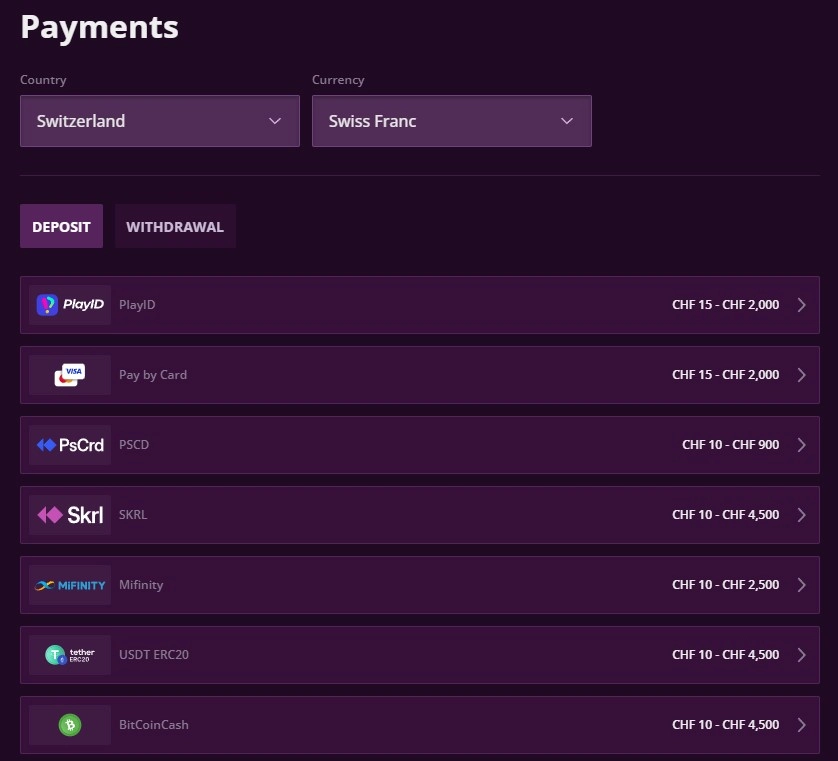
The same caution applies to labels such as “available in Australia.” In ordinary commerce, availability can imply that a business is entitled to serve local customers. With prohibited online casino services, that inference is unsafe. A website may be reachable for a time, or may advertise a deposit route, while still being an operator offering a service that Australian law prohibits. Access and legality are not interchangeable.
There is another distinction that is easy to miss: the absence of explicit criminal liability for players does not mean that players receive the protections associated with a locally regulated service. Australian consumer law does not protect players who use offshore casinos. If a dispute arises over an account, a balance or a withdrawal, a local-looking payment option does not create Australian oversight of the operator or a local remedy. The card brand is not the regulator. The cashier is not a licence.
I have found that the most useful way to assess a payment claim is to separate three questions that promotional copy often folds together: does the site show a card option, can a transaction be processed, and may the operator lawfully provide the gambling service to someone in Australia? The first two concern payment availability. The third concerns the legal boundary. An answer to either payment question cannot answer the legal one.
That separation also avoids treating a payment failure as a legal verdict. A declined transaction does not by itself establish that a site is prohibited, just as an approved payment does not establish that it is lawful. Payment systems make transaction decisions; the Interactive Gambling Act governs the provision of the service. Different mechanisms, different questions.
For Australian readers, the phrase “casino sites that accept credit card” therefore needs a careful reading. It can describe what an offshore cashier claims to support, not a category of locally lawful online casino businesses. The legal boundary remains regardless of the card shown.
The practical conclusion is narrow but important: a card logo, an Australian-dollar display or a completed payment cannot turn a prohibited service into a permitted one, and cannot supply consumer protection that does not apply to offshore casino use. Payment availability is not legal approval. A clean distinction.
Legal Warning
The Interactive Gambling Act 2001 makes it illegal for operators to provide real-money online casino games to people physically located in Australia.
Making an Amex deposit: the cashier flow and the costs behind it
A cashier can make a card payment look like a simple sequence: choose Amex, enter card details and an amount in Australian dollars, then submit. That describes the interface, not an endorsement or a dependable route to fund online casino play from Australia. The legal position matters regardless of what a cashier displays: real-money online casino services are prohibited for operators serving people in Australia.
In payment terms, the key distinction is between processing speed and total cost. An Amex deposit may be credited instantly once the payment is accepted. “Instant” describes the time taken for the casino balance to update; it does not mean the transaction is free, that the card issuer will approve it, or that the service is lawful. A quick balance update can obscure charges that appear elsewhere in the payment chain.
A specialist review reports that Amex casino deposits typically carry no fee, while also noting that charges depend on the casino. That is not a universal pricing rule. A casino may add a payment surcharge, and a card issuer may apply a currency-conversion charge when the transaction is not settled in Australian dollars. The amount shown in the cashier is therefore not necessarily the final cost in the card account.

One specialist review identifies a possible casino surcharge of 1.5% on Amex transfers. That figure should be treated as a reported condition, not a standard rate across operators. The cashier’s payment summary and the operator’s terms are where a surcharge would need to be disclosed; if the total cost is unclear, the apparent speed of the transaction tells nothing about its price.
Currency conversion is a separate issue. A specialist review reports a 3% conversion fee on Amex cards. The relevant question is whether the payment is actually charged in AUD or converted from another currency, and which party applies the conversion charge. The casino, its payment processor and the card issuer can play different roles. A deposit amount entered in AUD does not, by itself, prove that the final card transaction will be settled in AUD.
I have seen payment descriptions blur these distinctions. “No fees” may refer only to a casino’s own deposit charge, leaving a conversion fee or issuer charge outside that statement. A casino surcharge, by contrast, is a cost attached to the payment by the operator or its processor. These are not interchangeable. The practical cost is the combined amount shown across the transaction records, not the most reassuring phrase on a payment page.
Nor does an instant deposit claim resolve a payment dispute. It says nothing about the terms attached to the account or whether the payment method is available in a particular case. The display of Amex in a cashier is not proof that a transaction can lawfully be made from Australia, and it does not establish that the card issuer will process it. A visible option is only a visible option.
Payment Costs
A deposit may be credited instantly, but this does not mean the transaction is free; costs can include casino surcharges or currency-conversion fees from the card issuer.
For that reason, a “fast” credit-card deposit is an incomplete description. Speed concerns when a balance may update after approval. Cost concerns possible operator surcharges and currency conversion. Legality concerns whether the service may be offered to people in Australia at all. These are separate questions, and one does not answer the others.
The payment flow is easy to describe; its total price is less tidy. A specialist review’s fee statement can indicate what to look for, but it cannot establish the terms of every cashier or card transaction. And an available payment method does not make an Australian online casino service lawful. No shortcut around that distinction.
Credit cards at casinos: Amex acceptance versus Visa
A card logo on a cashier page can look like a simple promise: choose the card, pay, and move on. In practice, “accepted” can mean only that a payment option appears in an operator’s interface. It does not establish that a payment will be processed, that the card will work for every account, or that the service is lawful in Australia.
That distinction matters particularly when comparing Amex with Visa. A specialist review reports that Visa may be available at a wider range of Australian-facing online casinos than Amex. The comparison is an indication, not a fixed market rule: the payment methods shown by an operator can change, and a listing does not guarantee a successful transaction. Visa may have broader stated acceptance, while Amex can be absent from a particular cashier altogether.

Acceptance is not the same as availability
A specialist review also notes that some online casinos do not accept Amex. That is a report about particular operators, not proof that Amex is generally unavailable or that every other card is supported. The practical point is narrower: card brands cannot be treated as interchangeable. A site may display one card option and omit another, or its published payment information may not match what appears in the cashier.
I have seen payment descriptions do more work than they should. “Cards accepted” sounds comprehensive, but it can conceal which network is supported and whether the label refers to deposits, withdrawals, or both. For a comparison of Amex and Visa, the relevant detail is the named card brand, not a broad card symbol or a general claim about credit-card payments. Even then, a displayed option is not a guarantee of approval.
This is why an acceptance claim needs a boundary. It describes a payment feature reported for an operator at a particular time; it does not certify the operator, its other terms, or the card’s suitability. No universal conclusion follows from a small number of cashier listings. No blanket promise either.
Limits are a separate comparison
The amount a cashier permits is another point of difference. A specialist review describes Amex transaction limits as higher than those for Visa and Mastercard. That should be read as a reported comparison, not as a standard applying to every casino or account. Individual operators set payment limits, and the figures may differ between card brands and between services.
Reported to be available at a wider range of Australian-facing online casinos.
May be missing from some cashiers but is described as having higher transaction limits where supported.
A higher stated ceiling can sound like an advantage, but it does not make Amex more widely accepted. These are separate measures. Acceptance asks whether the operator offers that card route; a limit describes the amount the operator permits through it. A card can have a higher published limit where it is supported and still be unavailable elsewhere. Likewise, a lower limit does not by itself mean that a card is less reliable.
The wording matters. “Higher limits” is not a promise that a particular deposit will be approved, nor does it establish that the cardholder’s own account has the same allowance. The cashier’s displayed terms are the operator’s stated conditions, while payment approval also depends on the transaction being accepted by the relevant parties. A headline comparison cannot settle an individual payment.
What a card comparison cannot establish
For Australian readers, there is a more basic boundary behind any comparison of offshore casino payment methods. The Interactive Gambling Act 2001 prohibits operators from supplying real-money online casino games to people in Australia. The Australian Communications and Media Authority enforces that law. An offshore cashier displaying Amex or Visa does not make the service locally authorised or protected.
Australian consumer law does not protect players who use offshore casinos. The law does not explicitly make the player’s use of an offshore site a criminal offence, but that is not the same as legal approval of the service or a guarantee of recourse if a payment or account dispute arises. The card brand does not alter that position.

So the useful comparison is limited: a specialist review reports potentially broader Visa acceptance, while Amex may be missing at some operators; another specialist review describes Amex limits as higher. Neither statement is a dependable rule for every cashier, and neither is a recommendation to use an offshore casino. Acceptance is one payment detail. It is not a measure of legality, protection, or overall quality.
When a card deposit is blocked or a card is not accepted
A failed Amex deposit does not always mean the same thing. The cashier may not support Amex at all, or a payment attempt may be refused even though the card is listed. Those are separate points in the payment chain, and the error message does not always make the distinction clear.
The first check is whether the payment option is actually available for the account and location. A card logo on a general payment page is not proof that it can be used for every transaction. The cashier’s live options are more relevant, though they still do not guarantee that a payment will be approved. A specialist review has reported that some casinos do not accept Amex; because acceptance can change, that should be treated as an operator-specific detail to confirm, not as a settled rule for the market.
If Amex is absent from the cashier, repeatedly submitting the same details is unlikely to resolve the issue. The restriction may be at the operator’s end: its payment setup may not include Amex, or its terms may exclude the card. This is different from a card being temporarily unavailable or a particular transaction being declined. A card deposit option is not universal.
- Check if the card is available in the live cashier
- Identify if the failure is an acceptance issue or a bank decline
- Repeatedly submit details if the card is absent from the cashier
- Assume a general “declined” notice identifies the specific party responsible
If Amex appears but the transaction fails, the payment may have been blocked by Amex for that particular website. A specialist review has described this as one possible reason an Amex casino deposit is declined. It is not a basis for assuming that all Amex payments to gambling websites are blocked, or that a successful attempt elsewhere will be repeated. Approval can be specific to the website and transaction.
The practical distinction matters. Where the cashier does not offer Amex, the problem is acceptance by the operator. Where it does offer Amex but the payment is refused, the decision may sit elsewhere in the payment chain. Australian banks may also block gambling-related transactions on Amex at issuer level, so the operator’s displayed options cannot settle whether a bank will approve a charge.
I would read the point of failure before drawing a conclusion from a generic “declined” notice. A message that the card type is unsupported points towards an acceptance restriction. A general decline gives less information; it does not, on its own, identify the casino, Amex or the bank as the party that refused the payment. Repeating attempts without knowing the cause can add confusion rather than clarify it.
There is a further boundary that a payment screen cannot resolve. Under the Interactive Gambling Act 2001, operators are prohibited from providing real-money online casino games to people in Australia. Access to a cashier, or the appearance of a card option, does not make an offshore service lawful or locally protected. Australian consumer law does not protect players using offshore casinos. Payment availability is not a consumer safeguard.
That is why “card accepted” is a narrow statement. It describes a payment method shown or processed in a particular setting; it says nothing by itself about the legal status of the service or the protections available if a dispute arises. A failed payment may be a technical or commercial restriction, but removing that restriction would not change the legal position.
The useful diagnosis is limited but clear: first distinguish an unavailable card from a declined transaction, then identify which part of the payment chain may be responsible. Neither outcome should be read as confirmation that the underlying service is authorised in Australia. Short version: acceptance is not approval.
What “top” means when card acceptance is the only criterion
Choosing a casino site that accepts credit cards in Australia calls for checking the available payment details alongside the operator’s other known terms. Use these notes as a starting point, and confirm current payment options before depositing.
Payout speed: crypto 30-120 minutes, fiat 24-72 hours · Min. deposit: A$30 MrPacho lists a minimum deposit of A$30. Its stated payout times are 30–120 minutes for crypto and 24–72 hours for fiat.
License: Curacao eGaming (Hollycorn N.V., since 2017) · Min. deposit: A$20-30 (depends on the offer) Playfina Casino is licensed by Curacao eGaming under Hollycorn N.V., with the license noted as active since 2017. Its minimum deposit is A$20–30, depending on the offer.
License: Curacao Gaming Control Board OGL/2023/174/0082 (Dama N.V.) SpinsUp is licensed by the Curacao Gaming Control Board under OGL/2023/174/0082, held by Dama N.V.
License: Curacao Gaming Control Board JustCasino is licensed by the Curacao Gaming Control Board.
License: Curacao eGaming OGL/2024/923/0383 (Antillephone N.V.) · Min. deposit: A$30 WinSpirit Casino is licensed by Curacao eGaming under OGL/2024/923/0383, held by Antillephone N.V. Its minimum deposit is A$30.
License: Curacao eGaming (Roby Games Ltd) Roby Casino is licensed by Curacao eGaming, with Roby Games Ltd named as the licensee.
License: Curacao Gaming Control Board (TechSolutions Group N.V.) Bizzo Casino is licensed by the Curacao Gaming Control Board, with TechSolutions Group N.V. named in the licensing details.
License: Curacao · Min. deposit: A$20 (POLi) Lucky Dreams lists a minimum deposit of A$20 for POLi. It is licensed in Curacao.
License: Curacao · Payout speed: crypto 30-60 minutes, fiat 1-5 days · Min. deposit: A$10 Wild Tokyo is licensed in Curacao and lists a minimum deposit of A$10. Its stated payout times are 30–60 minutes for crypto and 1–5 days for fiat.
License: Curacao – Antillephone N.V. (Versus Odds B.V.) · Min. deposit: EUR 20 Thor Casino is licensed in Curacao through Antillephone N.V. (Versus Odds B.V.). Its minimum deposit is EUR 20.
A “top” credit-card casino claim can mean very little when the only test is whether a payment method appears in a cashier. It says something about a payment option, not whether the service is lawful in Australia, how it handles accounts, or what protections apply if a dispute arises. I have seen promotional language compress all of those separate questions into one reassuring label. They are not the same thing.
There is a more basic limit in Australia. The Interactive Gambling Act 2001 prohibits operators from providing real-money online casino games to people in the country. A cashier that displays a card option does not change that legal position. Nor does calling an offshore service a leading or top credit-card online casino make it locally regulated. Australian consumer law does not protect players who use offshore casinos.
That distinction matters because acceptance is an operational detail. It can indicate that a payment route is presented as available; it does not establish that a transaction will be approved, that the casino will accept responsibility for a problem, or that the service has a lawful right to offer online casino games to Australians. The word “top” often sounds like an overall endorsement. Read narrowly, it may describe only a single feature.
Attention: A “top” label based on card acceptance is an operational detail and does not imply that a service is locally regulated or safe.
A specialist review has described Visa as more broadly accepted than Amex at Australian online casinos. That is a statement about reported payment availability, not a settled measure of quality or a guarantee about any particular cashier. Acceptance information can change, and the label alone gives no reliable account of the service’s legal status. Card comparisons belong to a separate question.
I would therefore treat “top credit card casinos” as a phrase that needs qualification, not as a meaningful ranking in itself. If “top” means only that a card is listed, it offers no conclusion about legality or consumer safeguards. If it is meant to imply that the operator is safe, locally authorised or suitable for Australian players, acceptance does not support that implication.
The practical point is simple: a payment badge is not a licence, and a favourable label is not protection. In this market, those are separate matters. No shortcut.
Real-money deposits, verification and Amex gift cards
A payment option and permission to provide a service are separate matters. In Australia, the Interactive Gambling Act 2001 prohibits operators from supplying real-money online casino games to people in the country. The Australian Communications and Media Authority enforces that law. A site displaying a card option does not make its service lawful or give its customers the protections of Australian consumer law. Offshore casino use is not locally protected.
Account checks are another distinct condition. Online casinos typically require customers to complete a Know Your Customer (KYC) assessment before carrying out financial transactions. The operator may use this process to establish a customer’s identity and assess account details. A payment method appearing on a site does not mean an account has cleared those checks, or that a transaction will be allowed.
That distinction matters because payment acceptance can be described broadly in promotional material. “Real-money deposits” may sound like a simple account feature; in practice, it sits alongside identity verification and the operator’s own transaction conditions. Acceptance of a card, including an Amex gift card, is not evidence of lawful operation in Australia. Nor does it establish that the account or any associated funds are covered by Australian consumer protections.
Amex gift cards have a narrower role than a standard payment card. At a casino that accepts American Express, a gift card may be usable to fund a deposit, but it is not a method for receiving winnings. Deposit capability only. That limitation is easy to miss when a payment logo or a list of accepted methods is treated as a complete description of how an account works.
I have seen payment menus presented as if they settle the question. They do not. A displayed card option says something about the operator’s payment setup; it says nothing by itself about KYC completion, withdrawal eligibility, or the legal status of providing online casino games to Australians. These are separate checks, not interchangeable assurances.
Amex Gift Cards
Amex gift cards may be usable to fund a deposit at casinos that accept American Express, but they cannot be used as a method for receiving winnings.
For Australian residents, the legal boundary remains the starting point: real-money online casino services are prohibited for operators, and consumer law does not protect people using offshore casinos. A gift card’s deposit-only function does not change that position. Neither does successful verification or a completed payment.
Amex withdrawals: eligibility, timing and possible fees
An Amex cash-out is not simply the reverse of a card deposit. A specialist review reports that a casino may require a previous deposit made with Amex before it will process winnings back to that card. That condition links the withdrawal route to the payment history on the account; having an Amex card on file, by itself, may not meet it.
Availability is a separate question. The same type of review notes that some casinos do not offer Amex as a withdrawal method, while others may attach an additional fee. Limits are set by individual operators and can differ, so a displayed maximum or minimum belongs to that casino’s rules, not to Amex generally. I would read the cashier’s withdrawal options and the payment terms together: one can show whether the route is available, while the other explains its conditions and charges. No assumption should be made from the deposit option alone.
Timing also needs careful wording. A specialist review puts the time for an Amex casino withdrawal to clear at as long as five days. That is a reported upper timeframe, not a promise that every payment will arrive within it; processing and clearing are distinct stages, and the operator’s stated schedule is the relevant one for a particular transaction. A pending request is not the same as money cleared to the card.

The practical point is that eligibility, fees and timing are controlled by the operator’s withdrawal rules, and those rules can differ. “Withdraw to card” may sound like a single, uniform service. It is not. The method can be unavailable, conditional on an earlier Amex deposit, or subject to a fee.
There is also a more fundamental limit in Australia. The Interactive Gambling Act 2001 prohibits operators from providing real-money online casino games to people in the country. Australian consumer law does not protect players using offshore casinos. A payment route does not change that legal position or provide local protection if a withdrawal is delayed or refused.
Why Amex acceptance varies from casino to casino
A specialist gambling review reports that some Australian-facing online casinos list Amex as a deposit option. That is a limited claim, not evidence that the card is accepted across the market. The payment label can differ from one operator to another, so “casinos accepting credit card” is not a single, stable category.
From the industry side, a payment method is part of an operator’s own cashier set-up. Its appearance on one site does not establish that another site offers the same option, or that availability will remain unchanged. A card brand may be familiar to customers and still be absent from a particular operator’s payment menu. That is a matter of site-level availability, not a promise that every Amex card will work.
Market Availability
Card acceptance varies by operator and does not establish a universal rule or a recommendation for offshore casinos.
I have seen broad wording such as “accepted” do too much work. It describes a listed payment route; it does not settle whether a specific transaction will be approved. Nor does a review’s snapshot establish the current position at every site. The distinction is plain. Availability varies.
There is a more important boundary in Australia. The Interactive Gambling Act 2001 prohibits operators from providing real-money online casino games to people in Australia. A payment option does not make such a service lawful, and Australian consumer law does not protect players using offshore casinos. Card acceptance should not be read as endorsement, local regulation or a guarantee of recourse.
That is why an online casino accepting a credit card is not automatically a locally authorised or protected service. The narrow conclusion is only that a specialist review has identified Amex deposits at some Australian-facing casinos. It does not support a universal claim about casinos, and it does not turn availability into a recommendation.
Paying without a credit card: other payment habits in Australia
In everyday Australian spending, leaving a physical card in a wallet does not necessarily mean leaving card payments behind. Contactless credit and debit cards are accepted almost everywhere, and mobile wallets such as Google Pay and Apple Pay are similarly widespread. Bank-linked services such as PayPal are also familiar, so people are accustomed to moving between payment methods according to the setting.
That familiarity can make a casino cashier’s payment menu look like a routine choice. It is not. A method appearing on a screen says nothing about whether the service is lawful in Australia, or whether an offshore operator provides meaningful consumer protection. Australian consumer law does not protect players using offshore casinos. The payment rail and the legal status are separate matters.

Crypto is sometimes presented as the frictionless alternative: Bitcoin and Ethereum can provide instant deposits and withdrawals with limited or no fees. That description concerns the transfer mechanics, not the risks of using a gambling service. Bank transfers sit at the other end of the comparison; they may take longer and carry higher fees. Actual terms depend on the service involved.
I have seen payment labels do more persuasive work than the underlying conditions. “Instant” describes a transaction stage, not the whole relationship with an operator. And an ordinary payment habit is not evidence that a gambling transaction is permitted. Different rails. Different questions.
Using a credit card for gambling: the issuer can still say no
A payment option shown on a website does not mean a card issuer will approve the transaction. Australian banks may block gambling-related payments made with Amex at the issuer level. The decision sits outside the website’s cashier: a displayed card logo cannot override the bank’s controls.
From the payment side, that distinction matters. A failed attempt does not necessarily mean the card details were entered incorrectly or that the website has rejected Amex. The issuer may have stopped the transaction before it was authorised. Nor does a successful payment establish that the service is lawful or protected under Australian consumer law.
The legal position is separate from the payment decision. Under the Interactive Gambling Act 2001, operators must not provide real-money online casino games to people in Australia. Australian consumer law does not protect people who use offshore casinos. A card transaction going through changes neither point.
I have seen payment availability described as if it were a simple feature: “Amex accepted” sounds definitive, but it only describes one part of a transaction. The operator, payment processing arrangements and issuer each have a role, and the issuer can still refuse a gambling-related charge.
No workaround implied. A bank’s decision is not an invitation to route a payment through another method or account. If an issuer blocks a gambling transaction, the block is the operative answer for that card.
How do you check if casino sites accept Amex deposits?
Check the site’s cashier for American Express as a deposit option. Some casinos do not accept Amex, and a listed option does not mean a payment will be approved.
Are there fees for using Amex at online casinos?
Amex deposits typically have no fee, but a casino may add a 1.5% surcharge and currency conversion may cost 3%. Check the cashier and your card terms for the charges that apply.
How safe is my money when using American Express at online casinos?
An Amex payment does not give you Australian consumer protection if you use an offshore casino. If a dispute arises over your account, balance or withdrawal, you may have no local remedy.
Are there any fees associated with using American Express at online casinos?
Deposits typically have no Amex fee, but a casino may charge a 1.5% surcharge and currency conversion may incur a 3% fee. Withdrawal fees may also apply, depending on the casino.
Can you use an American Express gift card at an online casino?
Yes, an Amex gift card can be used for deposits at casinos that accept American Express, but not for withdrawals.
Published by the Malina Casino team.