Casinos That Accept Google Pay in Australia: What to Know
 Available in AU
Retail familiarity, casino cashier acceptance and withdrawal options are separate questions, so a wallet claim alone does not verify a payment route.

- Why Google Pay’s Wide Retail Use Does Not Prove Casino Acceptance
- What a Google Pay Deposit Claim Leaves Unanswered
- How to Read Casino Payment Claims Without a Verified Operator List
- Withdrawal Speed Is a Separate Question from Wallet Acceptance
- The Australian Legal Context for Offshore Online Casinos
- A Casino’s Game Catalogue Does Not Establish Its Payment Options
- Mobile Wallet Use and the Limits of Slot-Payment Claims
- Card Acceptance, Wallets and the Withdrawal Caveat
- Australian Payment Habits Do Not Confirm Casino Support
- Google Pay as a Wallet, Not a Verified Casino Payment Route
Why Google Pay’s Wide Retail Use Does Not Prove Casino Acceptance
In Australia, contactless card payments and mobile wallets are part of ordinary retail life. Credit and debit cards are accepted contactlessly almost everywhere, and the same is true of mobile wallets such as Google Pay and Apple Pay. That familiarity can make a different kind of payment feel like a natural extension: if a phone can pay at a shop, perhaps it can pay through an online gambling cashier too.
The inference does not hold. A payment method’s broad acceptance at physical retailers describes one setting. It does not establish that a particular online service offers the same method, or that its cashier can process it. “Accepted almost everywhere” is a statement about everyday retail reach, not a universal rule for every merchant and every transaction.
I have seen the distinction get lost because the front-end experience looks similar. A phone is presented, a wallet is selected, and a payment appears to move with little effort. But a familiar interface does not make the underlying acceptance decision universal. The retailer, the online merchant and the payment arrangements serving them are separate contexts. A wallet that is routine at a supermarket checkout cannot be presumed to appear among the options at an online gambling cashier.
Google Pay availability can vary by casino and payment conditions, so check the cashier before choosing where to play. This list provides a quick reference to the information available about each operator.
Payout speed: crypto 30-120 minutes, fiat 24-72 hours · Min. deposit: A$30 MrPacho lists a minimum deposit of A$30. Its stated payout times are 30–120 minutes for crypto and 24–72 hours for fiat.
License: Curacao eGaming (Hollycorn N.V., since 2017) · Min. deposit: A$20-30 (depends on the offer) Playfina Casino is listed under the Curacao eGaming license held by Hollycorn N.V. since 2017. Its minimum deposit is A$20–30, depending on the offer.
License: Curacao Gaming Control Board OGL/2023/174/0082 (Dama N.V.) SpinsUp is listed under Curacao Gaming Control Board license OGL/2023/174/0082, held by Dama N.V.
License: Curacao Gaming Control Board JustCasino is listed as licensed by the Curacao Gaming Control Board.
License: Curacao eGaming OGL/2024/923/0383 (Antillephone N.V.) · Min. deposit: A$30 WinSpirit Casino is listed under Curacao eGaming license OGL/2024/923/0383, held by Antillephone N.V. Its minimum deposit is A$30.
License: Curacao eGaming (Roby Games Ltd) Roby Casino is listed under a Curacao eGaming license held by Roby Games Ltd.
License: Curacao Gaming Control Board (TechSolutions Group N.V.) Bizzo Casino is listed under a Curacao Gaming Control Board license, with TechSolutions Group N.V. identified as the holder.
License: Curacao · Min. deposit: A$20 (POLi) Lucky Dreams lists a minimum deposit of A$20 for POLi. It is also identified as Curacao-licensed.
License: Curacao · Payout speed: crypto 30-60 minutes, fiat 1-5 days · Min. deposit: A$10 Wild Tokyo lists a minimum deposit of A$10 and identifies itself as Curacao-licensed. Stated payout times are 30–60 minutes for crypto and 1–5 days for fiat.
License: Curacao – Antillephone N.V. (Versus Odds B.V.) · Min. deposit: EUR 20 Thor Casino is listed under a Curacao license associated with Antillephone N.V. and Versus Odds B.V. Its minimum deposit is EUR 20.
That matters when a page describes an Australian online casino as accepting Google Pay. The phrase may sound like a simple feature label, but it makes a claim about a particular cashier, not about the Australian public’s general use of mobile wallets. The country-level fact and the operator-level claim answer different questions. One concerns what consumers can commonly use in retail; the other concerns what a specific service makes available.
The same gap applies to searches for Australian online pokies or casinos that take Google Pay. The wording may bundle together a location, a type of service and a wallet, but those terms do not verify one another. Australian use of Google Pay does not turn into proof of an online cashier option simply because the service is aimed at, or described in relation to, Australian customers. The label is not the transaction.
There is also a difference between seeing a wallet named in general payment material and seeing it as an available choice in the actual cashier. Those are not interchangeable signals. A broad mention can describe the wallet’s popularity, or a payment capability in another setting; it does not, by itself, establish what a particular cashier accepts. The useful distinction is precise: retail adoption is evidence of retail adoption. It is not a receipt for an online transaction.
“Convenient” is often used as if it settles the matter. It does not. The word describes an impression of use, not a confirmed payment route. Likewise, calling a service a “mobile casino” says something about access from a phone, not about which payment buttons its cashier displays. Device compatibility and payment acceptance are separate matters. A site functioning on a mobile screen would not, on that basis alone, prove that Google Pay is supported.
The same care applies to the word “Australian.” It may refer to the intended audience, the currency or the way a page is written. None of those labels, on its own, confirms that the cashier offers an Australian user Google Pay. A local-sounding description is not a payment-system statement. The cashier’s actual options are the relevant evidence for that narrower claim.

This is why retail habits can set expectations but cannot settle acceptance. Someone accustomed to tapping a phone in shops may reasonably expect the same ease elsewhere. Yet payment availability is determined in the context where the transaction is being made. Familiarity with a wallet does not make every online service a participating merchant, and a widely used wallet is not automatically a universal online option.
I would treat a claim of Google Pay support as distinct from a statement about how common mobile wallets are in Australia. One describes consumer behaviour across the retail landscape; the other asserts a feature of an individual cashier. Mixing them makes an unsupported leap look like confirmation. Keep the categories apart, and the central point is straightforward: widespread contactless and wallet use in Australia says nothing conclusive about whether a particular online gambling cashier accepts Google Pay.
Retail reach is not cashier proof.
What a Google Pay Deposit Claim Leaves Unanswered
A statement that a casino accepts Google Pay for deposits sounds specific, but it can cover several different things. It may refer to a logo on a payment page, a wallet option visible in a cashier, or a completed transaction. Those are not equivalent evidence. The first signals an advertised route; the second suggests that an option is presented; only the final stage shows that a particular deposit was processed.
That distinction matters because a payment claim often compresses the entire transaction into a few words. “Google Pay deposit” does not, by itself, establish that the option is available to Australian users, that it appears for every account, or that a payment will be approved. It says even less about the conditions attached to the transaction. A label is not a receipt.
In Australia, consumers are comfortable moving between cards, mobile wallets and bank-linked services such as PayPal. That familiarity can make wallet payments feel interchangeable: if a phone can pay at a retailer, it may seem natural to expect the same route wherever an online payment is offered. But comfort with the technology is not evidence about a particular cashier. The merchant’s payment setup, not the wallet’s general presence in daily life, determines what a payment page actually offers.

What would make a deposit claim concrete?
The useful evidence is tied to the transaction rather than to broad wording. A clear claim would identify Google Pay as a deposit option in the relevant cashier, rather than merely showing a wallet logo somewhere on a site. It would also explain whether the option applies to Australian accounts and whether any account or payment conditions affect its availability.
The distinction between “available” and “usable” is easy to overlook. A payment option might be displayed but not proceed for a particular account or transaction. A cashier could also present conditions before submission that are not visible in a short promotional line. The presence of a button is therefore one part of the picture, not proof of a successful deposit.
The payment sequence matters as well. A deposit involves selecting an option, entering or confirming the required details, submitting the transaction and receiving a result. A claim that names only the first step leaves the rest open. It does not tell whether the payment was accepted, declined, left pending or otherwise failed to complete. Nor does it establish what the account balance showed afterwards. These are transaction facts, not qualities that can be inferred from a wallet’s reputation.
That is the point at which “instant” becomes especially slippery. In ordinary advertising, the word may describe how quickly a payment screen responds, how quickly a request is sent, or how quickly an account is updated. Without a defined event and a confirmed outcome, it is not a precise description of a deposit. A fast interface and a settled transaction are different things. The wording hides the seam.
Conditions sit behind the headline
Deposit terms are another unanswered part of a broad claim. A statement may omit minimum or maximum amounts, fees, eligibility rules or account checks. Those terms cannot be assumed from the fact that Google Pay is named. They are particulars of the payment arrangement, and they need to be stated separately if a deposit claim is to convey more than a general possibility.
- Verify the option in the actual cashier
- Check for specific account or payment conditions
- Confirm the transaction outcome and account balance
- Rely on a wallet logo on the site
- Assume a promotional line proves availability
- Mistake a fast interface for a settled transaction
The same applies to the currency and the amount ultimately charged. A figure written in a headline does not establish that the amount will be accepted, that it is the amount processed, or that no other charge applies. A “$10” deposit claim, for instance, is not self-verifying: it would need to match the cashier’s stated terms and the transaction record. Without that connection, the figure is an assertion, not evidence.
A reliable assessment also distinguishes a current cashier display from a general description that may be repeated across pages. Payment arrangements can change; a copied statement may lag behind the actual interface. The relevant detail is what is represented for the specific service and account at the time of the transaction, together with the conditions shown before submission. General mobile-wallet use cannot fill in those blanks.
There is a further limit to what one completed payment would establish. It would show an outcome for that transaction, not necessarily a standing promise about all accounts or future deposits. A payment route can be subject to conditions, and an isolated success does not erase them. Conversely, a logo or a written claim cannot establish that any transaction has succeeded.
I treat payment language as a description of a process, not as proof of its result. For Google Pay, the meaningful distinction is between a general claim, a visible option, disclosed deposit terms and a recorded transaction outcome. Each answers a different question. Until those details are connected, “accepts Google Pay” remains incomplete as a description of what a deposit would involve. The headline is not the transaction.
How to Read Casino Payment Claims Without a Verified Operator List
“Best” is a comparison, not a payment feature. Calling a casino the best choice for Google Pay would require more than a page that mentions the wallet. It would require a reliable basis for identifying which operators accept it and comparing their relevant terms.

The distinction matters because a payment logo or a broad statement about mobile wallets does not establish what happens in an individual casino’s cashier. Google Pay and Apple Pay are accepted almost everywhere in Australia, but retail acceptance is not evidence that an online gambling operator offers either wallet. A claim about general familiarity with mobile payments cannot fill that gap.
The word “instant” needs the same care. It sounds like a measurable promise, yet a headline alone does not establish which part of a transaction is meant to be instant, or whether the claim applies to Google Pay at all. A casino can use confident language without showing that the wallet is available to its customers. I would not turn that wording into a factual comparison.
A genuine comparison would need to connect a named operator to a specific cashier option and show that the information applies to the relevant market and remains current. It would also need enough consistent detail to distinguish one operator from another. Without that foundation, a ranked list creates an impression of checking and comparison that the underlying claim does not support.
This is why I treat “best Google Pay casino” as a conclusion that needs evidence, not as a category that can be filled by repeating familiar payment language. The same goes for a claim that a casino site accepts Google Pay: the important point is whether the operator’s own cashier actually presents the method, not whether the wallet is common elsewhere. A polished payment page may look definitive while leaving that central distinction unresolved.
Search phrases often bundle separate ideas together: a casino website, a wallet, games, deposits and withdrawals. Those are not interchangeable claims. A general label cannot establish that Google Pay is supported for every part of an account, nor that a named game or category has a particular payment route. Treating the bundle as one fact gives the wording more force than it earns.

There is also a difference between a provider describing a payment option and an independent comparison proving that the option works as described. A careful account would identify the operator, the exact cashier wording and the conditions attached to the method, then avoid extending that evidence beyond what it shows. If those links cannot be made, the responsible result is not a shorter list or a softer superlative. It is no ranking.
I have seen how “top” labels can make a thin claim appear settled. In practice, the label often does the persuasive work while the qualifying detail is left in the small print—or not supplied at all. That is not enough to support a “best” designation. A claim should stand on its particulars, not on the confidence of its phrasing.
That is not a reason to guess from retail habits or to substitute a generic wallet claim for casino-specific evidence. No list, then.
Withdrawal Speed Is a Separate Question from Wallet Acceptance
A payment option shown for adding funds does not, by itself, establish that the same route can return winnings. Deposit and withdrawal functions are separate settings in a cashier. A wallet name beside a deposit choice tells little about how an outgoing payment would be handled, or whether that option exists at all.
I have seen payment language do too much work in a small space. “Instant” can describe the point at which a deposit is credited, while leaving the later withdrawal process untouched. It is not a timetable for both directions. A fast incoming transaction cannot be used to infer a fast payout, and the presence of Google Pay in one part of a cashier would not settle the withdrawal question.
There are several distinct steps behind a payout. The operator must approve the request, the account may need to pass identity checks, and the payment route must be available for that transaction. Online gambling services commonly require customers to complete identity verification before handling financial activity. That check is often called Know Your Customer, or KYC. Until it is complete, a withdrawal request may not be ready to move through the ordinary payment process.
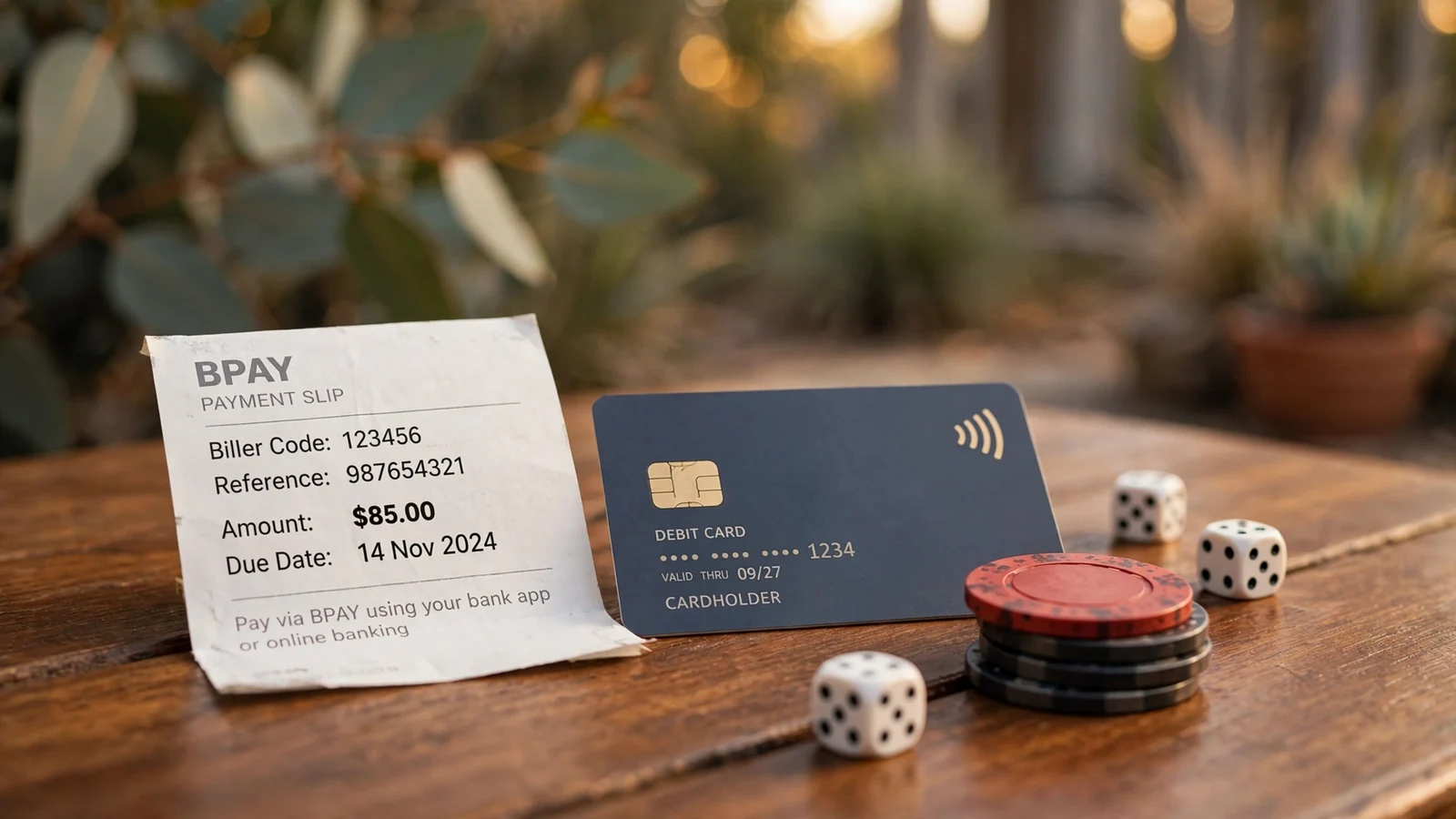
This is why the phrase “instant withdrawal” deserves a narrow reading. It might refer to an operator reviewing a request quickly, rather than funds arriving in a wallet immediately. It might describe a particular method, not every method shown on the site. Unless the stated timing clearly covers the whole route from request to receipt, the word does not tell the full story. Marketing shorthand. Not a delivery time.
For Google Pay, the key distinction remains whether it is merely mentioned as a way to pay in, or whether the cashier separately identifies it as a withdrawal route and sets out the conditions. A deposit label cannot answer that. Nor does general familiarity with mobile wallets establish how a specific online service processes outgoing funds.
The practical wording to examine is the withdrawal section of the cashier’s terms: which payment methods can receive funds, whether the original deposit route is relevant, what checks must be completed, and how timing is described. These are not minor details. A method can be convenient for paying in yet have no corresponding role when a balance is paid out. The two directions must be assessed independently.
A claim about instant Google Pay withdrawals therefore needs to be read as a claim about the entire withdrawal path, not as an extension of a deposit statement. The distinction is easy to miss because payment pages often group methods together, but a shared logo or wallet name does not make their functions interchangeable. Deposit availability and payout availability are different questions; speed is another one.
The Australian Legal Context for Offshore Online Casinos
A payment option and the legality of the service accepting it are separate matters. A Google Pay button, if shown in a casino cashier, would not change the rules that apply to online casino services offered to people in Australia. The Interactive Gambling Act 2001 makes it unlawful for operators to provide real-money online casino games to Australian residents. The restriction concerns the operator’s conduct, not which wallet or card appears at checkout.

The distinction matters because payment language can make a transaction feel routine. “Pay with Google Pay” describes a possible way to move funds; it does not establish that the underlying service may lawfully be offered in Australia, or that consumer protections apply. I have seen how easily a familiar cashier option can dominate attention while the status of the service itself remains in the background. Different question. More important one.
The Australian Communications and Media Authority, generally referred to as ACMA, administers enforcement of the Act. Its role is to enforce the rules that prohibit online casino operators from providing these services to Australians. The law does not expressly make an individual player’s use of an offshore casino a criminal offence. That distinction should not be mistaken for approval, protection or a statement that every related risk disappears.
There is also a practical difference between a business being based overseas and a player being covered by Australian consumer law. A person using an offshore casino is not protected by Australian consumer law in the way a customer dealing with an Australian business would be. If a dispute arises over an account, a payment, or a requested return of funds, there may be no local consumer-law route to resolve it. The familiar appearance of a website or the availability of a mainstream wallet does not supply that protection.
That is why a search for casinos accepting Google Pay in Australia cannot be treated as a simple comparison of cashier features. The method of payment does not establish the operator’s legal position, and a displayed option cannot make a prohibited service lawful. Nor does the absence of a charge against a player under the Act create a right to use the service or guarantee a remedy if something goes wrong.
Legal Risk
The Interactive Gambling Act 2001 makes it unlawful for operators to provide real-money online casino games to Australian residents.
In my experience, marketing tends to put the payment method in the foreground because it is easy to understand and compare. The legal boundary is less visible, but it comes first: the Act bars operators from offering real-money online casino games to people in Australia. ACMA enforces that framework, while Australian consumer law does not protect people who use offshore casinos. A wallet logo cannot alter either point.
A Casino’s Game Catalogue Does Not Establish Its Payment Options
A casino’s game catalogue and its cashier are separate parts of the service. The catalogue describes what the platform presents for play; the cashier handles deposits and withdrawals. Seeing casino games listed, or seeing a mobile-friendly lobby, does not show that Google Pay is available as a way to fund an account.
I have seen how easily those two ideas get joined in promotional language. A page may place a wallet reference beside a broad description of games, making the connection feel established without stating what the cashier actually accepts. But proximity is not evidence of a payment route. “Mobile casino” describes access through a phone or tablet; it does not mean that the mobile version has Google Pay enabled.
The distinction matters because payment support is configured at the cashier level, while game content is presented separately. A catalogue can remain much the same even when payment options differ, and a wallet’s presence on a device does not establish that a particular gambling service can use it. The label “Google Pay casino games” therefore bundles together two claims that need separate support: that games are available, and that the cashier accepts Google Pay.

Google Pay and Apple Pay are accepted almost everywhere in Australia. That describes broad acceptance in the country, not a specific online casino’s payment configuration. Nor does a game title, category, or lobby display establish that Google Pay can be used for it. Payment is not a property of an individual game merely because the game appears on a mobile screen.
From inside the counter, the useful distinction is between what the product displays and what its transaction flow can actually process. A catalogue is not a cashier receipt. If a payment option is not clearly identified as part of the cashier’s available methods, game-related wording cannot fill that gap. The interface may look unified, but the functions are different.
That is the point to keep in view when casino games and Google Pay appear together in the same description. The mention of games does not verify Google Pay casino payments, and the mention of a mobile wallet does not establish which games, if any, can be funded through it. Two separate claims. Two separate checks.
Mobile Wallet Use and the Limits of Slot-Payment Claims
Mobile wallets are part of everyday payments in Australia. Google Pay and Apple Pay are accepted almost everywhere in the country, so their presence in ordinary retail transactions feels familiar. But that broad acceptance does not establish that a particular online casino offers Google Pay, or that the wallet applies to any particular game category.
I treat those as separate claims. A reference to a mobile wallet concerns a payment route; a reference to pokies concerns the games a service makes available. Neither statement proves the other. Even when both appear on the same page, the wording alone does not show that Google Pay can fund play associated with a particular category. Familiarity in shops is not evidence about an online cashier.

This is where labels can do more work than the details behind them. “Google Pay pokies” may sound like a defined payment feature, but it can blur two different ideas: a wallet used for payments generally and a category of casino games. The phrase does not, by itself, identify an accepted method, confirm a transaction path or establish that a game-specific payment arrangement exists.
I have seen how such language can be read too generously. A broad statement about mobile wallets may be placed near game-related material, and the proximity can make the claims appear connected. It is not confirmation. Payment availability has to be stated as a payment condition, not inferred from nearby references to games or from the popularity of contactless services.
The same caution applies to claims that combine a wallet with casino promotions. A promotional label does not clarify whether the wallet is accepted, which activity a payment relates to, or what conditions govern it. The wording is not the underlying rule.
So the narrow point matters: widespread mobile-wallet use in Australia supports only a statement about everyday acceptance. It does not establish Google Pay support for casino games, for pokies as a category, or for a particular game. Separate claims need separate evidence. Familiarity is not verification.
Card Acceptance, Wallets and the Withdrawal Caveat
Contactless card payments are accepted almost everywhere in Australia, but that says nothing about whether an online casino accepts the same card, or whether a payment route can be used in both directions. Retail acceptance and an online cashier operate under different conditions. A familiar tap-to-pay experience is not evidence of casino support.
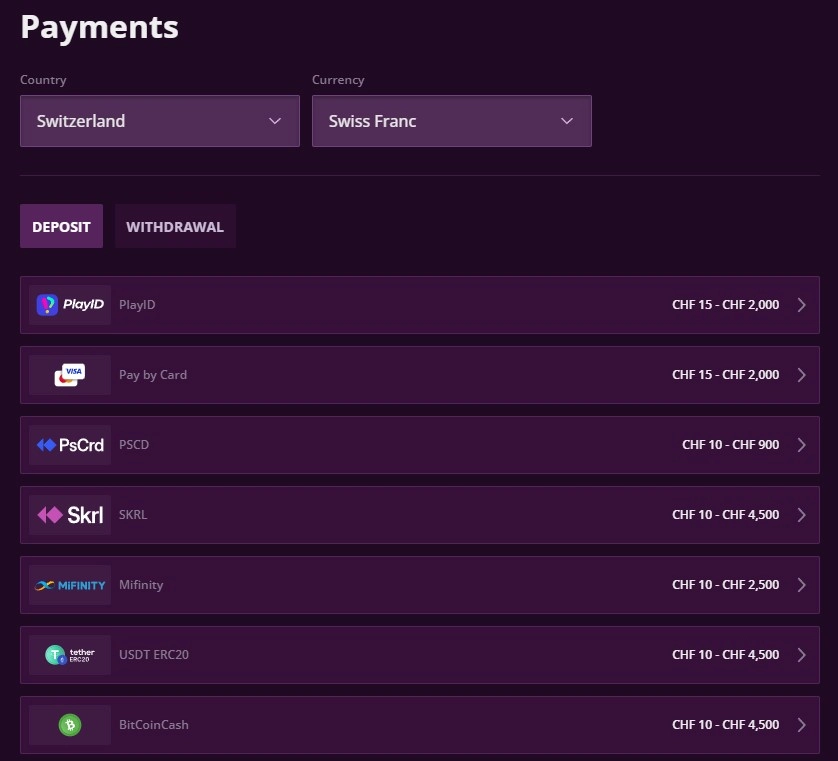
The distinction matters for mobile wallets as well. Google Pay may be commonplace in Australian shops, yet that does not establish that an online casino accepts it for deposits, much less that it permits winnings to be returned through it. A “Google Pay withdrawal” claim needs to be treated as a separate claim from wallet acceptance. The payment method can be available at one stage and unavailable at another.
Amex illustrates the same gap between a payment label and the full transaction rules. A specialist review reports that some online casinos do not accept Amex. The same kind of review describes cases where a casino may not return winnings to Amex, or may attach an additional withdrawal fee. Those statements are not a rule for every operator; they show why the cashier’s conditions matter more than the logo on a general payment list.
From the counter side, deposit and withdrawal options are often described separately because they are separate decisions. A payment method shown for funding an account does not, by itself, establish that it is available for cashing out. Nor does broad acceptance of a card or wallet elsewhere settle the casino’s own terms.
That is the practical limit of claims about an online casino with Google Pay withdrawal: without method-specific confirmation, retail familiarity cannot fill the gap. The same applies to broad claims about all Google Pay casinos. They do not tell whether the wallet is supported for withdrawals, whether conditions apply, or whether the named route is available at all.
Keep the categories distinct: Australian retail contactless acceptance, casino deposit acceptance, and casino withdrawal availability are not interchangeable. Amex reports make the caveat visible; they do not verify Google Pay payout support. Different question.
Australian Payment Habits Do Not Confirm Casino Support
Australians are comfortable moving between cards, mobile wallets and services linked to bank accounts, including PayPal. That familiarity describes how people handle everyday payments; it does not tell us what a particular online casino lists in its cashier.
I have seen payment language treated as if it were transferable: a wallet is common in shops, so it is assumed to be available wherever an online payment can be made. That leap skips the operator’s own setup. A cashier displays the methods that the service has enabled for the relevant account and market. Familiarity with a payment brand does not establish that it appears there, or that a payment attempt will be accepted.
Google Pay is a clear example of the distinction. Australians may know the wallet and use it alongside cards or bank-linked services, but that says nothing specific about an Australian casino using Google Pay. The same applies to the broader idea of an Australian casino with Google Pay: a general payment habit cannot verify a particular cashier’s options.
The wording matters. “Supports mobile payments” sounds definite, but it can leave the actual method unnamed. “Accepts Google Pay” is more specific, yet the claim still needs to match the cashier currently presented by that operator. A payment service’s popularity is not evidence of that match.
This is why broad descriptions of Australian payment behaviour have limited value when assessing a casino’s payment setup. They provide context about consumer familiarity, not confirmation of a merchant relationship or an available transaction route. Cards, wallets and bank-linked services may all feel like ordinary parts of the same payment landscape. Operationally, they remain separate choices.
I would keep those two questions apart: what Australians are comfortable using, and what a particular cashier actually offers. The first is a general observation. The second requires operator-specific confirmation. Familiarity is not acceptance.
Google Pay as a Wallet, Not a Verified Casino Payment Route
Google Pay is widely accepted in Australia, as is Apple Pay. That describes the wallet’s reach across everyday payments; it does not establish that an online casino’s cashier supports it. The two statements operate at different levels: one concerns acceptance by Australian merchants, the other a particular service’s payment setup.
I have seen how a familiar payment logo can do more work in a claim than the underlying detail warrants. “Google Pay accepted” sounds definite, but without a clear link to the casino’s own cashier, it does not show that the option is available to Australian customers or that a payment can be completed. General familiarity is not confirmation.
The useful distinction is between having Google Pay on a phone and finding it offered as a payment route by a specific online service. The first is a feature of the wallet and its broad retail use. The second depends on the service’s own arrangements. One does not prove the other.
That also keeps the phrase “Google Pay casino” in proportion. It may describe what someone is looking for, but it is not evidence that any particular casino accepts the wallet. Nor does a mention of Google Pay establish that it can be used to fund an account or receive funds. Those are separate functions and need their own confirmation.
So, can Google Pay be used at a casino? Its widespread acceptance in Australian shops cannot answer that question for an online cashier. I would treat the wallet’s general availability as background, not as proof of casino support. No established route follows from retail use alone.
Different claim. Different evidence.
What are the deposit and withdrawal limits at the best Amex casinos?
Limits are set by each casino and can vary. Check the casino’s cashier for the limits that apply to Amex deposits and withdrawals.
Are there any fees associated with using American Express at online casinos?
Amex deposits typically have no fee, but a casino may charge a 1.5% surcharge, and Amex cards incur a 3% currency conversion fee. Withdrawal fees may also apply, depending on the casino.
Are there any limits on how much I can deposit or withdraw using American Express?
Yes. Each casino sets its own Amex deposit and withdrawal limits, so check the limits shown in its cashier.
What should I do if my American Express deposit is declined?
Amex or your Australian bank may block gambling payments to a particular website. Check with your card issuer whether the payment was blocked.
What are the fees involved with American Express payments?
Amex deposits typically have no fee, but a casino may charge a 1.5% surcharge, and Amex cards incur a 3% currency conversion fee. Withdrawal fees may apply depending on the casino.
Can I withdraw winnings directly to my American Express card?
Some casinos allow Amex withdrawals, but not all do, and you generally need to have deposited with Amex first. Withdrawals can take up to five days to clear, and a fee may apply.
Created by the ”Malina Casino” editorial team.