
Offshore Casinos for Australian Players: Access and Checks
 Available in AU
A practical guide to mobile formats, licensing signals, legal limits, withdrawals, bonuses and crypto payment considerations for Australian players.

- How Australian Players Access Offshore Casino Sites on Mobile
- Offshore Licences and What They Actually Tell Australian Players
- The USA Search Terms Don’t Set the Rules for Australia
- What “Offshore Casino” Means in Practice
- Australian Law, Site Blocking and the Limits of Recourse
- What a 2026 Offshore-Site Review Can—and Cannot—Verify
- Reading Withdrawal Limits Before Comparing Sites
- The Checks Behind Any Offshore Casino Directory
- Bonus Terms: The Cost Hidden Behind the Headline
- Crypto Deposits and Withdrawals: Timing Is Only One Part of the Picture
How Australian Players Access Offshore Casino Sites on Mobile
On a phone, the main distinction is not between a good casino and a bad one. It is between opening a website in a browser, saving that website as a Progressive Web App (PWA), and installing a native app. Those formats can look similar on screen, but they work differently behind the scenes.
For Australian users, browser access is the usual starting point. Casinos that accept Australian players tend to provide a mobile website or a PWA rather than a native app. Dedicated casino apps are rarely listed on Google Play or Apple’s App Store in Australia, so the browser is the default route. The same account can generally be used on desktop and mobile; changing the screen does not mean opening a separate account.
Browser access: the straightforward format
A browser version is the casino website opened in a mobile browser. There is no separate casino app to install. The punter reaches the site through the browser, signs in there and uses the mobile layout. Any saved login or browser settings remain functions of the device and browser, not a separate casino application.
Choosing an offshore casino from Australia means checking the practical details that matter to you, such as payment options and licensing information. This reference offers concise, fact-based notes to help you assess the listed options.
Payout speed: crypto 30-120 minutes, fiat 24-72 hours · Min. deposit: A$30 MrPacho lists crypto payouts at 30–120 minutes and fiat payouts at 24–72 hours. The minimum deposit is A$30.
License: Curacao eGaming (Hollycorn N.V., since 2017) · Min. deposit: A$20-30 (depends on the offer) Playfina Casino is licensed by Curacao eGaming under Hollycorn N.V., with the stated licensing relationship dating from 2017. Its minimum deposit is A$20–30, depending on the offer.
License: Curacao Gaming Control Board OGL/2023/174/0082 (Dama N.V.) SpinsUp is licensed by the Curacao Gaming Control Board under OGL/2023/174/0082, held by Dama N.V.
License: Curacao Gaming Control Board JustCasino is licensed by the Curacao Gaming Control Board.
License: Curacao eGaming OGL/2024/923/0383 (Antillephone N.V.) · Min. deposit: A$30 WinSpirit Casino holds a Curacao eGaming license, OGL/2024/923/0383, through Antillephone N.V. Its minimum deposit is A$30.
License: Curacao eGaming (Roby Games Ltd) Roby Casino is licensed by Curacao eGaming through Roby Games Ltd.
License: Curacao Gaming Control Board (TechSolutions Group N.V.) Bizzo Casino is licensed by the Curacao Gaming Control Board, with TechSolutions Group N.V. identified as the license holder.
License: Curacao · Min. deposit: A$20 (POLi) Lucky Dreams lists a Curacao license and a minimum deposit of A$20 via POLi.
License: Curacao · Payout speed: crypto 30-60 minutes, fiat 1-5 days · Min. deposit: A$10 Wild Tokyo lists crypto payouts at 30–60 minutes and fiat payouts at 1–5 days. Its minimum deposit is A$10, and it lists a Curacao license.
License: Curacao – Antillephone N.V. (Versus Odds B.V.) · Min. deposit: EUR 20 Thor Casino lists a Curacao license associated with Antillephone N.V. (Versus Odds B.V.). Its minimum deposit is EUR 20.
This arrangement also makes browser access a useful point of comparison. If a page is difficult to read or navigate in a phone browser, adding an icon to the home screen will not automatically fix it. A PWA is still tied to the website. It changes how the page is reached and presented, rather than turning the service into a different product.
I treat “app-like” as a description of the interface, not proof that a native app exists. That distinction matters because a home-screen icon can give a site the appearance of an installed application while still opening its web service. The account and the underlying site remain central.
What a PWA changes
A Progressive Web App is a shortcut to a casino website that behaves more like a native app on a mobile device. If the site offers one, an install or add-to-home-screen prompt may appear while the website is open. Tapping the prompt and confirming adds the shortcut to the device.
After installation, the icon sits with other home-screen icons, which can make returning to the site more direct. The PWA is not the same as downloading a native app from an app store. Its relationship with the website remains the defining feature: it is a web-based shortcut with an app-like presentation.
The label alone tells little about the experience. A PWA does not establish that every page or feature will work identically across phones, browsers or operating systems. The important practical point is simply that installation saves a route back to the website; it does not replace the website or create a separate casino account.

Why native apps are less common
A native app is built for a particular mobile operating system and installed as software on the device. That is different from opening a website or saving a PWA shortcut. For Australian casino services, native apps are rarely found in the mainstream app stores, which helps explain why browser play remains the ordinary format.
An app-store absence should not be treated as an invitation to install a file from an unfamiliar link. Sideloaded casino apps carry security risks, and their safety depends on the operator. A download prompt outside an app store does not itself verify who made the software or what it does. The convenience of an icon is not a security check.
There is also a separate category that can cause confusion: social and free-play casino apps use virtual credits and are available through Google Play and the Apple App Store in Australia. Their availability does not mean a real-money casino app is listed there. The format and the type of play are different.
Practical differences on a phone
Browser play avoids installing a separate app, while a PWA adds a home-screen shortcut and an app-like feel. A native app is installed software, but it is not the common store-listed option for these casinos in Australia. Those are differences in access format, not rankings of which service is preferable.
The website is opened in a mobile browser without any separate app installation.
A web-based shortcut added to the home screen that behaves like a native app.
Software built for a specific operating system, rarely found in mainstream Australian app stores.
A mobile browser also uses the same account as desktop access. That continuity can make switching devices simpler, but it does not change the site’s terms or guarantee that every element will display or behave the same way on a smaller screen. The browser, device and connection all shape what appears.
Where a site is blocked, using a VPN to try to reach it may breach the operator’s conditions; winnings may be voided and the account closed. A VPN does not make a blocked service a dependable mobile option. There is also no Australian government body to complain to if an offshore casino refuses to pay winnings.
The practical distinction is plain: browser first, PWA as a shortcut, native app as the uncommon format. An icon can make access feel familiar. It does not tell the whole story.
Offshore Licences and What They Actually Tell Australian Players
A licence name can look like a shortcut to judging an offshore operator. In practice, it answers a narrower question: which jurisdiction the operator says is responsible for its gambling licence. Curaçao, the Malta Gaming Authority (MGA) and Gibraltar are among the jurisdictions named by casinos that accept Australian players. Seeing one of those names is not the same as establishing that the service is authorised to provide online casino games in Australia.
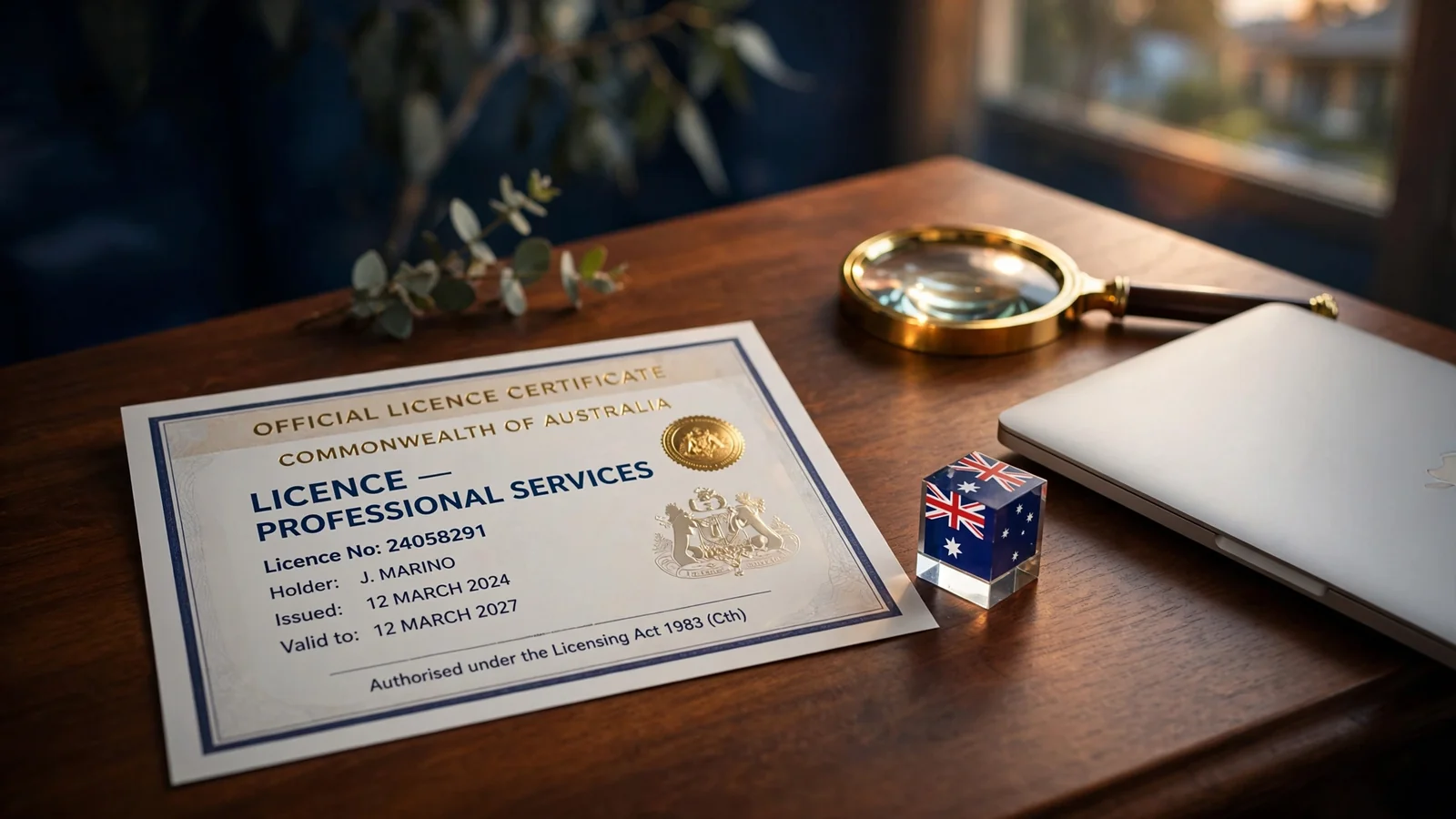
That distinction matters because the Australian rule applies to the operator’s conduct, not the polish of its licensing page. Under the Interactive Gambling Act 2001, operators cannot provide real-money online casino-style games to people in Australia. The restriction covers games such as poker, blackjack, roulette and pokies. An offshore licence does not override that rule or turn an offshore service into an Australian-licensed casino.
I have seen licensing language do a lot of work in a small space. A seal, a licence number and a regulator’s name can create an impression of local protection even when the jurisdiction named is not Australia. The practical reading is more limited: the claim identifies a regulatory connection asserted by the operator. It does not establish that Australian law treats the service as authorised here.
What the licence label can establish
A genuine licence can indicate that an operator falls under the rules of the jurisdiction that issued it. But a name printed on a website is only a claim until it is checked against the relevant regulator’s records. Even where the licence is valid, its scope and conditions belong to that jurisdiction. They should not be read as a promise that every part of the service has been independently checked or that a dispute will be resolved in an Australian forum.
The jurisdiction also matters. Curaçao, the MGA and Gibraltar are not interchangeable labels, and an operator’s wording may refer to a company, a licence holder or a group relationship rather than clearly identifying who runs the service. The useful question is not simply whether a badge appears. It is whether the named operator and the licence details correspond, and whether the stated permission covers the activity being offered.
A foreign licence is not an Australian licence and does not override the Interactive Gambling Act 2001.
Even a correct match has limits. A licence does not, by itself, establish that every game is fair, that every withdrawal will be paid promptly, or that a particular account dispute will end in the punter’s favour. Nor does it settle the treatment of offshore casino deposits, fees or payment reversals. Those are separate matters, governed by the operator’s terms and the arrangements for the payment method. A licence is not a guarantee of an outcome.
What it does not establish in Australia
The central gap is local authority. A foreign licence is not an Australian licence, and the foreign regulator’s role does not displace the Interactive Gambling Act. The person playing is not made legally liable under that Act merely for using an offshore casino; the prohibition concerns operators providing the service to people in Australia. That distinction should not be twisted into an endorsement. Lawfulness for the individual and authorisation of the operator are different questions.
Nor does a foreign licence supply the same practical route to help as a domestic complaints process. There is no Australian government body to complain to if an offshore casino refuses to pay winnings. A regulator in the licensing jurisdiction may have a complaint mechanism, but its existence should not be mistaken for guaranteed recovery or Australian government protection. Jurisdiction, evidence, the operator’s identity and the regulator’s powers all affect what a complaint can achieve.

Some offshore operators are crypto-friendly, but the availability of cryptocurrency does not strengthen a licence claim or create additional consumer protection. A payment route and regulatory status are separate things. The same applies to claims about fast service, security or “trusted” status: marketing language is not a licence condition.
A site’s stated licence also does not confirm that it accepts a punter located in Australia. Location acceptance must be confirmed before any deposit. Where access is blocked, using a VPN may breach the operator’s terms; winnings may be voided and the account closed. A sideloaded casino app carries security risks, and its safety depends on the operator. Neither an app nor a licence badge repairs the underlying uncertainty.
For any bonus, the terms need to be read before claiming: wagering requirements, game restrictions, expiry dates and cashout caps can determine whether the offer has usable value. That is a separate contract issue, not something a regulator’s logo resolves.
I would treat a licence as one piece of identification, not a verdict. It can help clarify which regulator an operator names and what jurisdiction to investigate. It cannot establish Australian authorisation, guarantee payment, or remove the limits of offshore recourse. The distinction is plain. A badge is not protection.
The USA Search Terms Don’t Set the Rules for Australia
A casino described as “offshore” is not automatically operating under one shared set of rules. The label can appear in material aimed at people in the United States, Australia or elsewhere, but it does not establish which country’s law applies to a person using the service. Location matters.
The label “offshore” does not establish a single regulatory category; rules vary depending on the operator and the user’s location.
I have seen marketing language blur that distinction. A site may use broad claims about international access, while a page discussing it may assume that a term such as “US offshore casino” describes a single regulatory category. It does not tell an Australian punter whether the service may lawfully offer games here, whether the site accepts Australian residents, or what protections would apply. Those are separate questions.
The Australian position is not set by wording aimed at the US market. Under the Interactive Gambling Act 2001, operators are prohibited from providing online casino-style games to people in Australia. That includes games commonly described as casino games, rather than only services carrying a particular label. A US-facing description cannot change the operator’s obligations when the customer is physically in Australia.
The position of an individual is different. The Act does not make it illegal for an Australian player to use an offshore mobile casino. That distinction is easy to lose in promotional copy: a restriction on the operator is not the same as a criminal prohibition on the customer. But it also does not turn an offshore service into an authorised Australian casino. Different question, different subject.
The terms “offshore casino Australia” and “offshore casino USA” can therefore point to different audiences even when they describe a similar kind of website. A service may be based outside Australia and present itself to US customers, Australian customers, or both. The phrasing alone does not confirm who can register, which country’s rules govern the offer, or whether Australian access is permitted by the operator. Location acceptance needs to be confirmed before any deposit.

Nor does it mean every payment route will be available to an Australian account. A label is not a licence, an access guarantee or a promise of payment. I treat those as separate checks because marketing tends to compress them into one reassuring impression.
A VPN does not resolve the underlying distinction. Using one to reach a casino site blocked in Australia may breach the site’s own terms; winnings may be voided and the account closed. It can also make account details and location checks inconsistent. The apparent ability to load a page is not proof that the operator accepts the account’s real location. Access is not acceptance.
This is also why general statements written for US readers should not be carried across to Australia. They may refer to a different audience, a different operator arrangement or a different legal framework. Even where the same brand or games appear, those similarities do not establish that the Australian position is the same. The country named in a page title is not a substitute for checking the actual terms and the location the operator says it serves.
There is a practical limit to any comparison, too. If an offshore casino refuses to pay winnings, there is no Australian government body that can hear a complaint and compel that operator to pay. That remains true regardless of whether a page uses language aimed at Australian or US customers. A favourable description, an accessible website or a familiar payment logo does not create local recourse.
No Local Recourse There is no Australian government body to complain to if an offshore casino refuses to pay winnings.
The useful distinction is plain: US-oriented language describes an intended audience or marketing angle; it does not set the rules for a person in Australia. The Australian legal frame concerns what operators may provide to people here, while the player’s position under the Act is different. Keeping those two points apart is more reliable than treating “offshore” as a country-specific permission. No shared rulebook.
What “Offshore Casino” Means in Practice
“Offshore” describes where an online casino operator is based in relation to the person using its service. For an Australian, the term generally refers to a casino business operating from outside Australia while making its website available to people located here. It describes the operator’s position, not a special kind of game or a separate category of Australian player.
That distinction matters because a company’s location and a customer’s legal position are not the same thing. The Interactive Gambling Act 2001 prohibits operators from providing real-money online casino games to people in Australia. Playing at an offshore mobile casino is not, under that Act, illegal for an individual Australian player. Those two points can sit side by side: the service may be unlawful for its operator to provide here, while the player is not made criminally liable merely for playing.
I have seen the word “offshore” used as if it were a quality label. It is not. It does not establish that a site is safe, fair, reliable or suitable for Australians. Nor does it tell anyone how a dispute will be handled. It identifies a cross-border arrangement: the business is outside Australia, but its service is being accessed from within the country. The practical details depend on the particular operator and the terms it applies.

The same label can cover businesses with very different structures. Some casinos accepting Australian players are associated with jurisdictions such as Curaçao, Malta or Gibraltar. That geography may appear in a site’s corporate or licensing information, but a location name alone does not explain what protections apply, how a complaint would be dealt with, or whether the service is authorised to operate in Australia. Those are separate questions, not meanings hidden inside the word “offshore.”
“International” is sometimes used as a softer substitute. The underlying point remains the same: the operator is not an Australian casino business simply because an Australian can open its website. A page being visible, an account being accepted, or a payment option appearing in a cashier does not convert an overseas operator into a locally regulated provider. Access and local authorisation are different matters.
There is another distinction worth keeping clear. A casino may describe itself as welcoming Australian customers, but that is the operator’s description of its own service. It does not settle the legal position of the business, and it does not create an Australian route for resolving a disagreement. From inside the industry, this is where polished wording can do too much work: “available” can mean a site accepts registrations, not that the arrangement carries local oversight or dependable recourse.
Meaning of Offshore
It describes a cross-border setup where the business is based outside Australia but accessed from within the country.
I would also separate the term from the technology used to reach a site. A website accessed on a phone remains an offshore casino if the operator is based abroad; the device does not change the operator’s location. Nor does a VPN alter the underlying arrangement. Using one to reach a blocked casino may result in winnings being voided and an account being closed under the operator’s rules. A changed connection is not a change of jurisdiction.
So the useful meaning is narrow. “Offshore casino” says that the business is based outside Australia and that an Australian may be attempting to use its service. It does not by itself certify the operator, promise access, or describe the player as an offshore business. The word explains the cross-border setup. Nothing more.
Australian Law, Site Blocking and the Limits of Recourse
Australian law draws a distinction between the operator and the person using a service. Under the Interactive Gambling Act 2001, an operator must not provide real-money online casino games to people located in Australia. That covers casino-style games such as poker, blackjack, roulette and pokies. The restriction is directed at the service being offered, not a general offence that makes an individual punter criminally liable simply for playing offshore.
That distinction answers only part of whether an offshore casino is legal in Australia. A foreign operator’s decision to accept Australian customers does not make its service lawful to provide here. Nor does the fact that a site loads, takes a deposit or displays a licence alter the Australian rule. The legal exposure sits with the operator offering the prohibited service. Players must be at least 18 to register and gamble.
Blocking is a practical barrier
The Australian Communications and Media Authority (ACMA) works to restrict access to unlawful gambling services, including by ordering internet providers to block sites. A blocked domain may stop loading, while an operator may shift to another address. That does not turn access into a stable or officially supported arrangement. A site can be reachable one day and unavailable the next.
A virtual private network may appear to bypass a block, but it adds a separate account risk. If an operator’s terms prohibit VPN access or treat it as a location misrepresentation, using one may lead to an account being closed or winnings being voided. The legal position of the operator and the operator’s own account rules are different issues. A technical workaround settles neither.
This is where advertising language can obscure the practical point. “Available to Australians” may mean only that a registration form accepts an Australian address; it is not confirmation that the service is lawful to provide or that access will remain available. Offshore crypto-friendly casinos still fall within the same Australian restriction when they offer real-money casino games to people in Australia. Cryptocurrency does not change the nature of the service.
What happens when something goes wrong
The most immediate risk is not a prosecution of the player; it is having limited recourse if the operator blocks access, disputes an account or refuses to pay. There is no Australian government body that can take a complaint and compel an offshore casino to release unpaid winnings. ACMA’s role in blocking illegal services does not make it a casino dispute-resolution service.
Australian Law and Players
Under the Interactive Gambling Act 2001, the prohibition concerns operators providing the service to people in Australia, rather than making the individual player criminally liable for using an offshore casino.
A foreign regulator or a complaint route named by an operator may exist, but that is not the same as an Australian authority enforcing a local customer’s claim. The operator may be outside the practical reach of Australian consumer remedies, and a blocked site can make even basic communication harder. These are real limitations, not details solved by a polished website or a payment receipt.
The sensible reading is narrow: Australian law prohibits operators from supplying online casino-style gambling to people here, while an individual is not made criminally liable merely for playing offshore. Access may be blocked, and recovering disputed money may be difficult. No local complaint route.
What a 2026 Offshore-Site Review Can—and Cannot—Verify
A review can record what an operator publishes: its stated ownership, terms, payment options and account requirements. It cannot turn those statements into proof that a withdrawal will be paid, that support will resolve a dispute, or that the service will remain available. I treat “best” as a claim that needs evidence, not a finding established by polished pages or a prominent badge.
The subject here is offshore, crypto-friendly casinos. That description is not an endorsement or a signal of safety. A site’s stated acceptance of Australian customers can change, so its location terms need to be checked before any deposit. A review written earlier cannot confirm that the same position still applies.
Published operator details also need to be distinguished from independently confirmed facts. A list of licensing jurisdictions—including Curaçao, the Malta Gaming Authority and Gibraltar—does not by itself verify a particular operator’s current status or the practical recourse available to a customer. Those are site-specific questions, not conclusions that can be inferred from a label.
I would not treat access through a VPN as a workaround: using one to reach a blocked casino may void winnings and lead to account closure. Sideloaded apps carry security risks, and their safety depends on the operator. Browser access avoids that particular installation route, but does not establish that a casino is trustworthy.
Before depositing, the relevant checks are whether the site accepts the player’s location, what its terms say about payments and account closure, and whether its responsible-gambling controls are clearly explained. Any bonus terms need close reading too: wagering requirements, game restrictions, expiry dates and cashout caps can determine whether an advertised offer has practical value.
There is no Australian government body to complain to if an offshore casino refuses to pay winnings. That limit matters more than a confident review score. A review can expose uncertainty; it cannot remove it.
Reading Withdrawal Limits Before Comparing Sites
A payout time tells only part of the story. A casino may describe withdrawals as quick, yet impose a weekly or monthly ceiling that controls how much can actually leave the account during that period. For a punter with a sizeable balance, that cap may matter more than the advertised processing speed.
- Check the precise withdrawal ceiling
- Verify the reset period for caps
- Rely solely on payout speed labels
- Assume processing time equals access to funds
I have seen the wording tucked into payment or cashier terms rather than the headline about payouts. The distinction is practical: processing time concerns when a request is handled; a withdrawal limit concerns how much can be released within the stated period. If the balance exceeds the cap, the remainder may have to wait for the next period. Quick processing, slow access.
A specialist casino review has reported weekly withdrawal caps in the range of $4,000–$10,000 at some casinos. That is a reported range, not a standard shared by every operator, and terms can change. Monthly limits may also apply, so a weekly figure alone may not reveal the full restriction.
The comparison needs the precise wording: whether the cap applies per account, per payment method, or across all withdrawals; when the weekly or monthly period resets; and whether pending requests count toward it. A headline limit can look generous while a separate condition narrows what can be withdrawn at once. The cashier rules are the operative detail.
In a directory-style comparison, a payout-speed label should therefore sit beside the relevant withdrawal ceiling, not replace it. Where the ceiling or its reset period is unclear, the comparison cannot establish how quickly a full balance could be accessed. I would treat that as an unresolved condition, rather than infer a favourable answer from a fast-processing claim.
The Checks Behind Any Offshore Casino Directory
A directory entry describes a site; it does not certify that a withdrawal will be paid. The gap often appears when an account requests its first cash-out. Identity checks can then become a condition of processing, even if registration and deposits were straightforward.
First withdrawals commonly trigger KYC: the operator may ask for identification or a selfie, along with proof of address. I have seen this treated as routine back-office work, but the timing matters. If documents are incomplete, unclear or inconsistent with account details, the request can pause while the operator asks for more information. A listing cannot confirm in advance that a particular account will pass those checks.
Payment rules create another point of friction. A specialist review has reported that some casinos require a withdrawal to use the same method as the deposit, while other methods may be deposit-only. That is not a universal rule; the cashier terms for the specific site and account matter. A deposit option appearing on screen does not, by itself, establish that it can receive withdrawals.
Before depositing, confirm that the site accepts the punter’s location and check the account-verification and payment rules. Using a VPN to reach a blocked casino may void winnings and lead to account closure. Sideloaded casino apps also carry security risks; their safety depends on the operator.
A directory cannot remove the wider exposure. Offshore services sit outside the Australian complaints framework, and there is no Australian government body to approach if an offshore casino refuses to pay winnings. That is the part a comparison table cannot settle.
Offshore Casino Check
- Confirm the site accepts your location
- Review account-verification (KYC) rules
- Check if withdrawal methods match deposit methods
- Read the terms regarding VPN usage
The useful distinction is between a listed payment option and a verified withdrawal route. Read the operator’s terms, keep account details consistent and retain copies of submitted documents and correspondence. None of that guarantees payment. It makes the conditions visible before money is committed.
Bonus Terms: The Cost Hidden Behind the Headline
A “no-deposit” bonus sounds like money without a price. In practice, it is a conditional credit, and the conditions decide whether it can become withdrawable. The headline describes the offer; the terms govern what happens to any balance or winnings attached to it.
Wagering requirements are the first calculation. They specify how much qualifying play must be completed before a bonus-related withdrawal is allowed. Specialist reviews describe welcome-bonus requirements commonly in the range of 30x to 50x the bonus amount, while treating requirements above 40x as steep. These are review-based benchmarks, not a universal rule. The stated multiplier may also apply to the bonus alone or to the bonus and deposit together; that distinction changes the amount of play required.
A no-deposit offer can therefore impose a substantial turnover condition despite asking for no initial payment. Some specialist reviews report clearance windows of 7–10 days, with the bonus lost if the deadline passes. The operator’s own terms determine the actual expiry and what happens to related winnings. A short window can make an offer impractical even when its advertised value looks generous.
The remaining clauses matter just as much. Before claiming, the terms should be checked for wagering requirements, game restrictions, expiry dates and cashout caps. A game restriction may mean that some activity does not count toward turnover, while a cashout cap can limit what is payable after the conditions are met. Minimum deposits and other eligibility conditions can also affect whether an offer described as “free” is available at all.

From the operator’s side, these clauses define the boundary between promotional credit and withdrawable funds. That is why the banner is never the full offer. Read the mechanics first. The headline comes second.
Crypto Deposits and Withdrawals: Timing Is Only One Part of the Picture
An offshore crypto-friendly casino may offer cryptocurrency alongside other deposit routes, but the payment menu is not a promise that every method will work for every account. A specialist review describes mobile casino deposit options as including cryptocurrency, PayID, BPAY and cards, with processing times varying by method. POLi should not be treated as a current option: it ended its Australian operations in September 2023.
Crypto can look quick at the withdrawal stage. A specialist review reports that crypto and e-wallet withdrawals are processed in under 24 hours, but that timing does not necessarily include any operator review or pending period. The distinction matters: a payment method can move funds quickly once released, while the casino’s own processing still holds up the request. E-wallets such as MiFinity, Skrill and Neteller are also used for deposits and withdrawals; bank transfers can take up to five business days, according to a specialist review.
The route has practical conditions. The account may need to be verified, and the operator may require a withdrawal through the same method used for the deposit or treat a method as deposit-only. Crypto also requires accurate wallet details; a transfer sent to an incorrect address may not be recoverable. Those are payment mechanics, not evidence that a site will pay.
These services are offshore, and a site’s payment list does not establish that it accepts Australian punters. Its location policy must be confirmed before any deposit. A VPN used to reach a blocked casino may lead to account closure and forfeited winnings. There is no Australian government body to complain to if an offshore casino refuses payment. Bonus conditions should also be read before claiming, including wagering requirements, game restrictions, expiry dates and cashout caps. Speed is only one condition.
Can players limit their losses on mobile casinos?
Yes. Responsible-gambling controls can include loss limits, along with deposit and wager limits, session time limits and self-exclusion.
Do mobile casinos offer bonuses?
Yes. Welcome bonuses are common, but check the wagering requirement, minimum deposit and expiry period before accepting one. Requirements are commonly 30x to 50x the bonus, and many offers must be cleared within 7–10 days.
Can I use PayID at Australian casino apps?
Yes, PayID is among the deposit methods available at mobile casinos that accept Australian players. Deposits are typically near-instant and free.
How do wagering requirements actually work in practice?
A wagering requirement multiplies the bonus amount by the stated figure to determine how much you must wager; welcome bonuses commonly require 30x to 50x the bonus. Check the deadline too: many offers must be cleared within 7–10 days, and requirements above 40x are considered steep.
Can I play mobile casinos for real money without an app?
Yes. Most mobile casinos that accept Australian players can be accessed through a phone browser, using the same account as on desktop; a PWA is an optional home-screen shortcut.
What happens if an offshore casino refuses to pay my winnings?
There is no Australian government body to complain to if an offshore casino refuses to pay winnings.
Published by the Malina Casino team.