
Instant PayID Withdrawals for Real Money in Australia
 Available in AU
PayID handles the bank-transfer stage, while operator approval and bonus conditions can affect when a withdrawal is released.

How PayID Payout Speed Actually Works
“Instant” describes a payment stage, not necessarily the time from submitting a withdrawal request to seeing money in a bank account. That distinction is easy to miss in promotional wording. PayID concerns the second part. It cannot make the first one happen automatically.
PayID is Australia’s bank-to-bank instant payment system, operating through the New Payments Platform (NPP). Transfers using PayID are processed in real time through the Osko network. In practical terms, PayID gives a payment a route for moving between participating bank accounts once it has been sent. The payment rail does not decide whether a withdrawal request is approved, check a customer’s account with an operator, or resolve a query about a transaction.
That division of responsibility explains why a real-time transfer and an instant withdrawal are not the same promise. A request can remain with an operator while checks are completed. Only after the funds are released does the bank-transfer stage begin. A specialist review has reported that withdrawals described as “instant” have, in some cases, taken up to 24 hours because of internal review. That is a report about observed operator processes, not a property of PayID or a timetable that applies everywhere.
Two clocks, not one
The first clock starts when a withdrawal is requested. It covers the operator’s handling of that request: confirming the account details, checking whether the payment can be released, and applying any relevant review. The second clock starts when the operator sends the payment. PayID’s real-time design applies to this latter movement, not to the period before release.
The distinction matters because an operator may use “instant” to describe the payment method while a customer reads it as a promise about the whole transaction. Those are different claims. If a request is waiting for approval, the payment network has not yet been asked to move the money. A transfer rail can be fast and the overall process can still take longer.

I would read any speed statement by looking for the verb behind it. “Sent”, “approved”, “processed” and “received” mark different events. “Processed” can be especially unclear: it might refer to a completed internal review or to a payment already submitted to the bank network. Clear terms distinguish the approval stage from the transfer stage and give processing information alongside any stated limits and fees.
The marketing label is only a label. The operational detail is what counts.
Where the hand-off happens
A PayID identifier links to a bank account; it is not itself the approval mechanism. In a withdrawal flow, the operator first has to decide that the request is ready to be paid and use the relevant account details to send the funds. After release, the payment travels through the banking infrastructure. If the bank-side transfer is handled through PayID and Osko, the network’s real-time capability applies at that point.
A review of the operator’s internal queue is therefore separate from a delay in the payment rail. A pending request does not establish that PayID is slow. Equally, the existence of a real-time payment network does not prove that a particular withdrawal has been approved or dispatched. These are separate stages with separate causes of delay.
The process also depends on the details attached to the account and request. Casino terms should explain which account details can receive a withdrawal, as well as processing times, limits and any fees. Players must use PayID details matching those used for deposits to avoid triggering a security review, and withdrawals should go only to accounts linked to the casino profile. A mismatch can interrupt the hand-off before any payment is sent.
That is why “real-time” should not be read as “no checks”. It describes how the payment can move after release; it does not remove the operator’s responsibility to verify the request.
Checks before release
Identity verification is one reason an operator may hold a request before payment. Casinos must complete KYC identity checks before processing withdrawals. A first request can therefore involve a review that has nothing to do with the speed of Osko or the receiving bank. Completing verification early can significantly speed up future withdrawals, because the identity check is less likely to be waiting at the point when a cashout is requested.
Complete Verification Early
Completing identity verification early can significantly speed up future withdrawals by ensuring checks are not waiting at the point of request.
The same principle applies to a request that needs manual attention. Market constraints require casinos to disclose a manual review process for withdrawals exceeding $2,000. That review takes place before the funds enter the payment rail; it should not be folded into a claim about transfer speed. The amount and conditions should be stated in the operator’s terms rather than left implicit in an “instant” badge.
This is a useful way to interpret a status message. “Pending” can indicate that the operator has not released the funds. “Approved” may indicate that internal checks are complete, but the relevant terms should make clear whether approval is followed by a separate dispatch step. “Paid” or “sent” suggests the payment has been issued, though the exact wording depends on the operator. Status labels do not replace a clear explanation of what event each one records.
A payment that is still being assessed has not yet reached the fast part of the journey. Simple distinction. Big difference.
What “instant” can and cannot mean
In a specialist review, some advertised instant withdrawals were reported to have taken up to 24 hours when internal review processes intervened. The point is not that all such requests take that long. It is that an advertised transfer speed does not settle the full request-to-receipt timeline. The operator’s approval process sits in between the request and the payment rail, and its timing can vary with the checks required.
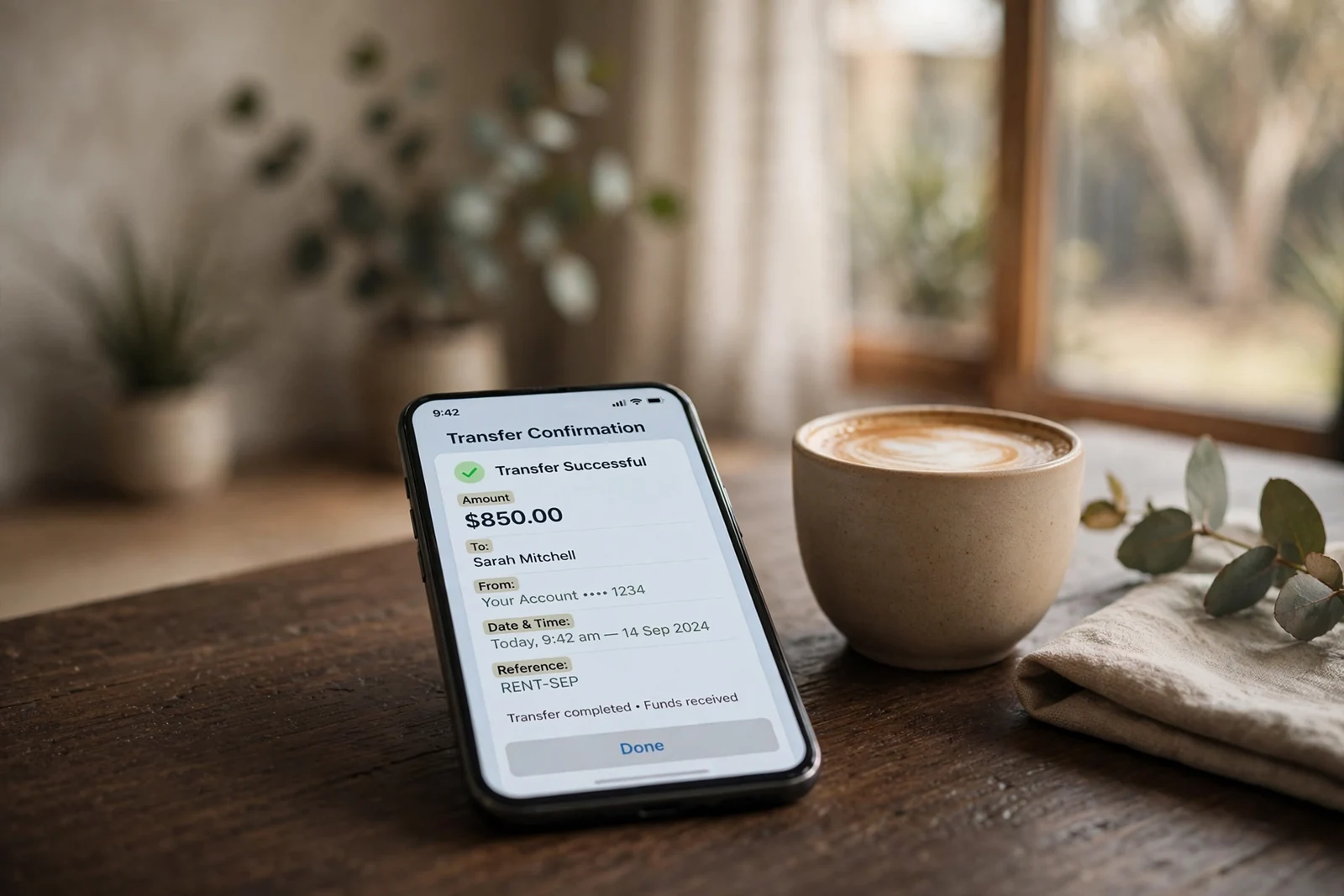
A more precise statement would identify the point from which the timing is measured: after approval, after release, or from submission of the request. Without that starting point, an “instant” claim is incomplete. A casino must not imply that the entire process from request to receipt is immediate. The payment phase may be fast, but that does not erase the earlier stages.
A useful reading of any claim keeps three questions separate: has the request been approved; has the operator released the funds; and has the transfer reached the linked bank account? The first two concern the operator’s process. The last concerns the payment and banking path. Collapsing all three into one word makes a claim sound more definite than the underlying process.
There is also a legal context that cannot be separated from the phrase “real money” in Australia. Under the Interactive Gambling Act 2001, operators are prohibited from providing real-money online casino games, including slots, poker and table games, to people physically located in Australia. The speed of a payment rail does not change that legal status.
The central point remains straightforward: PayID and Osko can move a released payment in real time, but they do not control when an operator approves or sends it. When “instant” is used, the meaningful detail is the stage it refers to. A fast rail is not the same thing as an instant request-to-receipt process.
What PayID Withdrawals Look Like in Practice
For an instant PayID withdrawal, check the casino’s current cashier details and withdrawal terms before depositing; the information here does not confirm PayID availability or instant payouts. These notes highlight only the verified details provided for each operator.
Payout speed: crypto 30-120 minutes, fiat 24-72 hours · Min. deposit: A$30 MrPacho lists crypto payouts at 30–120 minutes and fiat payouts at 24–72 hours. Its minimum deposit is A$30.
License: Curacao eGaming (Hollycorn N.V., since 2017) · Min. deposit: A$20-30 (depends on the offer) Playfina Casino is licensed by Curacao eGaming through Hollycorn N.V., with the stated licensing relationship dating to 2017. Its minimum deposit is A$20–30, depending on the offer.
License: Curacao Gaming Control Board OGL/2023/174/0082 (Dama N.V.) SpinsUp is listed with a Curacao Gaming Control Board licence, OGL/2023/174/0082, held by Dama N.V.
License: Curacao Gaming Control Board JustCasino is listed as licensed by the Curacao Gaming Control Board. No payout timing or deposit minimum is specified here.
License: Curacao eGaming OGL/2024/923/0383 (Antillephone N.V.) · Min. deposit: A$30 WinSpirit Casino is listed with Curacao eGaming licence OGL/2024/923/0383, held by Antillephone N.V. Its minimum deposit is A$30.
License: Curacao eGaming (Roby Games Ltd) Roby Casino is listed as licensed by Curacao eGaming through Roby Games Ltd. No payment or payout details are specified here.
License: Curacao Gaming Control Board (TechSolutions Group N.V.) Bizzo Casino is listed with a Curacao Gaming Control Board licence held by TechSolutions Group N.V.
License: Curacao · Min. deposit: A$20 (POLi) Lucky Dreams is listed as Curacao-licensed. Its stated minimum deposit is A$20 when using POLi.
License: Curacao · Payout speed: crypto 30-60 minutes, fiat 1-5 days · Min. deposit: A$10 Wild Tokyo is listed as Curacao-licensed, with crypto payouts at 30–60 minutes and fiat payouts at 1–5 days. Its minimum deposit is A$10.
License: Curacao – Antillephone N.V. (Versus Odds B.V.) · Min. deposit: EUR 20 Thor Casino is listed as licensed in Curacao by Antillephone N.V. for Versus Odds B.V. Its minimum deposit is EUR 20.
A PayID cashout has two separate clocks: the time an operator takes to approve the request, and the time for the payment to arrive after release. The second can be brief. The first is controlled by the operator’s checks, account status and withdrawal rules. “Instant” is therefore a description of the payment phase after approval, not a promise that money will arrive as soon as a request is submitted.
That distinction matters when comparing advertised times. A specialist review reported PayID withdrawals completed in under five minutes at the operators it assessed, while standard bank transfers in the same comparison took one to three business days. Another specialist review reported an average range of 30–90 seconds for the options it assessed. Those are reports about particular reviews and operators, not a dependable timetable for every request. They also do not establish how long an account review took before the payment was released.
Payout Speed Variations
Specialist reviews have reported PayID withdrawals completed in under five minutes, with some averaging between 30 and 90 seconds.
The practical sequence is less dramatic than the word “instant” suggests. The player submits a withdrawal request; the operator checks whether it can be approved; and, once released, the payment travels through the relevant payment process to the nominated account. If approval is held, the payment stage has not started. A fast transfer rail cannot remove an operator’s verification or security hold.
What can happen after a request is submitted
The withdrawal interface generally asks for an amount and payment details. The described process is to log in, open the Wallet or Withdrawal area, enter a PayID identifier, specify an amount and confirm. The interface may then show a pending status while the operator reviews the request. That status should not be read as evidence that funds have already been sent.
Account records matter here. Casinos must verify player identity through KYC procedures before processing withdrawals, and first withdrawals can prompt a request for identity documents. A specialist review also identifies first-time identity checks as a common reason a cashout takes longer than the payment estimate suggests. Until verification is complete, the operator may not release the funds.

Completing verification early can make later withdrawals faster because the same identity check may not need to interrupt each subsequent request. That does not mean every later cashout is automatic: an operator can still review a transaction or account, and the payment method and account details must remain consistent with its rules.
The PayID details should match those used for deposits, and withdrawals should go only to accounts linked to the casino profile. A mismatch can create a security question that is separate from the speed of the payment network. From an operational perspective, this is one of the simplest sources of avoidable delay: the request cannot move cleanly through the process if the receiving details do not align with the account history.
Automatic approval is conditional
Some specialist reviews describe top-tier PayID operators as automatically approving withdrawals below $5,000 AUD. That is a reported practice, not a universal rule or a guarantee that a request will clear without human involvement. “Auto-approval” means that a request may pass through a set of checks without a staff member handling each routine case. It does not mean identity checks have been waived, nor that every account or transaction qualifies.
- Use PayID details matching your deposit records
- Keep the receiving account linked to your casino profile
- Use inconsistent destination details
- Expect automatic approval for all account types
An automated decision still depends on the operator’s conditions. A request may be routed for manual review if the system detects something that needs checking, if account verification is incomplete, or if the requested amount falls outside the operator’s automatic-processing rules. The distinction is between routine approval and exceptions, not between a process with checks and one without them.
The amount can also matter. A specialist review lists withdrawals over $2,000 among common delay triggers. Separately, operators must disclose a manual review process for withdrawals exceeding $2,000. This does not establish that every request above that amount will be held, or that a request below it will be cleared automatically. It means the applicable terms should explain what review may occur. Large withdrawals may also be released in instalments under operator policy, so the total approved amount and the timing of each payment are not necessarily the same thing.
Clear limits are part of that picture. Per-transaction maximums may differ from weekly or monthly cashout limits, and a request can be affected by either. Reputable operators publish minimum and maximum withdrawal limits clearly; the terms should also state fees and processing times. A request that exceeds a stated limit may need to be changed or handled under a different policy, rather than simply travelling more slowly.

Why the first cashout can feel different
A first withdrawal is often where account checks become visible. Registration details, identity documents and payment details may need to be reconciled before release. A specialist review reports that first withdrawals often trigger identity verification requests, while another reports longer timing in a case where first-withdrawal security checks were involved. These reports illustrate the mechanism; they do not predict the handling time for any individual account.
The operator may also need to confirm that the account receiving the money belongs with the player profile. That is why using the same PayID details as for deposits and keeping the receiving account linked to the profile are operational requirements, not cosmetic preferences. A new or inconsistent destination can prompt a review even where the payment details themselves are valid.
Once verification is done, later requests may encounter fewer identity-related interruptions. Still, “verified” is not synonymous with “instant.” The operator may apply its withdrawal rules, check the request, or pause it for another reason. A reported fast payout can therefore coexist with a slower first cashout: the measures describe different stages.
Reading timing claims with care
A timing claim should identify what its clock starts and stops at. Does it measure the time from clicking confirm to operator approval, or from approval to arrival? Does it describe a routine withdrawal, or include first-time verification? Without that distinction, a number can sound like an end-to-end promise while measuring only one part of the process.
Understanding Payout Status
The player has requested the withdrawal, and it is currently awaiting operator approval.
Internal checks are complete, and the funds are ready for release to the payment rail.
The operator has issued the payment, and it is moving through the banking network to the account.
Specialist reviews have reported very short PayID payout times, including operator-specific averages of 47 seconds and 68 seconds, and a separate case averaging 3.2 minutes where first-withdrawal checks were involved. These are review findings about particular tests, not a service standard. They should not be treated as a forecast for a different account, request or operator. Other specialist reporting notes that some services advertised as “instant” took as long as 24 hours because of internal review. The word on a promotional page does not erase the approval queue.
A more useful reading separates three statuses: submitted, approved or released, and received. A request still awaiting approval is not yet in the payment phase. A released payment may arrive quickly, but the receiving bank’s processing window can also affect the final appearance of funds. If the operator gives a status or timestamp, it is worth establishing which stage it refers to before judging the delay.
There is also a legal limit to how this subject can be presented in Australia. The Interactive Gambling Act 2001 prohibits operators from providing real-money online casino games to people physically located in Australia. The mechanics described here are not an invitation to use such services, and no operator can lawfully market an offshore casino cashout as an Australian real-money offer.
Operationally, the central point is plain: PayID can make the transfer phase brief, but it cannot make an unverified account, a mismatched destination or a manual review disappear. “Fast” begins after clearance. Not before.

Bonuses Can Put a PayID Cashout on Hold
A bonus can change whether a balance is eligible for withdrawal, regardless of how a payout is later handled. The important distinction is between money shown in an account and money the terms allow to be cashed out. A balance can look available on screen while a wagering condition remains unfinished.
That is the part promotional language tends to blur. “No deposit” describes how an offer is funded; it does not, by itself, mean that any resulting balance can be withdrawn without conditions. The withdrawal question turns on the bonus rules attached to the offer, including what funds are subject to wagering and when the condition is considered complete.
I have seen this distinction cause confusion because the displayed balance is easy to notice, while the rule that governs it may sit in a separate set of terms. The interface shows a number. The terms define what that number means.
Which funds are covered by wagering
A wagering requirement sets out what activity must be completed before affected funds can be withdrawn. The wording matters because the requirement may apply to bonus funds alone or to the combined deposit and bonus. A specialist review describes both approaches; it does not establish that every offer uses either one in the same way.
Where only bonus funds are subject to wagering, the deposit is not included in that calculation. Where the rule covers the combined deposit and bonus, more of the balance is tied to the condition. That difference can materially change how much play is required before the account is treated as eligible for a cashout, even when the headline offer appears similar.
Wagering Requirement Types
Bonus-funds-only wagering applies only to the bonus amount. Combined wagering applies to both the deposit and the bonus, increasing the amount of play required before funds become withdrawable.
Bonus-funds-only wagering is the preferable structure from a player-protection perspective because it limits the funds caught by the rule. That is a comparison of terms, not a promise that a particular bonus is suitable or that completing the requirement will guarantee a withdrawal. Other conditions may still apply, and the wording of the offer remains decisive.
A useful way to read the clause is to identify its subject: does it refer to the bonus, or to the deposit and bonus together? Then look for the point at which it says funds become withdrawable. If those parts are unclear or separated across different pages, the offer’s headline cannot settle the issue.
A balance is not the same as withdrawable funds
In account displays, cash and promotional credit can appear close together, or be combined in a single balance. That presentation is convenient for play, but it can conceal the distinction between a cash balance and funds still governed by a bonus condition. The account total is not necessarily a statement that every amount in it is ready to leave.
The operational effect is straightforward: a withdrawal attempt can be held or declined while the wagering condition remains active. That is an eligibility issue, not a payment-speed issue. A fast payment method cannot make restricted funds eligible, and a payout method does not rewrite the bonus terms.
In my experience, disputes often begin with a mismatch in expectations. One side reads the balance as money already earned; the other reads the bonus clause as a condition that has not yet been satisfied. The wording may be legally important even when it is not prominent in the promotional message. Small print, large consequences.
This is why the full offer terms matter more than a short label such as “welcome bonus” or “no deposit bonus”. The label describes the promotion in broad terms. The wagering clause explains what must happen before the affected funds can be withdrawn. If the two seem to point in different directions, the detailed terms are the part that governs the eligibility question.
The rule should be read before accepting an offer
The clause should be checked for the funds it covers, the activity that counts towards completion, and what happens to the bonus balance if the offer is cancelled or the account requests a withdrawal. Those points determine how the promotion interacts with a cashout. A clear offer should make the relevant conditions understandable rather than relying on the headline to do that work.
It is also worth separating the deposit from the bonus in the account history where the system provides that information. A combined display can make it harder to see which part remains restricted. The terms may treat the deposit and bonus differently, so treating the displayed total as one freely available sum can lead to a mistaken expectation.
No particular wagering multiple or completion period can be assumed from the words “bonus” or “no deposit”. Those details belong to the individual offer terms. Where they are absent, vague, or inconsistent, it is not sound to infer a favourable rule from the promotion’s name.
Attention: A displayed account balance is not the same as withdrawable funds; bonus conditions must be satisfied before a cashout is permitted.
Why “no deposit” does not mean “no conditions”
A no-deposit offer can sound like money with no strings attached because it does not require a matching deposit. But the funding source and the withdrawal condition are separate matters. An offer may still attach wagering rules to its bonus funds, and the fact that no deposit was made does not remove those rules.
The same logic applies to a cash balance earned while a bonus is active. The relevant terms may define how the bonus and resulting balance are treated, so the distinction cannot safely be guessed from the way the funds were acquired. The clause should say what happens; if it does not, the promotional wording alone cannot fill in the gap.
From the operator’s side, wagering terms also serve as a boundary around a promotion: they specify when the bonus is treated as complete and when a withdrawal can be considered. From the player’s side, the practical concern is whether the condition applies only to bonus funds or also captures the deposit. That is why the scope of the clause matters more than the promotional label.
Australian context
There is a separate legal issue in Australia. Under the Interactive Gambling Act 2001, providing real-money online casino games to people located in Australia is prohibited for operators. Casino-style services such as online slots and table games fall within that prohibition.
The distinction remains important as a matter of understanding terms: a promotional balance and a withdrawable balance are not automatically the same thing. But a bonus clause cannot change the legal status of the service offering it. Nor does the phrase “instant PayID” resolve whether funds are eligible in the first place.
The practical reading is narrow. Establish which funds the wagering condition covers, and whether the terms say the condition has been completed. Until that is clear, a displayed balance should not be treated as proof that a cashout is permitted. Eligibility first. Payment later.
PayID Beside the Other Ways Money Moves
In Australia, comparing payment methods for real-money online casino play needs a legal qualification first. The Interactive Gambling Act 2001 prohibits operators from providing online casino games, including slots, poker and table games, to people physically located in Australia. Payment options described in industry material do not change that position or make such services lawful. This is a comparison of how payment methods are described, not a recommendation to use an online casino.
The practical distinction is between a payment network and the other steps surrounding a transaction. PayID works through the New Payments Platform (NPP), which enables real-time transfers between bank accounts. An e-wallet adds a separate account between the user and the merchant; a card payment travels through card-issuing and processing systems; and a traditional bank transfer follows bank procedures that may take longer. Cryptocurrency uses a different transaction system altogether. Those differences can affect the payment leg, but none guarantees that a withdrawal request will be approved or received immediately.
Uses the New Payments Platform (NPP) for real-time bank-to-bank transfers via an identifier.
Adds a separate account layer (e.g., PayPal, Skrill) between the user and the merchant.
Follows traditional banking procedures and may have longer settlement windows.
Uses digital asset networks to facilitate potentially near-instant transfers.
PayID and ordinary bank transfers
PayID’s main point of contrast with a conventional bank transfer is the underlying rail. PayID is an identifier used to direct a bank-to-bank payment through the NPP, rather than a separate wallet that holds funds. Osko may also be involved in processing real-time payments. Once a payment has been released into an eligible real-time payment process, the network is designed to move funds promptly. That does not mean every transaction labelled “instant” completes instantly from the moment it is requested.
A traditional bank transfer can have a longer settlement window. A specialist review reports that such transfers may take as long as five business days to complete. That figure is a reported possibility, not a fixed timetable for every bank or transaction. Banking cut-off times, weekends, checks and the receiving institution’s handling can all affect when money appears. The transfer may also be waiting for an organisation to approve and send it before the bank-processing period even begins.
An industry report also contrasts PayID payments with bank transfers that may take several working days. The useful point is the direction of the comparison, not a promise that PayID always beats every bank transfer in every circumstance. PayID and a standard transfer are both connected to bank accounts, but they need not use the same payment route or timing. The word “instant” describes the intended speed of the payment rail, not the whole chain of request, review, release and receipt.
E-wallets: a separate balance and another step
PayPal and Skrill are examples of e-wallets mentioned in Australian payment-method reviews. An e-wallet can create a layer between a bank account or card and a merchant account. That can be useful for managing payment activity separately, but it also means funds may need to move between more than one account before reaching a bank balance. The e-wallet’s own processing and withdrawal arrangements matter alongside the merchant’s.
The time estimates in specialist reviews are not uniform. One specialist review describes e-wallet transactions as often taking hours rather than days; another general timing description puts e-wallet withdrawals within a 24-hour processing window. These are reported estimates, not a guarantee or a universal market standard. They also may refer to different stages: a platform’s release of a withdrawal, the e-wallet’s receipt of funds, or the later movement from the wallet to a bank account.
That distinction is easy to miss in a “fast” payment claim. A wallet may receive an approved payment promptly while a subsequent withdrawal from the wallet follows its own schedule. Fees, account status and verification requirements can also differ by provider. The advertised label says little about which part of the route it measures. Separate steps. Separate clocks.
Compared with PayID, an e-wallet is not simply a faster or slower version of the same service. PayID routes money between bank accounts using an identifier; an e-wallet maintains a distinct account balance and may offer its own transfer options. Which arrangement is more suitable depends on the provider’s terms and the exact transaction being discussed, rather than a broad claim that one method is always superior.
Legal Prohibition
Under the Interactive Gambling Act 2001, providing real-money online casino games to people physically located in Australia is prohibited.
Cards and their different constraints
Card payments are often grouped together in payment comparisons, but credit and debit cards do not have identical roles. Payment-method reviews describe both types as part of the broader Australian payment landscape, and they report that card payments may take several days. That description is not permission to use a credit card for online gambling: the market constraints prohibit accepting credit card payments for online gambling services in Australia.
A card transaction can involve the merchant, a payment processor, the card network and the issuing bank. A refund or payout to a card may not follow the same route as a purchase, and not every card supports receiving withdrawals in the same way. A payment method being available for a deposit does not establish that it can also receive a withdrawal. Debit cards are distinct from credit cards, but their availability and processing still depend on the relevant provider and arrangement.
This is why comparisons should not rely on a single advertised time. A card may be authorised quickly at one stage while a later return of funds takes longer. PayID’s real-time bank-to-bank design is different from the card network’s process, but speed claims require a clear description of what is being timed. The request, approval and final receipt are separate events.
Cryptocurrency and prepaid vouchers
Some specialist reviews describe cryptocurrency transactions as capable of being near-instant. That is a description of a potential transaction speed, not a dependable promise about the full experience. A transfer can involve network confirmation, the recipient’s handling and conversion or withdrawal arrangements. A payment being visible on a blockchain does not itself mean that an organisation has approved a withdrawal or that the funds are available in an Australian bank account.

Cryptocurrency is also a different kind of payment from PayID. PayID moves funds between bank accounts through Australia’s payment infrastructure; cryptocurrency transfers use a digital asset network. The two are not interchangeable, and their timing, custody and value risks differ. The fact that some payment reviews mention cryptocurrency does not establish that a particular service accepts it or that the service is lawful to provide to people in Australia.
Prepaid vouchers sit at the other end of the comparison. A specialist review describes prepaid cards and vouchers such as Neosurf as generally suited to deposits rather than withdrawals. They can represent a way to load value, but that does not make them a route for receiving money back. A deposit-only option therefore cannot be compared with PayID as though both handle the full movement of funds in both directions.
What the comparison actually tells us
The payment method is only one part of any transaction. PayID’s connection to the NPP explains why the payment rail can support real-time bank transfers. E-wallets add a separate account and provider process; bank transfers may take several business days according to specialist reporting; card payments may also take several days; cryptocurrency can be near-instant in some descriptions; and prepaid vouchers are generally presented as deposit-only. None of those descriptions can replace a clear account of what is being measured.
The most important comparison is therefore not a league table of “fastest” methods. It is the route the money follows and the stage to which a time estimate applies. A real-time rail can move funds quickly after release, while a separate review or provider process may take longer. Conversely, a method with a slower reported range may still be predictable when its terms explain the stages and limits.
For Australia, there is a further boundary that payment comparisons cannot erase: real-money online casino services are prohibited when provided to people physically in the country. References to PayID, e-wallets, cards, cryptocurrency or vouchers describe payment mechanisms and reported industry practices; they should not be read as an endorsement of casino access or as evidence that an operator may lawfully offer those games here.
How fast are withdrawals?
PayID transfers can arrive in real time once the casino releases the funds, but checks beforehand can delay the overall withdrawal; some advertised instant withdrawals have taken up to 24 hours. E-wallet withdrawals are typically processed within 24 hours, while bank transfers and card payments may take several days.
What are easy withdrawal casinos?
They are casinos with a clear withdrawal process, published limits and fees, and fast payment options such as PayID. Some Australian PayID casinos have auto-approval for withdrawals under $5,000 AUD, though checks may still delay a payout.
How do you choose the best easy withdrawal casino site?
Look for clearly published processing times, withdrawal limits and fees, and a fast option such as PayID. Check whether the site explains verification and manual reviews, and complete identity checks early to help avoid delays.
What payment methods are available?
Australian casino payment options can include credit and debit cards, PayPal and Skrill, bank transfers, and—in some cases—cryptocurrency. PayID and POLi instant banking are also offered by some casinos; prepaid vouchers such as Neosurf are usually for deposits rather than withdrawals.
Published by the Malina Casino team.