
Casinos That Accept POLi in Australia: What to Check
 Available in AU
POLi availability, game access, operator claims and withdrawals require separate checks rather than assumptions based on an Australian label.

- POLi and Online Pokies: What the Available Evidence Can Establish
- POLi Deposits: The Details That Still Need Verification
- Assessing Casino Payment Claims Without an Operator Shortlist
- POLi Withdrawals: Do Not Assume Deposits Work Both Ways
- The Australian Legal Context for Offshore Online Casinos
- Casino Games and POLi: Separate Game Access from Payment Support
- What “Australian Casino” Means in a POLi Search
- Withdrawal Conditions to Check Separately from POLi Deposits
- Paying Online in Australia: POLi Claims and Other Common Methods
- Bonus Terms Do Not Verify a POLi Payment Option
POLi and Online Pokies: What the Available Evidence Can Establish
POLi and online pokies are often discussed together as though a familiar payment service automatically identifies a set of suitable casino sites. It does not. A payment method’s presence in Australian online commerce says nothing, by itself, about whether a particular gambling cashier offers it. Nor does a site’s use of Australian-facing language establish that POLi is available there.
I have learned to separate three claims that advertising can blur: that an operator is aimed at Australians, that it offers online casino games, and that its cashier supports a particular payment method. Each is a separate matter. Evidence for one does not prove the others. A page describing a casino as Australian, for instance, cannot establish local licensing or POLi support simply by using that label.
The same distinction applies to searches for mobile pokies and POLi. A site may have a mobile version or app, but that feature does not establish what payment choices appear in its cashier. Likewise, a payment brand appearing in general information about Australian consumers does not show that it is accepted for gambling transactions. These are different questions, and they require different evidence.
POLi availability can be an important part of choosing an online casino in Australia. Use these details to check what is known about each option, and confirm payment availability before depositing.
Payout speed: crypto 30-120 minutes, fiat 24-72 hours · Min. deposit: A$30 MrPacho lists a minimum deposit of A$30. Its stated payout times are 30–120 minutes for crypto and 24–72 hours for fiat.
License: Curacao eGaming (Hollycorn N.V., since 2017) · Min. deposit: A$20-30 (depends on the offer) Playfina Casino is licensed by Curacao eGaming under Hollycorn N.V., with the license noted as dating from 2017. Its minimum deposit is A$20–30, depending on the offer.
License: Curacao Gaming Control Board OGL/2023/174/0082 (Dama N.V.) SpinsUp is licensed by the Curacao Gaming Control Board under OGL/2023/174/0082, issued to Dama N.V.
License: Curacao Gaming Control Board JustCasino is listed as licensed by the Curacao Gaming Control Board.
License: Curacao eGaming OGL/2024/923/0383 (Antillephone N.V.) · Min. deposit: A$30 WinSpirit Casino is licensed by Curacao eGaming under OGL/2024/923/0383, associated with Antillephone N.V. Its minimum deposit is A$30.
License: Curacao eGaming (Roby Games Ltd) Roby Casino is listed as licensed by Curacao eGaming, with Roby Games Ltd named in connection with the license.
License: Curacao Gaming Control Board (TechSolutions Group N.V.) Bizzo Casino is listed as licensed by the Curacao Gaming Control Board, with TechSolutions Group N.V. named in connection with the license.
License: Curacao · Min. deposit: A$20 (POLi) Lucky Dreams explicitly lists POLi as a deposit option, with a minimum deposit of A$20.
License: Curacao · Payout speed: crypto 30-60 minutes, fiat 1-5 days · Min. deposit: A$10 Wild Tokyo lists a minimum deposit of A$10. Its stated payout times are 30–60 minutes for crypto and 1–5 days for fiat.
License: Curacao – Antillephone N.V. (Versus Odds B.V.) · Min. deposit: EUR 20 Thor Casino is listed as licensed in Curacao by Antillephone N.V. (Versus Odds B.V.). Its minimum deposit is EUR 20.
A dependable POLi claim would need to be tied to the specific operator and the relevant cashier, rather than inferred from broad statements about Australian payments. Payment options can be operator-specific and may change. A general description, an old mention, or a logo shown outside the payment flow may not reflect what is currently offered. That is a practical distinction, not a technicality.
The wording matters. “Supports POLi” may refer to a payment option at some point in the account journey, while a claim about a particular casino can sound like a current, confirmed feature. If the claim is not tied to the actual operator and its current information, the language can imply more certainty than it earns. On this subject, precision is more useful than a long list of names.
I would not treat “best” or “new” as evidence either. Those words are promotional labels, not proof of a payment feature. A ranking can compare sites only when its criteria are clear and its individual claims can be checked. Without that, a recommendation risks turning an unconfirmed payment association into an endorsement. No shortlist should be inferred from general habits or from the popularity of a payment service.
There is also a more fundamental Australian context. The Interactive Gambling Act 2001 bars operators from providing real-money online casino-style games to people in Australia. The restriction covers services such as poker, table games and pokies, not merely one format or device. The Australian Communications and Media Authority is responsible for enforcing that law. A POLi label does not change the legal status of the gambling service it is attached to.
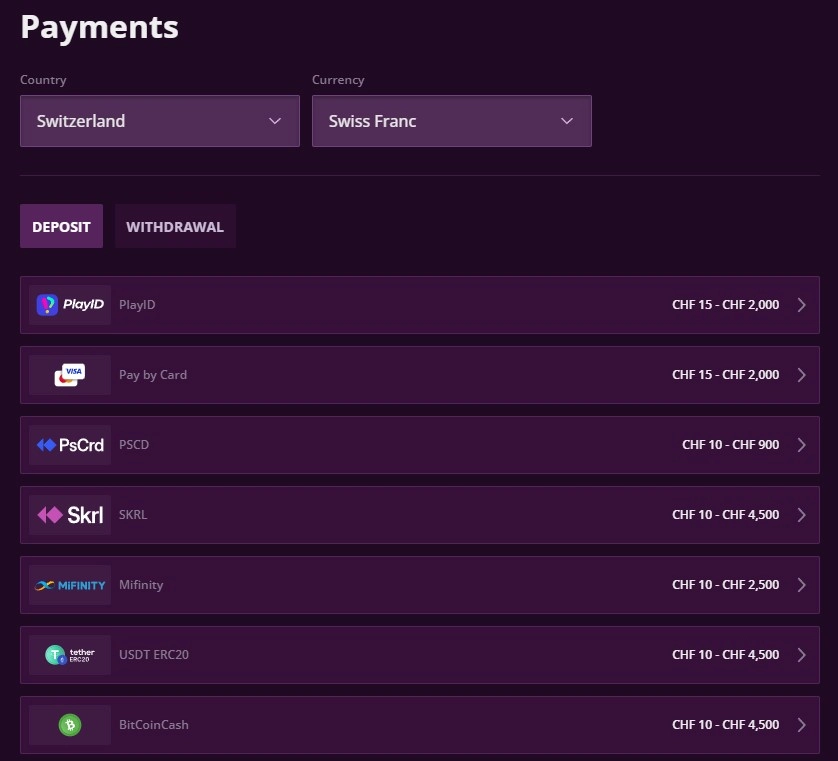
That distinction matters because a payment method can look like a simple convenience feature while the underlying service raises a separate legal issue. Describing a site as “Australian” or an option as “local” does not make an offshore casino a locally authorised service. Australian consumer law also does not protect players using offshore casinos. The payment claim and the consumer-protection position should not be folded into one reassuring phrase.
In my experience, the cleanest way to assess such language is to ask what exact proposition it supports. A statement that a cashier lists POLi is narrower than a claim that the casino is suitable for Australians. Neither statement, on its own, establishes that real-money casino play is lawful for operators to provide in Australia. Marketing tends to compress those distinctions. The wording should not.
This is why a responsible account of POLi and online pokies cannot turn the phrase “casino that accepts POLi” into a verified operator list without specific, current support for each name. General payment familiarity is not enough. A mobile layout is not enough. Nor is a broad Australian label. The claim has to remain limited to what can actually be established, with the legal context kept visible rather than hidden behind a cashier logo.
There is no shortcut here. A method name is not a licence, a ranking is not verification, and a payment feature does not settle whether the service itself may lawfully be offered to Australians.
Legal Status
The Interactive Gambling Act 2001 prohibits operators from providing real-money online casino-style games to people in Australia. A POLi label does not change the legal status of the gambling service.
POLi Deposits: The Details That Still Need Verification
A deposit claim has to answer more than whether a payment name appears somewhere on a casino website. For POLi, the key question is whether it is offered as a deposit option to Australian customers at the point a payment is made. A logo, a general payment-methods page or a reference in promotional copy does not, by itself, establish that.
The cashier is where a deposit option becomes operational rather than merely advertised. Even then, its appearance should not be confused with a complete account of the conditions attached to it. Deposit rules may be described in the cashier, payment terms or account terms, and the wording can differ between those places. The practical detail is the combined picture: what method is available, which transaction it applies to, and what conditions accompany it.
What a deposit claim needs to establish
A useful statement about POLi deposits would identify the availability of the method and the scope of that availability. It would distinguish a deposit option from any other payment function, and make clear whether the statement applies to Australian customers. If the method is unavailable in the cashier for a particular account, a broad claim on a site page would not settle that point.
The amount is a separate issue. A search for a small fixed deposit does not establish that a casino permits that amount through POLi. Deposit minimums and maximums are operator-specific terms, not properties that can be inferred from the payment method’s name. A figure should therefore be tied to the relevant cashier and terms, rather than repeated as if it applied across casino sites. No figure can sensibly stand in for confirmation of the method itself.

The same care applies to instructions. A description of how to make a POLi deposit would need to reflect the actual steps presented by the operator and payment service at the time. It should not be assembled from assumptions about bank-linked payments, nor borrowed from instructions for cards, wallets or another route. A plausible sequence is still not evidence of the procedure in a particular cashier.
I have seen how a payment label can do a lot of work in a short piece of copy. “Available” sounds definitive, but it leaves basic questions unanswered: available to whom, for which transaction, and under what conditions? Those distinctions matter before any amount or process is described.
Conditions that belong beside the method
A deposit method can have conditions beyond its presence in a list. The operator’s terms may define eligibility, transaction handling, fees or other restrictions. Those details should be read as terms of the particular service, not assumed from the POLi label. Where the cashier and the written terms do not align, the mismatch itself is important; marketing language cannot resolve it.
Account checks are another part of the deposit context. Online casinos commonly carry out Know Your Customer checks before allowing financial transactions. That means an account’s ability to make a deposit may involve verification requirements, rather than being determined solely by the chosen payment method. The nature and timing of any checks should not be invented or treated as identical between operators.
Fees also require exact wording. A claim that a deposit is “free” needs to specify whether it refers to an operator charge, a payment-service charge or some other cost. Without that distinction, the word can imply more than it establishes. The same applies to transaction limits and processing descriptions: they need to be stated as operator terms, not presented as general characteristics of POLi.
- Tie deposit claims to the specific operator and current cashier
- Verify deposit minimums and maximums in the relevant terms
- Confirm verification requirements and account checks
- Infer availability from general payment logos or promotional copy
- Assume deposit amounts apply across all casino sites
- Use generic bank-linked payment instructions as proof of procedure
A small-deposit phrase is not a deposit rule. Nor does a low threshold, even if stated somewhere, tell the whole story about method availability, account eligibility or fees. The amount, the payment route and the conditions are separate pieces of information.
Keep the claims narrow
The clearest description of a POLi deposit would be restrained: it would identify the specific cashier option, state the applicable deposit conditions, and avoid extending a site-specific detail into a market-wide promise. If those details are not made clear, the careful conclusion is not that the method works in a particular way; it is that the claim has not established the necessary terms.
That distinction also prevents a common category error. A casino may list a method generally, while the deposit cashier presents a different set of options for an account or transaction. A deposit procedure cannot be confirmed from an unrelated payment guide, and a method’s name cannot supply missing amounts, fees or instructions. Keep each assertion attached to the evidence that supports it.
There is a further boundary for Australian residents. Australian consumer law does not protect players who use offshore casinos. A polished cashier or detailed payment wording does not change that position. Clarity about a deposit is not the same thing as consumer protection.
No shortcuts.
Assessing Casino Payment Claims Without an Operator Shortlist
A page describing the best casino sites that accept POLi needs more than a payment-method label beside an operator’s name. The claim has to be attributable to the actual site, relevant to Australian customers and current enough to reflect what its cashier offers. Without those checks, a ranked shortlist would turn an unconfirmed statement into an apparent recommendation.

I have seen how easily a payment claim can outlive the arrangement it describes. A page may say that a site takes a particular method, while the cashier’s available options have changed or the statement was never confirmed for the market in question. The wording remains confident; the underlying offer may not. A polished comparison table does not fix that gap.
What a site-level claim needs to establish
The key distinction is between a general description of a payment service and confirmation that a specific operator currently supports it. A claim that a casino accepts POLi should identify the operator and make clear that the option is available to customers in Australia. A broad statement about Australian payment habits does not establish either point.
The same standard applies to labels such as “best POLi casino” or “top site”. Those are judgments, not proof of payment support. Before a comparison could be meaningful, each entry would need a dependable basis for its POLi claim, with the scope of that claim stated plainly. Without that, ranking sites would create an impression of verification that the wording cannot carry.
This is where “trusted” often does too much work. In practice, it can be a decorative adjective attached to a name, rather than an explanation of what has been checked. The useful detail is the specific basis for the statement and whether it applies to the relevant customer and transaction. A badge is not a method.
Why similar labels can mislead
“POLi casino” can be read as a description of the payment cashier, but it may also be used as loose promotional shorthand. A site might be discussed alongside POLi without the claim being confirmed at the operator level. That is not enough to identify a casino that takes POLi.
Attention: A site may be discussed alongside POLi without the claim being confirmed at the operator level; this is not enough to identify a casino that accepts the method.
The same caution applies to claims about instant POLi withdrawals. A statement about a payment method does not, by itself, establish that it is offered for every kind of transaction. Deposit support and payout support are distinct claims and should not be merged into one convenient label. Nor does the word “instant” establish a processing commitment unless the operator’s terms clearly say what it covers.
I would not treat repetition as corroboration. Several pages can repeat the same description while ultimately relying on one untested claim. A list that appears in multiple places may look settled, but the number of repetitions says nothing about whether the cashier supports the method now.
What a responsible comparison can say
Where operator-level confirmation is unavailable, the accurate choice is not to fill a table with likely candidates. It is to leave the operator claim unmade. That may look less complete than a list of the best POLi casino sites, but it avoids assigning a payment feature to a business without a sound basis.
This matters especially when a heading promises “best” sites or “POLi pokies” destinations. Such wording can imply that the named operators have been assessed and that the payment method connects to their gambling products. Neither implication follows from a broad payment claim. The presence of games on a site would not establish POLi support, and payment support would not establish the availability of any particular game.
The same restraint applies to a site described as Australian. The label alone does not establish local authorisation, local consumer protection or a functioning payment route. Australian consumer law does not protect people using offshore casinos. That is a material limit, not a footnote that can be offset by a confident rating.

A sound assessment is therefore narrow: separate what is stated about a payment method from what is actually established about a named operator. If the operator-level link cannot be supported, there is no reliable shortlist to rank. No shortlist is better than a convincing one built on inference.
POLi Withdrawals: Do Not Assume Deposits Work Both Ways
A payment method shown beside a deposit option is not automatically a payout route. That distinction matters whenever a casino page describes POLi as supported: the claim may refer only to money going into an account, not winnings coming back out. A label in a cashier is narrow evidence. It does not establish that the same method is available for withdrawals.
I have seen payment language treated as if it described a complete journey. It often does not. Deposit and withdrawal rules can be set separately, and the cashier may present different methods for each direction. For POLi, no general conclusion about withdrawal availability follows from a deposit claim. Nor does a site calling a withdrawal “instant” establish what that means in practice: it could refer to an internal approval step, rather than funds reaching a bank account immediately.
The wording matters. “Instant withdrawal” is an attractive promise, but it can compress several separate events into one phrase: a request being submitted, the operator reviewing it, a payment being sent, and the receiving institution processing it. Without a specific, applicable term explaining which stage is meant, the phrase is not a dependable description of the whole payout. I would not treat it as a POLi processing commitment.
Deposit support and withdrawal support are distinct claims. A payment method shown for deposits is not automatically available as a payout route.
Account checks can also sit between a withdrawal request and its release. Online casinos commonly conduct identity and customer checks before handling financial transactions. That means a payment method’s apparent speed cannot, by itself, tell the whole story about when a payout might be sent. The relevant terms need to explain what verification is required and whether it must be completed before a withdrawal can proceed.
A careful assessment separates four questions: whether POLi is listed for deposits, whether it is listed for withdrawals, what conditions apply to each direction, and what “instant” describes. These are not interchangeable details. A deposit button answers only the first question. A general payments page may not answer the second, while a headline about fast payouts may omit both the method and the conditions.
The same caution applies to searches for a POLi withdrawal casino in Australia. A phrase associating a casino with POLi does not prove that withdrawals use POLi, or that the operator currently offers it. Payment pages and terms can change, and a method’s presence in one part of a site should not be read as confirmation elsewhere. Specificity matters. A clear statement should identify the payout method and its conditions, rather than relying on a broad claim that the site “supports” POLi.
There is also a boundary advertising language tends to leave out: Australian consumer law does not protect players using offshore casinos. That leaves a practical gap between a marketing description and the recourse available if a payout is disputed. The wording is not a guarantee. It is a claim to examine.

The useful conclusion is limited but firm: deposit support and withdrawal support are separate claims. “Instant” does not resolve that difference, and it does not establish that POLi can be used to receive funds. Until the payout method and its terms are stated specifically, neither should be assumed. No shortcut.
The Australian Legal Context for Offshore Online Casinos
A payment method does not change the legal status of the service receiving the money. POLi appearing in a cashier, or being mentioned in a casino’s promotional material, would not make an online casino lawful for people in Australia. The legal question concerns the service offered to someone physically in the country, not the label attached to the payment route.
Under the Interactive Gambling Act 2001, operators are prohibited from providing real-money online casino games to people in Australia. The restriction covers casino-style services such as poker, blackjack, roulette and pokies. It is directed at providers: the law does not explicitly make an individual player’s use of an offshore site a criminal offence. Those are separate points, and blending them creates a misleading impression of what the law says.
The Australian Communications and Media Authority, or ACMA, oversees enforcement of the Act. That role does not turn an offshore operator into a locally authorised business, nor does a site’s continued visibility establish that it is permitted to serve Australian customers. Access and legality are not the same thing.
The practical consumer-protection gap matters. Australian consumer law does not protect players who use offshore casinos. If a dispute arises over an account, a balance or the handling of a transaction, the protections available for a domestic consumer purchase cannot simply be assumed to apply. A site may use Australian-facing language or display a familiar payment option; neither feature establishes local accountability.
Consumer Protection
Australian consumer law does not protect players who use offshore casinos, regardless of the payment methods available in the cashier.
I have seen how payment language can distract from the more basic question of who is legally providing the service. A cashier is a transaction interface, not a licence. “Australian players welcome” is marketing language, not proof that the operator may lawfully offer casino gambling to people in Australia. Short distinction. Important one.
This context also limits what can responsibly be said about a casino accepting POLi in Australia. A payment claim, even if accurately displayed by a particular operator, would not settle whether the operator is permitted to offer its casino service here or what recourse a customer would have in a dispute. Payment availability and legal status are different matters.
The point is not that the player is expressly criminalised for using an offshore site; the Act does not explicitly say that. It is that the operator is prohibited from supplying the service to people in Australia, while a customer using an offshore casino lacks the protection of Australian consumer law. Those limits should remain visible whenever a payment method is discussed.
Casino Games and POLi: Separate Game Access from Payment Support
A cashier and a game catalogue answer different questions. The cashier describes how an account might be funded; the catalogue describes the entertainment a service makes available. Seeing POLi mentioned beside a casino payment option would not, by itself, show which games are offered or establish that any particular game can be accessed through POLi.
That distinction is easy to blur in promotional wording. “Play with POLi” can sound as though the payment service is attached to the games themselves. In practical terms, a payment method is not a game feature. It does not change a game’s rules, determine what appears in a catalogue or establish that a casino supports POLi. Those are separate claims and need separate evidence.

I have seen how labels can do more work than the terms behind them. A payment badge may refer only to a deposit route, while a game page describes the catalogue. Neither label proves the other. Read narrowly. Claims about games need to be supported by information about game access; claims about POLi need to concern the cashier. A broad phrase joining the two does not fill the gap.
The wording “POLi casino games” can therefore suggest a connection that has not been demonstrated. It might mean games at a casino that also mentions POLi, or it might imply that POLi is somehow part of the game experience. Those are not equivalent descriptions. Without reliable, current details about a particular service, the phrase cannot identify a POLi-supported game or establish that POLi is available for casino payments.
There is also a market-level distinction. Under the Interactive Gambling Act 2001, operators may not provide real-money online casino games to people physically located in Australia. A payment label does not alter that legal position or turn an otherwise prohibited service into a permitted one. Australian consumer law does not protect players using offshore casinos. The payment and game questions remain separate; neither should be read as assurance of lawful access or consumer protection.
The useful editorial test is simple: keep the claims in their own lanes. A statement about a cashier should not be presented as proof of game availability, and a catalogue description should not be treated as proof of POLi support. Promotional shorthand often compresses those ideas into one phrase. That compression is not evidence.
Payment vs Games
A payment method is not a game feature and does not establish the availability of any particular game or lawful access to the service.
No special category of “games using POLi” follows from the payment method. The phrase can describe, at most, a supposed relationship between a casino’s payment options and its catalogue; it does not establish that relationship. Separate claims. Separate proof.
What “Australian Casino” Means in a POLi Search
“Australian casino” can describe several different things, and those meanings are easy to blur when POLi appears in the same phrase. It might mean a business based in Australia, a site designed for Australian customers, or simply a casino that accepts Australian dollars or Australian payment methods. None of those descriptions, on its own, establishes that the operator is licensed to provide online casino games in Australia.
That distinction matters because the legal position is not defined by branding or currency. Under the Interactive Gambling Act 2001, operators cannot provide real-money online casino games to people physically in Australia. The Australian Communications and Media Authority enforces the law. A site calling itself Australian does not change that framework.
The same care applies to payment labels. A cashier showing an Australian-facing currency or banking option would not prove that POLi is available, nor would it establish the operator’s location or legal status. Payment support is a separate operational detail; the word “Australian” is a market label, not a payment specification.
I have seen labels do too much work in commercial copy. “Local” can sound like a claim about ownership, oversight and customer recourse, even when it refers only to the audience a site seeks. Those are different propositions. The wording may be polished; the underlying distinction remains.
For an Australian resident, the more consequential point is that consumer law does not protect people using offshore casinos. The absence of player liability for using an offshore site is not the same as local regulation, approval or protection. And a site’s claimed connection to Australia does not supply those protections.

So “Australian casino with POLi” should not be read as a single verified status. It combines two separate claims: a relationship to the Australian market and support for a particular payment service. Each would need to be established on its own, and neither can be inferred from the other. The label is not evidence.
Withdrawal Conditions to Check Separately from POLi Deposits
A deposit method and a withdrawal method are separate entries in a casino’s cashier. A POLi label beside deposits would not, by itself, show that winnings can be returned through POLi. Nor does a payment option establish how a withdrawal is reviewed or when funds might arrive. Those details need their own clear terms.
The useful distinction is between method eligibility and payout conditions. Terms should state whether a withdrawal can go to the same payment channel used for a deposit, whether another method is required, and whether the account must meet verification requirements first. Online casinos commonly conduct a Know Your Customer check before processing financial activity. That check can affect when a payment is released, but it does not establish a POLi payout route or a processing timeframe.
I have seen payment wording blur these separate stages. “Fast withdrawals” may describe a general marketing claim, not a commitment about a particular bank-linked service. The operative detail is the cashier and the withdrawal terms: which methods are listed for payouts, what documentation is required, and whether fees or other conditions apply. Any condition should be read as applying only where the operator actually publishes it; it cannot be inferred from the deposit screen.
Withdrawal Verification
- Check if POLi is explicitly listed in the payout section of the cashier
- Review the operator’s terms for specific withdrawal conditions
- Identify required identity and Know Your Customer (KYC) checks
- Confirm if the payout must return to the original deposit method
A POLi withdrawal claim therefore needs explicit support in the operator’s current payout information. A reference to POLi in deposit instructions, a general statement about bank payments, or an account’s ability to receive deposits is not enough to confirm withdrawals. Where the terms do not clearly identify POLi as a payout option, the status remains unestablished. No assumed timeline.
There is also a wider Australian limit. The Interactive Gambling Act 2001 makes it unlawful for operators to provide real-money online casino services to people in Australia. Australian consumer law does not protect players using offshore casinos, so a payment dispute may not have the protections a domestic consumer service would provide. That matters regardless of which method appears in a cashier.
Paying Online in Australia: POLi Claims and Other Common Methods
Australian payment habits are not tied to one channel. People move between cards, mobile wallets and services connected to bank accounts, such as PayPal, depending on what a merchant accepts and what suits the transaction. That flexibility can make a payment brand look more widely interchangeable than it is. Each provider still has its own acceptance rules.
Contactless credit and debit cards are accepted almost everywhere in Australia. Google Pay and Apple Pay are also accepted almost everywhere. Those facts describe everyday payment acceptance across the country; they do not establish which methods a particular online service supports. Familiarity at a shop counter is not evidence of availability in an online cashier.
That distinction matters when POLi appears beside casino-related wording. A payment method used in one part of the Australian market cannot be assumed to appear in every other setting. Nor does a list of familiar alternatives establish that a particular operator accepts any one of them. The cashier’s actual options, rather than a broad description of Australian payment habits, determine what a service offers.
From the other side of the counter, payment labels are often treated as if they were interchangeable badges. They are not. A card, a mobile wallet and a bank-linked service involve different arrangements, and a merchant’s support for one says nothing definitive about another. Familiarity is not compatibility.

The practical reading is narrow: Australian consumers commonly switch among cards, mobile wallets and bank-linked services, while contactless cards and major mobile wallets have broad acceptance in everyday commerce. That context helps explain why several payment names may appear together in general discussions. It cannot verify a POLi option for any casino cashier, or establish that casino-related use is available. Keep the categories separate.
Bonus Terms Do Not Verify a POLi Payment Option
A bonus and a payment method answer different questions. Bonus wording describes an offer’s conditions; a cashier’s payment list describes the methods an operator says it supports. Seeing POLi mentioned near a bonus does not establish that POLi is available for deposits, or that the offer can be used with a POLi payment.
This distinction matters because promotional copy is often compressed. A page may discuss a welcome offer and list payment methods nearby, but proximity is not a condition. Nor does a phrase such as “POLi casino bonus” tell anyone whether a payment qualifies, whether the offer applies to that payment, or what restrictions govern the offer. Those details would need to be stated in the relevant terms.
I have seen how easily separate pieces of commercial copy get read as one promise. A headline attracts attention; the terms carry the operative conditions. Neither should be treated as a substitute for the other. If payment eligibility is not explicitly addressed, the bonus language cannot fill that gap.
The same restraint applies to claims about POLi-specific promotions. Calling an offer a POLi bonus would still not verify that a casino accepts POLi, and it would not establish any particular bonus amount, wagering condition, or withdrawal rule. Those are separate claims requiring separate confirmation.
There is a further Australian context: real-money online casino services are prohibited for operators serving people in Australia, and Australian consumer law does not protect players using offshore casinos. Promotional wording does not change that position. A bonus label is not a payment confirmation. Nor is it consumer protection.
Which online casinos accept American Express for deposits?
Jackpot City Casino, Spin Palace, Ruby Fortune, Ignition Casino, Joe Fortune, and PlayAmo are listed as supporting Amex deposits for Australian players. Check the casino’s current cashier, since payment options can vary.
How do you check if casino sites accept Amex deposits?
Check the casino’s cashier for American Express as a deposit option. To make a deposit, select Amex, enter your card details and the amount in AUD, then submit the payment.
Are there any fees associated with using American Express at online casinos?
Amex deposits typically have no fee, but a casino may apply a 1.5% surcharge, and a 3% currency conversion fee may apply. Withdrawal fees can also apply, depending on the casino.
Why does my Amex deposit get declined at some casinos but not others?
Amex may block payments to a particular website, and Australian banks may block gambling-related transactions on Amex cards. Payment acceptance can also differ between casinos.
Can you use an American Express gift card at an online casino?
Yes, at casinos that accept American Express, an Amex gift card can be used for deposits only.
Can I withdraw winnings directly to my American Express card?
Some casinos allow Amex withdrawals, but others do not; a prior Amex deposit may be required. Withdrawals can take up to five days to clear, and fees may apply.
Created by the ”Malina Casino” editorial team.