
Casinos That Accept PayID in Australia: What’s Verified
 Available in AU
The legality of an online casino service in Australia comes before whether its cashier displays PayID.

- The Australian Online Casino Context
- What Can Be Verified About PayID-Accepting Casino Sites
- PayID Deposits: Details That Need Confirmation
- Australian Casinos and PayID: What the Evidence Supports
- PayID and Casino Games: No Verified Game-Specific Details
- PayID Withdrawals: No Confirmed Processing Information
- Real-Money Casino Payments and PayID: What Cannot Be Confirmed
- Paying with PayID: Acceptance Must Be Verified
- PayID Casino Bonuses: No Verified Offer Details
The Australian Online Casino Context
PayID searches can make an online casino seem like an ordinary payment choice: identify a service, check its cashier and decide whether to use it. In Australia, that framing leaves out the more important issue. The law distinguishes between a person using a service and an operator providing one. For online casino games, that distinction sets the context before any payment method is considered.
The Interactive Gambling Act 2001 bars operators from providing real-money online casino games to people in Australia. The rule concerns the service offered, not whether a particular site lists a familiar payment option. A casino-style game does not fall outside that framework because it is described as entertainment, offered through a mobile site or paired with a bank-linked payment method. The legal question is the nature of the gambling service and whether it is provided to people located in Australia.
That point is easy to lose in payment-focused language. A page may describe a casino as “Australian” because it accepts Australian currency or is accessible to Australian visitors. Those labels do not establish that the operator may lawfully provide real-money casino gambling in Australia. Nor does a payment option alter the status of the underlying service. The cashier is one part of a transaction; it does not decide whether the gambling offer itself is permitted.
PayID availability can vary, so check the payment options shown by a casino before depositing. This list gives a concise reference to the details available for each operator.
Payout speed: crypto 30-120 minutes, fiat 24-72 hours · Min. deposit: A$30 The available payout details list crypto withdrawals at 30–120 minutes and fiat withdrawals at 24–72 hours. The minimum deposit is A$30.
License: Curacao eGaming (Hollycorn N.V., since 2017) · Min. deposit: A$20-30 (depends on the offer) Playfina Casino is listed under the Curacao eGaming license held by Hollycorn N.V. since 2017. Its minimum deposit is A$20–30, depending on the offer.
License: Curacao Gaming Control Board OGL/2023/174/0082 (Dama N.V.) SpinsUp is listed under Curacao Gaming Control Board license OGL/2023/174/0082, held by Dama N.V.
License: Curacao Gaming Control Board JustCasino is listed as licensed by the Curacao Gaming Control Board.
License: Curacao eGaming OGL/2024/923/0383 (Antillephone N.V.) · Min. deposit: A$30 WinSpirit Casino is listed under Curacao eGaming license OGL/2024/923/0383, held by Antillephone N.V. Its minimum deposit is A$30.
License: Curacao eGaming (Roby Games Ltd) Roby Casino is listed under a Curacao eGaming license held by Roby Games Ltd.
License: Curacao Gaming Control Board (TechSolutions Group N.V.) Bizzo Casino is listed under a Curacao Gaming Control Board license held by TechSolutions Group N.V.
License: Curacao · Min. deposit: A$20 (POLi) Lucky Dreams is listed as licensed in Curacao. Its stated minimum deposit is A$20 for POLi.
License: Curacao · Payout speed: crypto 30-60 minutes, fiat 1-5 days · Min. deposit: A$10 Wild Tokyo lists crypto payouts at 30–60 minutes and fiat payouts at 1–5 days. Its minimum deposit is A$10, and it is listed as licensed in Curacao.
License: Curacao – Antillephone N.V. (Versus Odds B.V.) · Min. deposit: EUR 20 Thor Casino is listed under a Curacao license associated with Antillephone N.V. and Versus Odds B.V. Its stated minimum deposit is EUR 20.
The operator’s position and the player’s position
The Act places the prohibition on operators providing the relevant online casino services. It does not expressly make an individual player’s use of an offshore site a criminal offence. That is a narrow distinction, not an endorsement or a statement that every related risk disappears. It means the legal position of the operator and that of a person using the service should not be collapsed into one claim.
I have seen how marketing language can blur that line. “Available in Australia” can describe technical access, while leaving the legal character of the offer unstated. “Australian casino” can sound like a local status even when it merely signals an intended audience or a currency setting. Neither phrase answers the central question: whether the operator is allowed to provide real-money online casino games to people in Australia.
There is a separate practical concern. Australian consumer law does not protect players who use offshore casinos. A service being reachable, or presenting familiar payment branding, does not create the local consumer protections that would apply to a locally regulated gambling product. Access is not the same as oversight. That difference matters when the terms, account decisions or handling of funds are controlled by an offshore operator.


ACMA’s role
The Australian Communications and Media Authority, generally known as ACMA, is responsible for enforcing the Interactive Gambling Act. Its role is part of the regulatory framework for prohibited interactive gambling services. It is not a certification service for casino payment methods, and a payment logo on a site should not be mistaken for approval by the regulator.
This is why a search for Australian online casinos that accept PayID cannot be treated as a simple directory request. Payment acceptance, where it exists, would answer only a narrow operational question. It would not establish that the casino service is lawful to provide in Australia, that the operator is locally regulated, or that a person using an offshore service receives Australian consumer-law protection.
The same applies to “best” lists and mobile-friendly labels. A polished cashier or a page designed for Australian users can make a service appear routine. Presentation is not legal status. I have learned to separate the mechanics shown on a page from what those mechanics actually prove. In this market, a familiar transfer option says nothing by itself about whether the operator may offer real-money casino games to people here.
What the legal context changes
The law is not a footnote to a payment decision. It changes how the whole question should be read. An Australian-facing casino page may discuss deposits, games and account access as though they were separate consumer features. Yet the underlying service remains subject to the Interactive Gambling Act. A payment method cannot make a prohibited offer lawful, and ease of access cannot be used as evidence of permission.
Legal Risk
The Interactive Gambling Act 2001 prohibits operators from providing real-money online casino games to people in Australia, and Australian consumer law does not protect players using offshore casinos.
Nor should the distinction about player liability be stretched further than it goes. The Act’s focus on operators does not amount to a government recommendation to use offshore sites. It does not supply consumer protection where Australian law does not cover the player’s dealings with an offshore casino. Those are different questions, and keeping them separate avoids both exaggerated warnings and misleading reassurance.
The practical reading is plain: Australian law restricts operators from providing real-money online casino games to people in Australia; ACMA is responsible for enforcement; and the law does not explicitly criminalise players for using offshore sites. At the same time, Australian consumer law does not protect people who use those offshore casinos. None of those points turns on whether a cashier displays PayID.
That is the context in which payment claims need to be understood. First, the legal character of the service. Then, and only as a separate matter, the payment details. Context first.
What Can Be Verified About PayID-Accepting Casino Sites
A site name and a payment logo are not enough to establish that PayID is accepted for casino transactions. The relevant claim is narrower: whether a particular operator currently allows that payment method for the relevant transaction and for customers in Australia. Without a direct, current basis for that claim, presenting a named site as a confirmed option would be guesswork.

That distinction matters because payment information can be reused long after it stops being accurate. A page may describe a method that once appeared in a cashier, or mention it in a general list of supported services without clarifying whether it applies to deposits, withdrawals, or a particular country. Those are not equivalent statements. I have seen how a short payment label can become a broad advertising claim once it is repeated elsewhere.
“Best” is an even larger claim. It implies that sites have been compared against consistent criteria and that the underlying acceptance information is sound. A ranking built on uncertain availability would make the presentation look more definite than the underlying evidence. A polished table does not fix that. It only makes the uncertainty easier to overlook.
What would support an acceptance claim
A credible assessment would need to connect the payment method to the exact operator and the relevant service. It would also need to establish the scope of the claim: whether PayID is presented in the cashier, whether it is available to customers located in Australia, and whether the statement concerns deposits rather than another transaction type. These details should be checked against current operator information, not inferred from a third-party label or an old review.
Even a cashier entry would not settle every practical question. It would show that a payment route is displayed in that setting, not necessarily explain the conditions attached to it. The name of a method, its availability and the operator’s rules are separate pieces of information. Treating them as interchangeable is how a simple mention turns into an unsupported promise.
- Tie PayID acceptance to a named operator
- Verify current cashier or operator notices
- Define the specific transaction type
- Consider the Australian legal context
- Rely on third-party labels or old reviews
- Use rankings based on uncertain availability
- Use general payment branding as proof of acceptance
- Infer legality from a polished cashier
I would also distinguish a payment provider’s general availability from an operator’s acceptance. The fact that people use a payment service elsewhere does not establish that a casino supports it. Nor does a general statement about online payments prove that a particular transaction will be accepted. Each link in that chain needs its own confirmation.
The Australian setting changes the meaning
There is a more important qualification than any ranking. Under the Interactive Gambling Act 2001, operators are prohibited from providing real-money online casino games to people physically located in Australia. The Australian Communications and Media Authority is responsible for enforcing that law. A payment claim should not be presented as a route around that restriction or as an endorsement of a service for use in Australia.
The law’s focus on operators should not be mistaken for consumer protection. Australian consumer law does not protect players who use offshore casinos. That leaves a material gap between a website’s payment wording and the remedies available if a transaction or account dispute arises. A confident-looking cashier cannot close that gap.
I have found that payment copy often compresses several different ideas into one reassuring phrase: a method exists, a brand displays it, and a customer can complete a particular transaction. Those are not the same thing. In this market, there is also a legal boundary that promotional language must not blur. Payment availability is not proof that a real-money casino service may lawfully be offered to Australians.

Why an operator list would mislead
An operator list would suggest that each named service had been checked and that the result was comparable across entries. Without that footing, names would create an impression of verification that the wording could not support. The same problem applies to labels such as “top,” “recommended,” or “best PayID casino”: they make a selection sound settled when its basis is not.
The more careful standard is modest. A PayID acceptance statement should be tied to a named operator, a current cashier or operator notice, the Australian context, and a clearly defined transaction. If any of those parts is unclear, the claim should stay qualified rather than being promoted into a recommendation. No ranking by confidence alone.
This is not a minor editorial distinction. In payment decisions, a reader may interpret a method’s presence as assurance that the operator is available, the transaction is permitted, and the payment will work as expected. A logo or a copied list does not establish any of those conclusions.
So the defensible description is limited: a casino site should only be called PayID-accepting when current, operator-specific information substantiates that exact claim, and that wording must not imply that an online casino may lawfully serve Australian residents. The label cannot carry more weight than the evidence behind it.
PayID Deposits: Details That Need Confirmation
A deposit is the point at which money moves from a customer’s payment account to a gambling operator’s balance. The label “PayID” does not, on its own, establish how that transfer would work. Those details should not be inferred from the name of a payment method or from descriptions of other ways to pay.
A cashier can display a payment option without revealing all conditions, such as amount limits, account requirements, or the handling of failed transfers.
That distinction matters. A cashier can display a payment option without revealing every condition attached to it. The amount entered, the account used, the handling of a failed transfer and the treatment of a pending transaction are separate parts of the payment arrangement.
I have seen payment descriptions make a method sound more settled than the underlying process. “Instant” may refer to a message or account update, not necessarily the complete movement of funds. “Easy” says little about eligibility, fees or what happens when a transfer is not accepted. Those words are not transaction terms.
For PayID deposits, the practical details that would need clear confirmation include whether the payment method is actually available for the particular transaction, what information the payment screen requires, how the deposit is matched to an account, whether the displayed amount is the amount received, and what happens if the payment is delayed or rejected. These are questions about the mechanics of a transfer, not assurances that PayID can be used for gambling.
The distinction between a payment initiation and a credited balance is also important. A transfer instruction being submitted does not, by itself, establish that an operator has received or credited the money. Nor does a receipt prove that a gambling service is lawful for Australian customers. Payment processing and legal status are different matters.

In Australia, the Interactive Gambling Act 2001 prohibits operators from providing real-money online casino games to people physically located in the country. The Australian Communications and Media Authority enforces that law. The legal restriction concerns the service, not just the payment method attached to it. A payment label cannot change the status of the underlying activity.
There is also a material consumer-protection issue: Australian consumer law does not protect players who use offshore casinos. That matters where a payment is disputed, delayed or not reflected in an account. A familiar payment name should not be mistaken for a local safeguard or a guarantee that a deposit can be recovered.
I would separate four questions before treating any deposit description as meaningful: whether the service may lawfully be offered in Australia, whether PayID is stated as an accepted method for the relevant transaction, what its transaction terms say, and what protections apply if something goes wrong. A claim addressing only the second point does not answer the others. A payment method is not a legal clearance.
Numbers and timings should come from explicit transaction terms, not be borrowed from another payment type or treated as universal.
The careful reading is the plain one: acceptance, instructions, timing, limits and charges each require their own confirmation. None should be assumed from a generic cashier label. And none removes the legal and consumer-protection risks attached to offshore online casinos in Australia.
Summary of Deposit Risks
- Acceptance, limits, and charges require individual confirmation
- Generic cashier labels do not guarantee a successful transfer
- PayID deposits do not remove legal risks associated with offshore casinos
- Australian consumer law provides no protection for offshore casino transactions
Australian Casinos and PayID: What the Evidence Supports
The Australia-specific part of a PayID casino search has two separate questions inside it: whether a payment method is accepted, and whether the underlying service may lawfully be provided to people in Australia. Those questions should not be collapsed into one. A site describing itself as Australian-facing, or displaying payment information for Australian customers, does not by itself establish that its casino service is lawful here or that PayID can be used for gambling transactions.
The legal position turns on the service, not on the wording of its payment page. The Interactive Gambling Act 2001 makes it illegal for operators to provide real-money online casino games to people physically located in Australia. That prohibition covers casino-style games such as poker, blackjack, roulette and pokies. The Australian Communications and Media Authority is responsible for enforcing the Act. The law does not explicitly make a player’s use of an offshore casino a criminal offence, but that does not make the service lawful for the operator to provide.
That distinction matters because payment language can make an arrangement look ordinary. A familiar bank-linked payment name may suggest a routine transfer, but a payment method does not change the legal character of the activity it funds. I separate the two questions when assessing a claim: what transaction is described, and what service is being offered in connection with it? One does not answer the other.
“Available to Australians” is especially imprecise. It might refer to a page written for an Australian audience, a currency option, a payment logo, or an account flow that appears accessible from the country. None of those details, on its own, establishes that the operator is permitted to provide real-money online casino games to people located in Australia. Nor does an Australian-oriented presentation confirm that PayID is accepted for a casino deposit. Labels are not proof. They are not permission either.
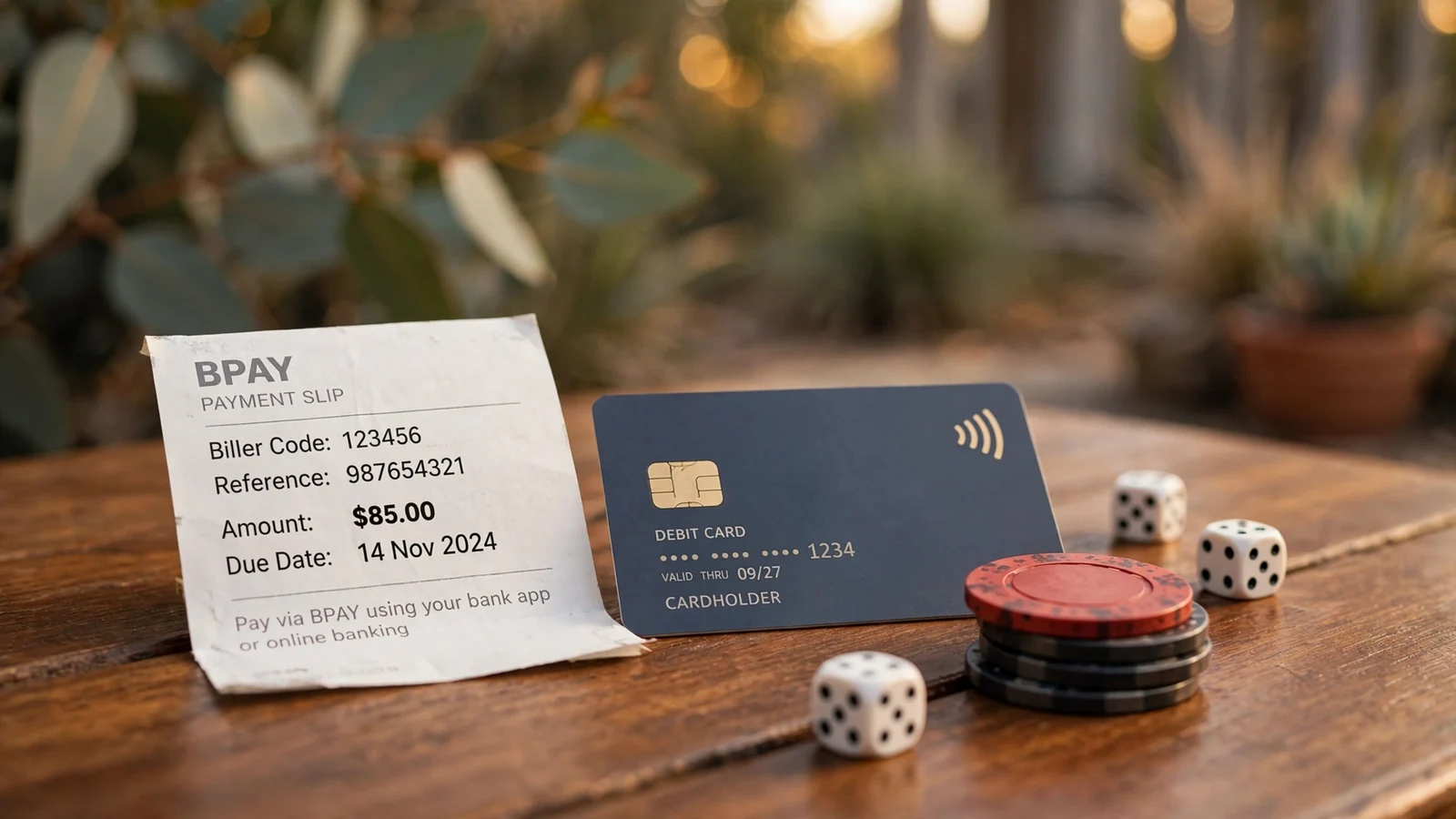
The legal and practical consequences also fall differently on operators and players. The Act imposes penalties on providers that breach it; the fact that a player is not explicitly criminalised for using an offshore site does not supply consumer protection for that use. Australian consumer law does not protect players who use offshore casinos. That is a material risk, not a footnote. If a dispute arises over an account, a payment, or winnings, the player should not assume that the protections available in a domestic consumer transaction will apply.
I have seen payment claims treated as if they were a shortcut to assessing a whole operator. They are not. A payment method is one part of an account’s cashier, while legality, access, dispute handling and consumer protections are separate matters. A PayID reference cannot settle those issues. Nor should a payment option be read as a signal that an operator has Australian authorisation to provide casino games. It signals, at most, what the operator says about a payment route; it does not establish the legal status of the gambling service.
The difference between “PayID is available” and “PayID is available for casino gambling in Australia” is not cosmetic. The first statement could describe a general payment facility or a function used for some other kind of transaction. The second makes a claim about a particular payment method, a particular use and a particular market. Each part needs to be clear before the statement can be treated as meaningful. A general reference to bank-linked payments does not establish acceptance of PayID by a casino cashier.
Attention: Technical access to a site or the ability to open an account does not mean the operator is permitted to provide real-money casino games under Australian law.
Likewise, an account that can be opened or a page that loads should not be confused with lawful provision of the service. Access in a technical sense and permission under Australian law are different questions. ACMA’s enforcement role is part of that picture: the regulatory framework is not merely a matter of what a website chooses to say about itself. A polished localised page does not displace the Interactive Gambling Act.
This is why I avoid turning an Australian label into a recommendation. Words such as “best” or “Australian” can make a payment claim sound like a vetted choice, when the label alone does not establish either lawful casino provision or confirmed PayID use. A ranking would add confidence without resolving those questions. In this market, that is the wrong kind of certainty.
There is a further practical distinction between a payment service’s general availability and a gambling operator’s acceptance of it. Australians use a mix of cards, mobile wallets and services linked to banks in everyday transactions. That broader familiarity cannot be carried across as evidence about a casino cashier. A method being familiar in ordinary commerce does not prove that it is accepted for online gambling, and acceptance in one setting does not establish acceptance in another.
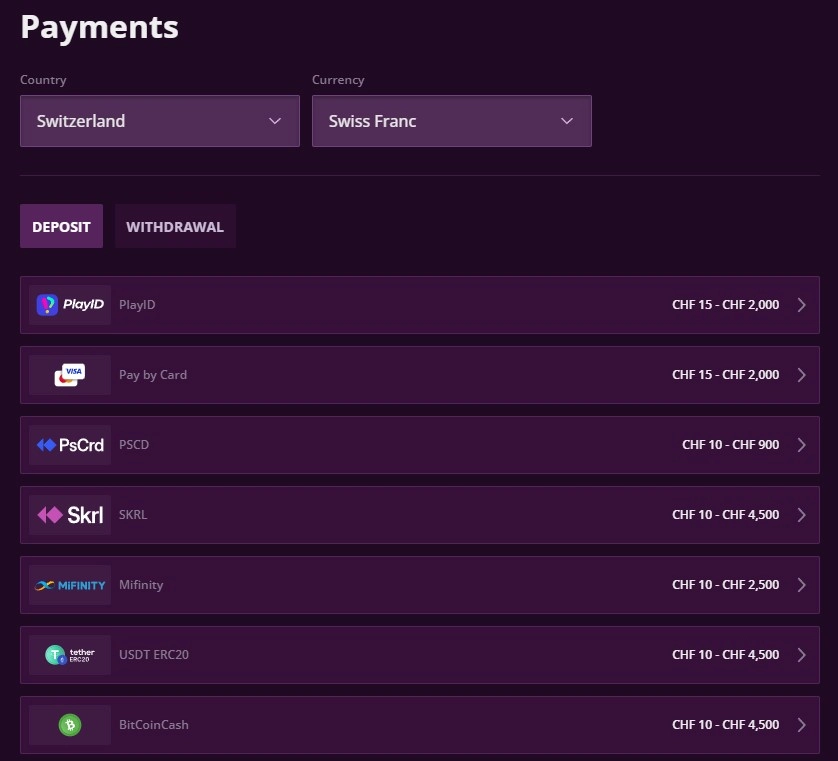
The same caution applies to the phrase “PayID casino.” It can compress several assumptions into a few words: that a casino service is being offered to Australians, that PayID is integrated into its cashier, and that the option applies to gambling rather than another transaction. Those assumptions should not be treated as a single confirmed fact. The term itself does not establish them.
For an Australian audience, therefore, the central distinction is not between one PayID casino and another. It is between a payment claim and the legal status of the service associated with it. The Interactive Gambling Act prohibits operators from providing real-money online casino games to people in Australia, and offshore use does not bring Australian consumer-law protection. A PayID label cannot remove either point.
No shortcut here.
PayID and Casino Games: No Verified Game-Specific Details
A payment label and a game catalogue answer different questions. “PayID” describes a claimed way to move money; it does not identify which games a service provides, whether they are available to people in Australia, or whether a payment method changes access to them. Treating those points as interchangeable turns a payment claim into a game claim without evidence.
I separate the cashier from the catalogue when assessing how a gambling service presents itself. The cashier concerns payment arrangements. The catalogue concerns the service being offered and the terms under which it is made available. A PayID reference beside a casino brand does not, by itself, establish a connection between that payment method and a particular game or category. The wording may be broad; the implication can be much broader.
Relationship between Payment and Games
A payment reference (like PayID) only describes a claimed way to move money. It does not identify the games provided, their availability in Australia, or the legality of the service.
That distinction matters in Australia because the Interactive Gambling Act 2001 makes it illegal for operators to provide real-money online casino games to people physically located in the country. The prohibition covers casino-style services, rather than turning on the payment method used. The Australian Communications and Media Authority enforces the Act. A payment option cannot make a prohibited service lawful or demonstrate that a game is available under Australian law.
There is also a consumer-protection consequence that tends to disappear behind payment language: Australian consumer law does not protect players who use offshore casinos. Payment acceptance, if claimed, should not be mistaken for local oversight, a local remedy or assurance about the service. Those are separate matters.
Descriptions that join PayID to casino games can therefore create a false sense of specificity. A phrase may sound as if it confirms a particular game, a game category, or a special version of a service. Unless the operator clearly states what is being offered and the legal position permits it, the payment wording proves none of those things. Nor does a payment reference establish that the same arrangement applies across every part of a site.
I would read such language narrowly: as a statement about payment only, and only to the extent that the operator’s own terms support it. I would not infer that PayID unlocks a catalogue, changes eligibility, or makes a game accessible from Australia. Those conclusions require separate evidence and a lawful service. The distinction is basic. The implication is not.

This is why game-specific claims should not be built from payment terminology. A cashier label cannot identify a game, establish its rules, or confirm that it can lawfully be supplied to someone in Australia. Any description that suggests otherwise is combining separate issues. On this market, that is more than loose wording; it can obscure the legal status of the service itself.
The practical reading is restrained: payment language is not a game list, and it is not permission to access one. No more than that.
PayID Withdrawals: No Confirmed Processing Information
A casino’s ability to take a payment and its ability to return funds through the same channel are separate questions. A reference to PayID in a payment menu does not, on its own, establish that PayID can be used for withdrawals. Nor does the phrase “instant withdrawal” explain when a payout is considered complete: an operator might use it to describe an internal approval stage rather than money reaching an account. Without clear terms for the withdrawal itself, neither interpretation can be assumed.
I learned to read payout language narrowly. “Available” can refer to a method appearing in an account, while actual use may depend on account checks, transaction conditions or operator rules. Those distinctions matter more at withdrawal than at deposit: a payment going in does not prove that winnings can come back by the same route. PayID-specific processing times, limits, charges and eligibility conditions should not be inferred from information about cards, bank transfers or other services.
Most online casinos require a Know Your Customer (KYC) assessment before processing financial transactions, which is independent of the payment method used.
Online casinos typically require customers to complete a Know Your Customer assessment before financial transactions. That general requirement does not establish a PayID withdrawal process or predict how long any particular payment would take. The practical question is what the operator’s own terms say about payout method, approval and any restrictions—and whether those terms apply to the account in question. A generic payment badge is not enough.
There is also a more fundamental Australian issue. Under the Interactive Gambling Act 2001, operators are prohibited from providing real-money online casino games to people physically located in Australia, and the Australian Communications and Media Authority is responsible for enforcement. Australian consumer law does not protect people who use offshore casinos. A claimed PayID payout does not change either point or provide a safeguard if a dispute arises.
So “PayID withdrawal” should be treated as a specific claim about money leaving an account, not as a consequence of PayID being mentioned elsewhere in a cashier. Timing, fees and conditions require explicit terms; they cannot be borrowed from another payment method. No shortcut.
Real-Money Casino Payments and PayID: What Cannot Be Confirmed
A payment method appearing beside a casino brand is not, by itself, proof that it can fund real-money gambling. The distinction matters: a service may be available for ordinary transfers while its use for a particular merchant or transaction type is unavailable. PayID acceptance for casino payments cannot be inferred from the name of the payment service or from a general claim that a site supports online payments.

Australia’s legal position also changes how such claims should be read. The Interactive Gambling Act 2001 prohibits operators from providing real-money online casino games to people physically in Australia. That prohibition covers casino-style games such as poker, blackjack and roulette. The Australian Communications and Media Authority enforces the Act. A payment option described on an offshore site does not alter the law governing the service.
I have seen payment labels treated as shorthand for a complete transaction route. They are not. A deposit method, a debit-card route and a withdrawal destination are separate functions, each controlled by its own terms and processing arrangements. One cannot be assumed from another. Nor does a payment label establish that a transaction will be accepted by a bank or payment provider.
The phrase “real-money PayID casino” can sound like a simple product category. In practice, it bundles together two separate questions: whether an operator may offer the gambling service in Australia, and whether a particular payment channel is supported for that service. The legal restriction is clear; the payment claim needs its own substantiation. A promotional phrase cannot resolve either point.
There is also a practical consequence often left out of payment copy: Australian consumer law does not protect players who use offshore casinos. That matters when a payment is disputed, delayed or handled under terms set outside Australia. A familiar transfer method does not create local consumer protections or make an offshore gambling service lawful.
Final Conclusion
Payment labels are not proof of legality or a guarantee of functional real-money transaction routes in the Australian market.
I would not treat a PayID reference as evidence of a real-money deposit route, a debit-linked option or a cash-out path. The wording needs to identify the precise transaction and the entity handling it. Anything less is a label, not a usable payment description. No shortcut.
Paying with PayID: Acceptance Must Be Verified
A payment method is not established by a label in an advert or a general statement about available banking options. In the systems I have worked around, the relevant distinction is between a payment brand being mentioned and an operator actually making that route available for a particular transaction. Those are not the same thing.
For PayID, the question of acceptance concerns the payment route itself. It does not establish that an account can be opened, that a particular service may lawfully be supplied in Australia, or that money can later be returned through the same route. Each is a separate matter. A payment option also should not be treated as a general endorsement of the service connected to it.

The Australian legal position sets a firm boundary. Under the Interactive Gambling Act 2001, operators must not provide real-money online casino games to people in Australia, and the Australian Communications and Media Authority enforces that law. The fact that a payment method is discussed or displayed does not alter that position. Nor does it create consumer-law protection for Australians using offshore casinos.
I have seen how payment wording can do more work than it appears to. “Supported” sounds complete; in practice, it can refer only to one stage of a transaction, or to availability under conditions that are not stated alongside the label. A payment method’s name alone says nothing reliable about the full service behind it. Read the wording narrowly.
The same discipline applies to claims about paying through PayID: they need to be specific to the payment route and the transaction in question, rather than inferred from general familiarity with bank-linked services. Acceptance is not a synonym for unrestricted use. And it is not a legal safeguard.

Short version: labels are not proof.
PayID Casino Bonuses: No Verified Offer Details
A bonus described as PayID-related can mean several different things: an offer available only after a PayID deposit, a promotion that lists PayID among eligible payment methods, or a general casino bonus displayed beside payment information. Those are not interchangeable claims. The wording of a promotion would need to make clear which one applies.
I have seen how a payment logo can acquire more meaning in promotional copy than the terms support. Its presence beside an offer does not, by itself, establish that the payment method qualifies a customer for the bonus. Nor does a reference to a deposit method establish that an offer is available without a deposit. The terms and the cashier would have to align. Marketing language is not the rulebook.
The same distinction matters for a no-deposit bonus. “No deposit” describes a claimed offer condition; it does not explain whether registration, identity checks, eligible games, or other requirements apply. Without the specific offer terms, it would be misleading to describe a PayID no-deposit bonus as available or to suggest that PayID unlocks one.
Promotions also need to be considered within Australia’s legal setting. The Interactive Gambling Act 2001 prohibits operators from providing real-money online casino games to people physically in Australia. Australian consumer law does not protect people using offshore casinos. A bonus should not obscure either point, and promotional claims should not be treated as a recommendation to use an online casino.
I would separate three things before accepting any bonus claim: the payment method named in the terms, the conditions that make the offer eligible, and the legal status of the service in Australia. If those details are not explicit, the label alone proves little.
A banner is not a condition.
Which online casinos accept American Express for deposits?
Jackpot City Casino, Spin Palace and Ruby Fortune are listed among Australian gambling sites accepting Amex. Ignition Casino, Joe Fortune and PlayAmo also support Amex deposits for Australian players.
How do you check if casino sites accept Amex deposits?
Check the casino’s cashier for American Express as a selectable deposit method. A payment logo alone does not confirm that Amex is currently available for deposits.
Can I use Amex to withdraw winnings from an Australian online casino?
Some casinos do not allow withdrawals to Amex, and withdrawals generally require a previous Amex deposit. Where available, they can take up to five days to clear and may incur a fee.
Are casino Amex payments instant?
Amex deposits are processed instantly. Withdrawals can take up to five days to clear.
Does American Express work for online casinos?
Yes, some online casinos accept Amex deposits, including sites that support Australian players. Acceptance is not universal, and Australian banks may block gambling-related Amex transactions.
Prepared by the Malina Casino editorial staff.