
Casinos that accept Bitcoin in Australia: how they work
 Available in AU
Follow deposits from wallet to casino, examine payout stages, and understand the legal and bonus limits discussed.
- How Bitcoin Deposits and Payouts Move
- What a Meaningful Casino Comparison Can—and Cannot—Show
- Live Casino Play Meets the Same Legal Boundary
- Bitcoin Casino Bonuses: Read the Conditions, Not the Headline
- What “Accepts Bitcoin” Means for Australians
- Starting a Bitcoin Casino Session: Wallets, Networks and Verification
- Casino Games and the Limits of the Bitcoin Label
- Bitcoin Casinos Operate Outside Australia’s Licensing Framework
- Bitcoin Deposits: Confirmations, Addresses and Irreversible Transfers
- Bitcoin Slots and the Australian Online-Games Rule
How Bitcoin Deposits and Payouts Move
A Bitcoin payment does not travel from a bank account into a casino balance in one step. It begins in a wallet, moves across the Bitcoin network, and is then recognised by the casino’s payment system. A withdrawal reverses the direction: the casino approves the request, sends a blockchain transaction, and the receiving wallet records it. Each stage has its own status and possible delay.
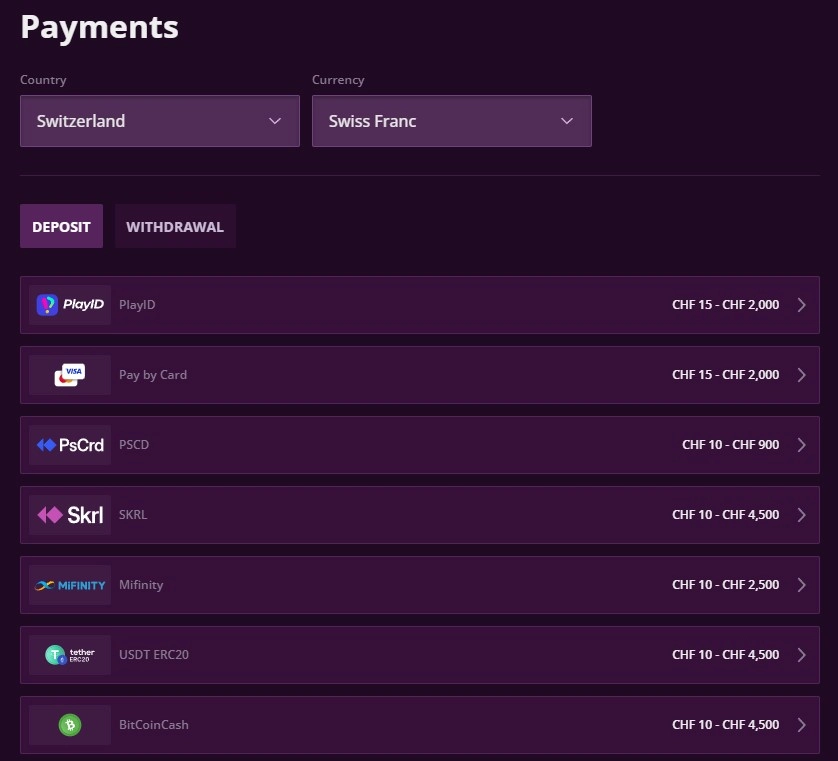
For a deposit, the casino displays a Bitcoin payment address, sometimes alongside a QR code and an amount. The wallet creates a transaction to that address and broadcasts it to the network. The casino can see that a payment has been detected, but detection is not the same as confirmation. Confirmation means the transaction has been included in a block; later blocks add further confirmations and make the transaction harder to reverse.
The casino’s payment rules determine when the funds become playable. A specialist review reports that some casinos credit deposits after one to three confirmations. That is a description of policies reported for particular services, not a universal Bitcoin rule. A specialist review also gives a possible span of ten to sixty minutes for a first confirmation, depending on network congestion and the fee attached to the transaction. Network conditions change, so an estimate is not a promised arrival time.

Some services have been described in specialist reviews as allowing play once a deposit is detected, before it has all the confirmations the casino requires for final credit. That is an operational choice by the casino, not proof that the blockchain has settled the payment. If the service shows a pending balance, its status may differ from a confirmed, withdrawable balance. The distinction matters: a displayed amount is not necessarily cleared funds.
Bitcoin fees are paid for network processing and can vary with demand. A specialist review has cited fees reaching AUD 10–20 per transaction during peak periods; that figure is not a standing tariff or a prediction for a particular transfer. The fee selected in a wallet can also affect how quickly a transaction is included. The amount received by the casino may differ from the amount entered in the wallet if the fee is deducted from the transferred total or if the casino specifies a required deposit amount.
Once the casino credits the account, its own ledger shows the balance. That internal credit is separate from the blockchain record: the network records the transfer, while the casino records what it considers available to play or withdraw. A delay between those records can arise while the payment is matched to an account or while the required confirmation threshold is reached. The blockchain does not decide when a casino updates its balance.
A withdrawal involves more than sending a transaction. The casino may first review the request and approve it internally; only after that does it broadcast Bitcoin to the nominated wallet. A specialist affiliate review reports casino-side processing delays of twelve to forty-eight hours before a payout is sent. Treat that as a report about a particular service’s process, not an established timetable across the market. The same kind of review reports that a Bitcoin payout may reach a personal wallet within an hour after casino processing. That describes the network leg after dispatch, not the time from clicking “withdraw” to receiving funds.
The sequence is therefore: request, internal review, dispatch, then network confirmation. A pending withdrawal may still be waiting with the casino, while a transaction identifier indicates that it has been sent to the network. If a transfer appears delayed, those states are not interchangeable. Checking which stage is pending helps distinguish an operator-side hold from a network-side wait.
The transaction record can make a transfer traceable, but it does not make it reversible. Bitcoin payments sent to an incorrect address or incompatible network can result in permanent loss; a confirmed transfer cannot simply be recalled through the wallet. Before sending, the address and the casino’s stated network must match exactly. A copied address should be checked rather than trusted on appearance alone.
There is also a currency risk between the wallet and the account. Bitcoin’s Australian-dollar value changes, so the value of a deposit or a later withdrawal in AUD can shift even if the number of Bitcoin units does not. The casino balance may be displayed in Bitcoin, another currency, or both; the display and conversion method affect what the figure means. A fast blockchain transfer does not remove that price movement.
Irreversible Transfers
Bitcoin payments sent to an incorrect address or incompatible network can result in permanent loss, as confirmed transfers cannot be recalled.
I separate the payment path into two clocks: the casino’s processing clock and the blockchain’s confirmation clock. Confusing them is how a routine wait can look like a missing payment. A transaction can be visible but unconfirmed, confirmed but not credited, or approved internally but not yet broadcast. The label “instant” describes an interface or a provisional credit policy; it does not make every step instantaneous.
What a Meaningful Casino Comparison Can—and Cannot—Show
A comparison is useful when it separates observable details from sales language. “Best” is a verdict, not a measurement. “Fast,” “trusted” and “latest” are labels whose meaning depends on what was checked, when it was checked and by whom. Without that context, a polished table can look more conclusive than the information behind it.
I read a comparison as a map of claims, not as proof that one casino is better than another. A page may set out operator details alongside its commentary, but those details should not be mistaken for independent confirmation. A displayed field tells what the page reports; it does not, by itself, establish how an operator handles every account or whether a customer’s experience will match the description. That distinction is easy to lose when a short verdict sits beside a row of tidy figures.
The same caution applies to labels such as “top Bitcoin casino” or “best Bitcoin casino site”. A ranking can reflect a publisher’s chosen criteria, commercial arrangements or editorial judgement. Unless the basis is made clear, the order does not reveal the weight given to each factor. I have seen the word “recommended” do a lot of work while explaining very little. That is presentation, not evidence.

A sound comparison makes its scope visible. It says which details are reported, which are checked, and what the assessment actually measures. It also avoids treating unlike things as interchangeable: a payment option is not a measure of service quality, and a promotional badge is not a substitute for an explanation. When a table compresses several considerations into one score, the underlying reasoning matters more than the score itself.
Time matters, too. Operator terms and availability can change, so a page that does not show when its information was reviewed leaves an important gap. Even a recent description is a snapshot, not a guarantee that the same conditions will apply later. “Latest” is meaningful only when the underlying update is visible and the claim has a defined subject. Otherwise, it is another adjective.
For Australians, the comparison has a further limit: crypto casinos are not licensed in Australia and sit outside the country’s regulatory framework. The Australian Communications and Media Authority focuses on blocking unlicensed offshore gambling sites. A comparison that presents a site as “Australian” because it accepts Australian customers or displays local-facing information should not be read as evidence of Australian licensing. Access and domestic regulatory status are different questions.
That distinction also limits what a list can establish. It can organise information about offshore operators; it cannot turn that information into local approval. Nor does inclusion in a comparison settle whether a particular claim is accurate or current. The placement of an entry is an editorial choice, not a regulatory endorsement.
Regulatory Status
Crypto casinos are not licensed in Australia and sit outside the country’s regulatory framework; ACMA focuses on blocking these unlicensed offshore sites.
Searches for the best Bitcoin casino, Bitcoin casino sites or a Bitcoin casino list often imply that one definitive answer exists. In practice, comparisons can help readers see what is being claimed and how the publisher frames it. They cannot establish a universal winner, confirm every operational detail, or remove the uncertainty created by changing terms and an offshore regulatory position.
My rule is simple: separate the reported detail from the conclusion attached to it. A comparison is most useful when that line stays visible. A ranking alone is not enough.
Live Casino Play Meets the Same Legal Boundary
“Live” describes how a casino game is presented, not a different legal category. A table streamed with a dealer on screen is still an online casino service when customers take part through a website or app. The format may feel closer to a physical table, but the underlying service remains online.
That distinction matters in Australia. The Interactive Gambling Act 2001 prohibits operators from providing online casino-style games to Australian residents. The prohibition explicitly covers games such as blackjack and roulette, as well as poker and slots. Putting a dealer in a studio, adding a video feed or calling a table “live” does not remove the game from that scope.
I have seen marketing rely on the texture of the experience: a human dealer, a visible table, a sense of interaction. Those features can make the product feel unlike an automated game. Legally, though, the relevant point is not whether a person deals the cards on camera. It is whether an operator is providing an online casino-style game to people in Australia.

The same reasoning applies when Bitcoin is part of the pitch. A casino may describe itself as accepting BTC, or pair cryptocurrency payments with live dealer tables. That describes payment and presentation, not permission to offer the games. Bitcoin does not turn blackjack or roulette into a different service under the Act.
This is why phrases such as “best live casino” or “live tables for Bitcoin players” need to be read as promotional descriptions, not as evidence that a service is permitted in Australia. A polished stream, a large table menu or a payment option says nothing by itself about the legal status of providing casino games to Australian residents. Nor does the word “platform” change the substance: if the service gives access to online casino-style games, the live format does not create an exemption.
An Australian licence is not a route for an operator to offer online casino games to Australian residents. The Act bars operators from providing those games under an Australian licence. So a claim that a live casino is “licensed” needs context: the word alone does not establish that the operator may lawfully serve Australians. It should not be treated as a local approval simply because it appears beside a table or payment method.
The distinction also prevents a common category mistake. A live dealer is not the same thing as a live sports event, and a streamed table does not become permissible merely because the action happens in real time. The game remains casino-style. The camera changes the presentation. Not the boundary.
From an industry perspective, the “live” label is useful because it communicates a particular playing format. It can help distinguish a streamed table from software that generates outcomes without a visible dealer. But that is a product distinction, not a legal one. The rules do not stop applying when the dealer is visible, the studio looks physical or the player’s balance is denominated in Bitcoin.
Live Casino Boundary
- Live dealer presentation does not change the legal category of the service.
- Online casino-style games remain prohibited for Australian residents under the Interactive Gambling Act 2001.
- Bitcoin payments do not create an exemption to these legal restrictions.
For Australian residents, the central question is therefore not whether a site has live dealers or accepts BTC. It is whether an operator is offering online casino games to people in Australia. Under the Interactive Gambling Act 2001, the live presentation does not change the answer for games such as blackjack and roulette: they remain within the prohibited online casino-style services.
Bitcoin Casino Bonuses: Read the Conditions, Not the Headline
A “free” Bitcoin bonus is still a promotion with rules attached. The label may describe how an offer is triggered—perhaps without a qualifying deposit—but it does not establish that the resulting balance can be withdrawn freely. I have seen the headline do its job while the terms quietly define what counts as eligible play, when a balance becomes withdrawable and what can disqualify a payout.
The first condition to inspect is the wagering requirement. It sets how much eligible play must take place before bonus funds, or winnings linked to them, can be released. The wording matters: a requirement may apply to the bonus, the deposit and bonus together, or winnings. Those are materially different calculations. If the terms do not make the calculation clear, the headline cannot fill the gap.

Next comes game eligibility. Casino promotions may exclude particular games or count play on different games differently. A bonus presented alongside Bitcoin slots, video slots or other casino games does not automatically apply across the catalogue. The eligible-game clause is the operative one. A game can appear on the site and still be excluded from bonus play.
Maximum cashout language deserves equal attention. A promotion can allow a balance to grow while limiting the amount that may be withdrawn from bonus-linked winnings. The limit may apply only to those winnings, rather than to separately deposited funds, but the terms need to say so. Without that distinction, a large displayed balance is not the same thing as an available payout.
Payment-method exclusions can change the offer’s value too. A Bitcoin casino deposit bonus may exclude cryptocurrency deposits, or permit them while imposing separate withdrawal conditions. “Bitcoin accepted” and “bonus eligible” are separate claims. The terms should identify which currencies and payment methods qualify, and whether a bonus affects the method available for a later payout.
“No deposit” does not mean “no conditions.” A no-deposit Bitcoin offer may still carry wagering, game-eligibility and cashout rules, as well as identity checks before a withdrawal can be processed. The same applies to a bonus described as free Bitcoin: the label says little about whether funds are withdrawable or what must happen first. Read the conditions attached to the specific promotion, not a general bonus page.
- Inspect wagering requirements for bonus funds
- Check game eligibility clauses
- Review maximum cashout limits
- Trust the headline alone
- Assume “no deposit” means no conditions
- Overlook payment-method exclusions
Promotional terms also sit within a wider risk. Cryptocurrency prices move, so the value of a deposit or winnings measured in Australian dollars can change before conversion or sale. Crypto transfers are irreversible; that is a payment risk, not a bonus feature. Nor does using Bitcoin create extra consumer protection.
There is a more fundamental boundary for Australians. The Interactive Gambling Act 2001 does not name Bitcoin, but it prohibits operators from providing real-money online casino games to people in Australia. An offshore licence does not authorise an operator to provide those services to Australian residents. A bonus headline cannot alter that legal position. Someone registered with BetStop or a state-based self-exclusion program must also self-exclude directly at each offshore platform; registration does not automatically apply there.
A promotion can be technically attractive and still be poor value once its terms are applied. The small print is the product.
What “Accepts Bitcoin” Means for Australians
For Australians considering Bitcoin casinos in 2026, it is worth checking the practical details each site discloses, including payment timing, deposit thresholds and licensing. Use these details as a starting point and confirm directly whether BTC deposits are currently available.
Payout speed: crypto 30-120 minutes, fiat 24-72 hours · Min. deposit: A$30 MrPacho lists crypto payouts at 30–120 minutes and fiat payouts at 24–72 hours. Its minimum deposit is A$30.
License: Curacao eGaming (Hollycorn N.V., since 2017) · Min. deposit: A$20-30 (depends on the offer) Playfina Casino is listed under Curacao eGaming, with Hollycorn N.V. identified as the operator since 2017. The minimum deposit is A$20–30, depending on the offer.
License: Curacao Gaming Control Board OGL/2023/174/0082 (Dama N.V.) SpinsUp is listed with a Curacao Gaming Control Board licence, OGL/2023/174/0082, under Dama N.V.
License: Curacao Gaming Control Board JustCasino is listed with a Curacao Gaming Control Board licence.
License: Curacao eGaming OGL/2024/923/0383 (Antillephone N.V.) · Min. deposit: A$30 WinSpirit Casino is listed under Curacao eGaming licence OGL/2024/923/0383, with Antillephone N.V. identified. Its minimum deposit is A$30.
License: Curacao eGaming (Roby Games Ltd) Roby Casino is listed under Curacao eGaming, with Roby Games Ltd identified.
License: Curacao Gaming Control Board (TechSolutions Group N.V.) Bizzo Casino is listed with a Curacao Gaming Control Board licence, with TechSolutions Group N.V. identified.
License: Curacao · Min. deposit: A$20 (POLi) Lucky Dreams is listed as licensed in Curacao. Its minimum deposit is A$20 via POLi.
License: Curacao · Payout speed: crypto 30-60 minutes, fiat 1-5 days · Min. deposit: A$10 Wild Tokyo lists crypto payouts at 30–60 minutes and fiat payouts at 1–5 days. Its minimum deposit is A$10, and it is listed as licensed in Curacao.
License: Curacao – Antillephone N.V. (Versus Odds B.V.) · Min. deposit: EUR 20 Thor Casino is listed under a Curacao licence with Antillephone N.V. and Versus Odds B.V. identified. Its minimum deposit is EUR 20.
A casino’s claim that it “accepts Bitcoin” describes a payment option, not its legal status in Australia. The Interactive Gambling Act 2001 does not name Bitcoin or cryptocurrency. Its focus is the operator: it makes it illegal to offer specified online casino services to Australian residents. Changing the payment rail does not change who is providing the service or the legal question that follows.
That distinction is easy to lose in a cashier page. A Bitcoin symbol beside a deposit option can make a site look purpose-built for Australian players, but it does not mean the operator holds an Australian casino licence. Australia does not issue a domestic licence for online casino games. A foreign licence, where an operator has one, is not an Australian licence.
The wording matters. “Available to Australians” is a commercial claim about access, not proof that the service is authorised under Australian law. Likewise, a site’s ability to receive BTC does not establish that its casino offering complies with the Interactive Gambling Act. Payment acceptance and permission to provide casino games are separate questions.
The Act is directed primarily at the business offering the service, rather than making it an offence for an Australian to play at an offshore-licensed online casino. That does not convert an offshore operator into a locally licensed business. In my experience, those two ideas are often blurred in promotional copy: a statement about the player’s position gets presented as if it were an endorsement of the site. It is not.

So “casino with Bitcoin” is a narrow description: the operator says it can process BTC. It says nothing, on its own, about whether the operator may provide online casino games to residents in Australia, what oversight applies, or what recourse exists if a dispute arises. The label answers a payment question. It does not answer a licensing one.
There is a practical reason to keep the categories separate. A site can accept Bitcoin while being offshore and outside Australia’s domestic casino licensing framework. Calling it a Bitcoin casino does not make it an Australian casino, and a foreign permit should not be described as local approval. The legal focus remains on the service being offered, not the coin used to fund an account.
For a Bitcoin casino test, the useful first distinction is therefore not whether a deposit button displays BTC. It is whether the site’s statements clearly identify the operator and the jurisdiction behind it, and whether its marketing avoids presenting offshore access as Australian authorisation. “Crypto-friendly” is promotional shorthand. It is not a legal category.
I have seen payment language do more work than it should. It can make a site seem tailored to a market without saying anything reliable about its status there. Bitcoin changes how funds are sent; it does not rewrite the law governing the casino service.
Attention: A Bitcoin symbol on a cashier page describes a payment option, not the operator’s legal authorization to provide casino services in Australia.
Starting a Bitcoin Casino Session: Wallets, Networks and Verification
A Bitcoin payment starts outside the casino account. A specialist review describes the usual sequence as sending cryptocurrency from a personal wallet to an address supplied by the operator, then requesting a withdrawal to a wallet address. The exact steps depend on the platform and wallet, so the payment screen’s instructions matter more than a generic guide.
Before sending anything, check that the operator supports Bitcoin for deposits and withdrawals. Support for one does not establish support for the other: a site may accept a currency but not pay out in it. Confirm the withdrawal currency and any address requirements before funds enter the account. Otherwise, a balance may be available to play with but awkward or impossible to withdraw in the intended form.
Network selection is just as important as currency selection. The sending wallet and receiving service must use a compatible network. A specialist review notes that crypto payments are recorded on the blockchain, which provides a transaction record; it does not provide a reversal mechanism. Sending to the wrong address or through an unsupported network can mean permanent loss. Check the address carefully before approving the transfer. No recovery button.
The choice of coin can also affect the practical experience. A specialist review reports that Bitcoin can take longer to confirm than Litecoin or Ethereum, while Litecoin may have lower network fees than either. These are source-specific observations, not fixed promises: network conditions and fees change. Bitcoin’s value can also move between deposit and withdrawal, so the amount’s value in Australian dollars may differ even if the coin quantity is unchanged.

Withdrawal preparation includes identity checks. Identity verification documents must be provided before a payout can be processed. The name and account details used during registration should therefore be treated as part of the payment setup, not as an afterthought at cash-out. A pending verification request can hold up a withdrawal regardless of the blockchain status.
Australian residents also need to keep the legal setting in view. The Interactive Gambling Act 2001 prohibits operators from providing real-money online casino-style games to people in Australia; there is no domestic licence for those services. Do not use a VPN to get around location restrictions, as doing so can breach an operator’s terms and put an account or winnings at risk. Anyone registered with BetStop or a state-based self-exclusion program must also self-exclude directly with each offshore platform.
Casino Games and the Limits of the Bitcoin Label
Bitcoin describes how a balance may be funded or paid out; it does not define what happens on the screen. A casino game does not become a different kind of game because a player uses BTC rather than another payment method. The relevant distinction is between the payment rail and the service being offered.
That matters in Australia because the Interactive Gambling Act 2001 addresses the provision of online casino-style games to Australian residents. Its list includes slots, poker, blackjack and roulette. The rule concerns the games and the operator’s service, not the currency used to access them. Calling a site a “Bitcoin casino” therefore says something about its payment option, not whether its games may lawfully be offered in Australia.
Legal Classification of Games
Under the Interactive Gambling Act 2001, the prohibition covers slots, poker, blackjack, and roulette regardless of whether they are funded by Bitcoin or presented with a crypto-themed interface.
This is the part promotional labels tend to blur. “Bitcoin games” can sound like a separate category, as if crypto changes the underlying product. In practice, the label may cover familiar casino formats with a crypto payment option. A bitcoin casino game is still classified by its gameplay and how it is provided, not by whether the displayed balance is denominated in BTC.
The legal boundary is operator-facing. The Act prohibits operators from providing the specified online casino games to Australian residents. Australian players are generally not explicitly prohibited from accessing crypto casinos, but that does not make the operator’s offer lawful or turn an offshore service into an Australian-authorised one. Those are separate questions.
I would not treat a payment badge as a signal about game availability. The fact that a site accepts Bitcoin cannot establish that its pokies or table games may be offered to people in Australia. Nor does the word “crypto” create an exception to the law. The underlying service remains the point.
There is also a practical distinction between a payment method and a game feature. A game may show results, wagers or balances in a crypto-denominated account, but those interface choices do not change the legal character of online casino-style play. Bitcoin gambling remains gambling; the coin is not the game.
The label has limits. Familiar games, familiar rules.
Bitcoin Casinos Operate Outside Australia’s Licensing Framework
A Bitcoin payment option does not give a casino Australian regulatory status. Crypto casinos are not licensed in Australia, so they operate outside the country’s domestic framework. The distinction matters: accepting Bitcoin describes how an account may be funded; it does not establish that an operator is authorised to serve people in Australia.

There is no Australian online-casino licence that a crypto operator can point to as local approval. An offshore business may present itself as licensed elsewhere, but that is not an Australian licence and does not place it under Australian casino regulation. From the counter, I learned to separate a polished compliance page from the practical question it leaves unanswered: which authority in Australia supervises the service? For these casinos, the answer is not an Australian licensing body.
ACMA’s role in this market is visible in its blocking activity. The regulator focuses on unlicensed offshore gambling sites and has banned several operators from Australia, with their websites blocked. A blocked address is therefore not just a technical inconvenience. It reflects enforcement aimed at restricting access to services that sit outside the local framework.
But a block is not the same thing as an Australian licence being withdrawn; these operators did not hold one. Nor does a site loading at a particular moment demonstrate approval. Access can change as blocking measures are applied, and a working web address is not evidence of regulatory oversight. I would not treat availability, a Bitcoin logo or a promotional claim as proof that an Australian authority has reviewed the operator.
The same distinction applies to a “Bitcoin casino” label. It identifies a payment method or marketing angle, not a separate category of Australian authorisation. Crypto does not move an operator into the domestic licensing system, and it does not make a blocked service regulated. Trying to get around a geographic block with a VPN is not a sound workaround; it can conflict with platform terms and may put an account or winnings at risk.
For anyone registered with BetStop or a state-based self-exclusion program, registration does not automatically apply across offshore platforms. Self-exclusion must be requested directly with each such platform. That is an important gap between a local support arrangement and an operator outside Australia’s framework.
Safe Deposit Process
Confirm the currency, network, and full address against the casino’s cashier instructions.
Check the transaction details in the wallet before authorising the transfer.
Send the funds, noting that once broadcast, the transfer is not reversible.
The practical picture is plain: these services have no Australian casino licence, and ACMA uses site blocking against unlicensed offshore gambling operators. A reachable site is not a regulated one. Nor is a Bitcoin deposit a badge of approval.
Bitcoin Deposits: Confirmations, Addresses and Irreversible Transfers
A Bitcoin deposit begins with a transfer from a personal wallet to the address displayed by the casino’s cashier. The balance shown on screen is not the same thing as a completed blockchain transfer: the transaction must be detected and receive the confirmations required by the operator before funds are credited. A specialist review describes confirmation as the point at which an offshore Bitcoin deposit is credited, but the operator’s own payment instructions are the relevant reference for a particular transaction.
The address is not a detail to check after sending. It identifies the destination, and a single copied character error can send funds somewhere the casino cannot access. Bitcoin transfers cannot generally be reversed by asking a wallet provider or the receiving service to cancel them. If funds go to the wrong address, the loss may be permanent.
The network matters too. A cashier may specify the Bitcoin network it supports; selecting a different network in the wallet can leave the deposit unrecoverable. The sending wallet and the casino’s deposit instructions must agree on both the address and network. A familiar brand name or a successful transfer preview does not establish that the destination is correct.
There is another cost that is easy to overlook: Bitcoin’s value can move between the time funds are sent and the time they are used or withdrawn. The amount credited in the casino account may therefore have a different value in Australian dollars later. Network fees can also vary, affecting how much arrives.
A sensible deposit check is mechanical: confirm the currency, network and full address against the cashier’s instructions, then review the transaction details before authorising it. Once broadcast, the transfer is not a reversible payment. That is the point at which a small copying mistake becomes final.

Bitcoin Slots and the Australian Online-Games Rule
“Bitcoin slots” describes a payment method paired with a game format. It does not create a separate legal category. A slot game does not become permissible for Australian residents because its account is funded in BTC, its interface uses crypto, or its operator calls it a Bitcoin casino.
The Interactive Gambling Act 2001 expressly includes slots among the online casino-style games operators may not provide to people in Australia. That prohibition also covers poker, blackjack and roulette, but the point for pokies is direct: changing the currency does not change the game or the rule that applies to its provision.
I have seen payment labels do a lot of work in casino marketing. “Crypto-friendly” can sound like a distinct kind of service; operationally, it says something about deposits or withdrawals, not whether the underlying game may be offered to Australian residents. The same distinction applies to BTC slots, whether they are presented as ordinary reels or wrapped in a crypto-themed interface. Different packaging. Same classification.
A “licensed Bitcoin casino” is not evidence of an Australian licence for online slots. Australian law does not provide a domestic licence under which an operator can offer these games to Australian residents. A foreign licence, where an operator holds one, does not convert the service into an Australian-licensed product.
That distinction matters because game availability and payment availability are separate questions. A site may describe Bitcoin as a supported currency, but that description does not establish that providing its slot games to Australians is lawful. Nor does the word “Bitcoin” itself tell anything about the game’s rules or the operator’s legal position.
For Australian readers, the essential point is not which slot titles appear on a lobby screen. It is that online slots remain within the games the Act expressly restricts operators from providing to residents. Crypto does not redraw that boundary.
Is it legal for Australian players to use Bitcoin at online casinos?
Australian players are not specifically prohibited from using Bitcoin at offshore gambling sites. However, the Interactive Gambling Act 2001 prohibits operators from offering certain online casino games to Australian residents.
Are Bitcoin and crypto casinos legal in Australia?
Australia does not license online casino games, and crypto casinos operate outside the country’s regulatory framework. The Interactive Gambling Act 2001 targets operators offering prohibited online casino games to Australian residents; it does not explicitly mention cryptocurrency.
How do I check if my Bitcoin deposit was confirmed on the blockchain?
Check the transaction’s blockchain record and whether it has been included in a block; later blocks add further confirmations. A payment merely detected by the casino is not necessarily confirmed or credited to your balance.
What law governs online gambling in Australia?
The Interactive Gambling Act 2001 governs the provision of online gambling services. It prohibits operators from offering certain online casino games, including slots, poker, blackjack and roulette, to Australian residents.
Created by the ”Malina Casino” editorial team.