Aussie Crypto Casinos in 2026: Australian Rules
 Available in AU
Explore how Australian law applies to offshore casino services and what to check about games, payments, promotions and identity verification.

- How Offshore Crypto Casinos Work—and Where the Australian Rules Apply
- The Australian Market: Access, Blocking and the Limits of Local Protection
- Slots and Site Games: What Can—and Cannot—Be Verified
- What “Best” Means When No Operator Can Be Endorsed
- Crypto Deposits, Minimums and the Fine Print on Promotions
- “No KYC” Is Not the Same as No Identity Checks
- Reviews, Free Spins and Claims That Need Evidence
- “Legit” in Australia: Regulatory Status, Not a Ranking
- Accepted Coins, Network Checks and Crypto Value Risk
- Crypto Casinos in 2026: The Payment-Rule Changes That Matter
How Offshore Crypto Casinos Work—and Where the Australian Rules Apply
An online crypto casino may look like a conventional gambling site with a digital-currency cashier, but the payment method does not determine its legal status. The key distinction in Australia is where the service is licensed and who is offering it. Offshore crypto casinos are not licensed in Australia and sit outside the Australian regulatory framework.
The Interactive Gambling Act 2001 prohibits operators from providing real-money online casino games to people in Australia. That applies to casino-style services offered over the internet, whether the account is funded with cryptocurrency or another payment method. Crypto does not create a separate category of casino that bypasses the rules.
There is an important difference between the prohibition on operators and the position of individual players. The law targets the service provider, not the person placing a bet. It is not a criminal offence for an individual in Australia to access an offshore casino, and an individual does not become liable simply by gambling there. That distinction can be obscured by warning banners and marketing language; it should not be. The operator’s legal position and the player’s legal position are not the same.

This does not make an offshore service an Australian-licensed alternative. In my experience, the label “available to Australians” can describe a site’s willingness to accept registrations, not approval by an Australian regulator. Those are different claims. An offshore operator remains outside local oversight, so Australian consumer protections do not apply to its casino service. A polished interface, crypto cashier or Australian-facing wording does not change that.
What ACMA does
The Australian Communications and Media Authority (ACMA) regulates online gambling under the Interactive Gambling Act. Its role includes monitoring online gambling activity, including activity involving cryptocurrency. The presence of digital assets does not place a platform beyond the regulator’s remit.
That point matters because crypto is often presented as if it changes the underlying transaction into something unrecognisable to gambling regulation. It does not. The relevant question is still whether an operator is providing a prohibited interactive gambling service to people in Australia. The payment rail may affect how funds move, but it does not decide whether the service is lawful for the operator to provide.

ACMA’s focus is on services and operators, rather than treating an individual’s use of an offshore site as a criminal act. In practical terms, a player’s ability to open a page or create an account should not be read as confirmation that the operator holds Australian approval. Access is not a licence.
The label is not a safeguard
“Crypto pokies” is a familiar way of describing casino-style games funded with digital currency. The phrase says something about the product and payment method; it says nothing about Australian authorisation. The same is true of a new-looking site or a platform described as a top crypto online casino. These are promotional or descriptive labels, not regulatory findings.
The distinction is easy to miss when the customer journey is built to feel ordinary: an account is opened, a balance is displayed and the site presents games. From the other side of the counter, I have seen how interface design can make a service feel established without explaining which country’s rules apply. A familiar process is not evidence of local supervision.
Australian-licensed operators cannot offer online casino games to residents in Australia under the Act. Offshore operators, meanwhile, are not licensed here and do not provide the protections that come with Australian oversight. This is not a matter of comparing two equivalent licensing routes. One is prohibited from providing the service to people in Australia; the other operates beyond the local framework.
The baseline age requirement also remains: gambling is for people aged 18 or older. Using cryptocurrency does not change that condition, nor does it turn an offshore service into a regulated domestic one.
The useful way to read the market is to separate three things that advertising often blends together: the game, the payment method and the operator’s legal status. A crypto balance describes how value is transferred. It does not establish who regulates the platform, whether Australian law permits the operator to serve local residents, or what recourse exists if a dispute arises.
Regulatory Status
Offshore crypto casinos are not licensed in Australia and sit outside the local regulatory framework, meaning Australian consumer protections do not apply to their services.
That is the operating context. The service may be reachable and may accept crypto, but those facts do not amount to Australian approval. The law draws its line at the operator’s provision of the gambling service, while ACMA monitors online gambling activity, including crypto-related activity. Different responsibilities. Different risks.
The Australian Market: Access, Blocking and the Limits of Local Protection
For Australian residents, an offshore crypto casino may look like an ordinary website until access changes. These platforms are not licensed in Australia and sit outside the country’s regulatory framework. That distinction matters in practical terms: Australian authorities do not supervise their services as they would a locally regulated product, and players do not have Australian consumer protections against an offshore operator.
I have seen how easily a polished interface can make a service feel local. Australian currency references, familiar payment language and an Australian-facing page do not establish local licensing or oversight. “Australian crypto casino” can describe the audience a site is trying to reach, not where it is regulated. The appearance is not the status.
Access can also be unstable. The Australian Communications and Media Authority (ACMA) monitors online gambling, including activity involving cryptocurrency, and can direct internet service providers to block prohibited offshore gambling sites. A specialist industry review reported that hundreds of domains had received blocking notices by mid-2025. That figure describes notices reported at that point; it should not be read as a fixed count or a complete measure of what residents can reach.
A block may affect a domain rather than make an operator’s name vanish from the internet. A page that opened previously may stop loading, while a different address or an old search result remains visible. From the user’s side, the distinction can be confusing: a dead link does not explain whether a site has closed, changed its address or become inaccessible because of a block. The practical result is the same at that moment. The route is gone.

This is one reason a “fast withdrawal crypto casino Australia” label should not be mistaken for a guarantee of ongoing access or local recourse. Speed claims describe an operator’s own service conditions, not protection from interruption or a remedy administered by Australian authorities. Nor does a casino bonus advertised to Australians change the operator’s regulatory position. Marketing copy can travel further than the service itself.
The gap becomes more visible when something goes wrong. Because offshore crypto casinos are outside Australian oversight, a local regulator does not provide the same consumer-protection framework for a dispute with them. A complaint may concern a delayed payment, an account restriction or a changed site address, but an Australian-facing support page does not itself create local supervision. The customer relationship remains with the offshore business.
That is not the same as saying an individual commits a crime simply by accessing such a site. Australian law targets operators, not individual players, and using an offshore platform is not a criminal offence for the user. But absence of player criminal liability should not be confused with an endorsement, a local licence or a guarantee of protection. Those are separate questions.
The same distinction applies across searches for crypto casinos in Australia, crypto pokies or crypto slots. A site’s availability at one point does not establish that it is locally regulated, permanently accessible or covered by Australian consumer safeguards. Blocking notices can make domains disappear with little warning, and a substitute address does not resolve the underlying status.
Access Stability
ACMA can direct internet service providers to block prohibited offshore gambling sites, meaning a domain that is reachable today may become inaccessible without warning.
Age remains a baseline condition: gambling is for people aged 18 or older. That requirement does not depend on whether a platform uses cryptocurrency or operates offshore. In practical terms, Australian access combines two realities: the individual is not criminalised merely for using an offshore casino, while the service itself remains outside local licensing and consumer protection. No local safety net.
Slots and Site Games: What Can—and Cannot—Be Verified
A page describing crypto slots may sound specific while saying very little. “Pokies,” “slot games” and “casino games” are broad labels, not a confirmed catalogue. A platform might use them in a headline without showing which games are available, whether they can be opened from Australia, or whether the description matches the current site. The wording is not the evidence.
I keep that distinction clear. That applies whether a page promises a crypto slot machine, a set of slot games or a full casino lobby. Naming games from memory or repeating an operator’s promotional copy would turn an unverified claim into an apparent finding.

The same caution applies to terms such as “provably fair.” The phrase describes a claim about how a game’s result can be checked; it does not, by itself, establish that a named game is offered, that its checking method has been independently assessed, or that the game is accessible to someone in Australia. Marketing language is easy to publish. Evidence has to match the specific game and the claim being made.
A useful distinction is between a game category and a verified game. “Slots” identifies a type of product, not its title, rules or availability. “Crypto casino” indicates a payment-related label, not proof that every game in a casino lobby accepts cryptocurrency directly. A list of coins or a wallet symbol beside a site name cannot establish which games are present. Those are separate claims, and they should not be collapsed into one.
Availability can also be time-sensitive. A title shown on a page may be removed, replaced or unavailable in a particular location. A promotional image is weaker evidence than a current, accessible game page, and even a visible page does not establish that its details have been checked independently. Without a specific, current basis for the claim, a confident-sounding inventory is just an inventory of assertions.
Under the Interactive Gambling Act 2001, operators are prohibited from providing real-money online casino games, including slots, to people located in Australia.
There is a further Australian distinction. Under the Interactive Gambling Act 2001, operators cannot provide real-money online casino games, including slots, to people located in Australia. The rule concerns the service being offered, not whether the interface labels a game as a slot, a pokie or something else. Crypto does not change the character of the game. This is why a list of titles should not be presented as an invitation or as evidence that an offshore platform is authorised to serve Australian residents.
That is not a judgement on the quality of any game. It is a boundary on what can responsibly be stated. A confident list would look more useful.
I have seen how quickly a general label becomes a product promise once it is placed beside a game image or a provider logo. Readers can reasonably take that presentation as confirmation. The small print rarely repairs the impression created by the headline. Better to describe the limit plainly than to borrow certainty from a polished lobby.
Age remains a baseline condition for gambling: players must be at least 18. That does not make an offshore game lawful for an operator to offer in Australia, nor does a game description establish that the relevant conditions have been met. The distinction is simple. Category is not catalogue; a claim is not verification.
What “Best” Means When No Operator Can Be Endorsed
Choosing an Aussie crypto casino in 2026 means checking the practical details that are available, rather than relying on broad claims. This list highlights each operator’s stated licensing, deposit minimums, or payout information where provided.
Payout speed: crypto 30-120 minutes, fiat 24-72 hours · Min. deposit: A$30 MrPacho lists crypto payouts at 30–120 minutes and fiat payouts at 24–72 hours. Its minimum deposit is A$30.
License: Curacao eGaming (Hollycorn N.V., since 2017) · Min. deposit: A$20-30 (depends on the offer) Playfina Casino is listed under the Curacao eGaming license held by Hollycorn N.V., in place since 2017. Its minimum deposit is A$20–30, depending on the offer.
License: Curacao Gaming Control Board OGL/2023/174/0082 (Dama N.V.) SpinsUp is listed under the Curacao Gaming Control Board license OGL/2023/174/0082, held by Dama N.V.
License: Curacao Gaming Control Board JustCasino is listed under a Curacao Gaming Control Board license.
License: Curacao eGaming OGL/2024/923/0383 (Antillephone N.V.) · Min. deposit: A$30 WinSpirit Casino is listed under the Curacao eGaming license OGL/2024/923/0383, held by Antillephone N.V. Its minimum deposit is A$30.
License: Curacao eGaming (Roby Games Ltd) Roby Casino is listed under a Curacao eGaming license held by Roby Games Ltd.
License: Curacao Gaming Control Board (TechSolutions Group N.V.) Bizzo Casino is listed under a Curacao Gaming Control Board license held by TechSolutions Group N.V.
License: Curacao · Min. deposit: A$20 (POLi) Lucky Dreams lists a Curacao license and a minimum deposit of A$20 when using POLi.
License: Curacao · Payout speed: crypto 30-60 minutes, fiat 1-5 days · Min. deposit: A$10 Wild Tokyo lists crypto payouts at 30–60 minutes and fiat payouts at 1–5 days. Its minimum deposit is A$10.
License: Curacao – Antillephone N.V. (Versus Odds B.V.) · Min. deposit: EUR 20 Thor Casino lists a Curacao license associated with Antillephone N.V. (Versus Odds B.V.). Its minimum deposit is EUR 20.
“Best” sounds like a finding. In a casino ranking, it is often only a label placed above a selection. The distinction matters: a heading does not show how operators were assessed, what evidence was checked or whether the comparison reflects the conditions that apply to Australian residents.
From inside the industry, I learned to read rankings as editorial products, not regulatory judgements. A list may compare features, but the word “best” does not establish that an operator is safe, fair, reliable or suitable. Those are separate claims, each requiring evidence. Without a clear method and current, independently checked information, a ranking cannot carry that weight.
That is why a best crypto casino Australia list cannot be responsibly presented as a recommendation here. Offshore crypto casinos are not licensed in Australia and sit outside the Australian regulatory framework. They offer no consumer protection under that framework. Calling one the best would risk turning an unsupported editorial label into an assurance about an operator.
A useful comparison would need to define its criteria before naming a winner. For instance, it would have to explain what counts as acceptable evidence, how the criteria are weighted and whether the same checks apply to every operator. It would also need to distinguish between information an operator publishes and facts independently confirmed. Without that separation, a polished comparison can look more conclusive than it is.

There is a second problem with broad labels such as “best online crypto casino”: they collapse different questions into one. A site might be described as strong on one feature and weak on another; neither description settles whether its terms are clear or whether its claims have been tested. A single overall score can conceal those distinctions. The score looks precise. The reasoning may not be.
The same applies to a crypto casinos list. Names arranged in order do not become evidence simply because the order is numbered. Nor does a “top” label make the first entry a sound choice. I have seen how presentation can do that work: a badge, a short verdict and a confident ranking can make a commercial judgement resemble an independent finding. The format is not the proof.
A best crypto casino site comparison should therefore show its limits as plainly as its criteria. It should say what was checked, when it was checked and what remains unknown. If those boundaries are not visible, readers cannot tell whether a ranking reflects verified performance, an editorial preference or a commercial arrangement. A list without that context is decoration.
Promotional language needs the same discipline. “Best” attached to crypto casino bonuses does not establish the value of an offer or the conditions attached to it. A headline cannot substitute for the terms. A separate review would need to assess the actual offer and explain its conditions; a general ranking cannot do so by implication.
Ranking Limitations
- Editorial labels like “best” or “top” are not regulatory findings or safety endorsements.
- Rankings often reflect editorial preference or commercial arrangements rather than verified performance.
- No offshore crypto casino is licensed or approved by Australian authorities.
There is no neutral way to turn an unsubstantiated preference into a dependable endorsement. The honest distinction is simple: an editorial label describes how a publisher has chosen to present a selection; evidence supports a claim about an operator. Those are not interchangeable. No ranking here should be read as approval, a safety finding or a recommendation to use an offshore service. Clipped verdicts are easy to publish. Proof is harder.
Crypto Deposits, Minimums and the Fine Print on Promotions
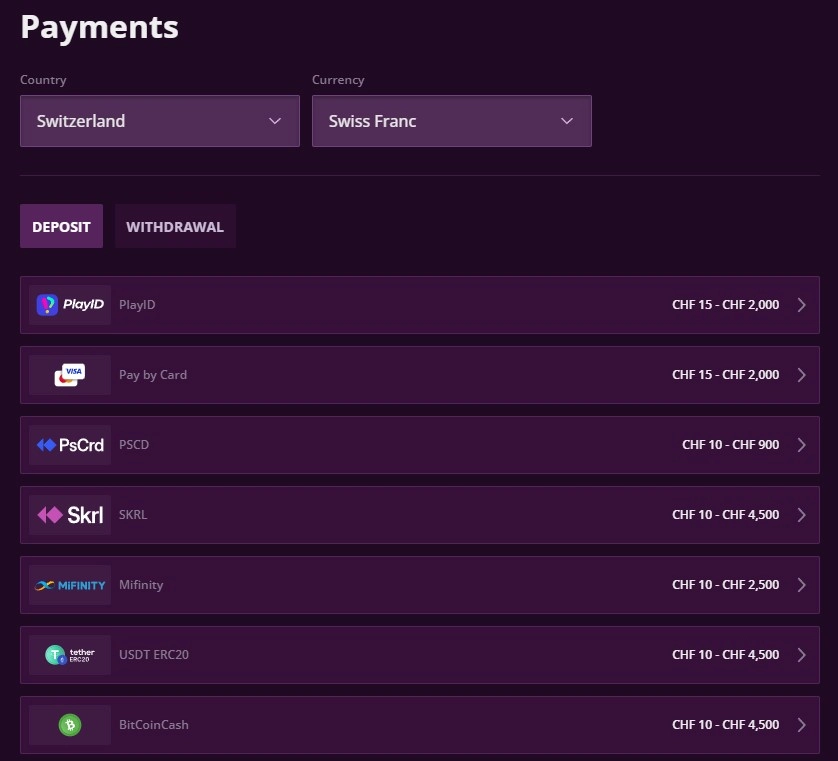
A low advertised minimum is a payment threshold, not a measure of what a deposit will buy. Specialist casino reviews have reported crypto entry points as low as $5, while their broader figures put many operators’ minimums at the equivalent of AUD 15 to AUD 30. Bitcoin minimums are often reported higher, at AUD 30 to AUD 50. These are reported ranges, not a promise that every site, currency or account will have the same terms.
The difference can matter at checkout. A site may display a minimum in one currency while the payment page calculates the amount in another; the applicable threshold is the one shown for the selected coin and network at the time of transfer. A figure described in Australian dollars is not necessarily the amount that will arrive after conversion or network charges. Small deposits can be especially sensitive to fees: the balance credited may be less than the amount sent.
A deposit minimum also says nothing about the value of a promotion. “No deposit” sounds like funds available without a payment, but the label alone does not establish whether an offer exists, who qualifies, what can be withdrawn, or what conditions apply. A bonus can be promotional credit rather than cash, and its displayed value is not automatically withdrawable. The terms attached to a particular offer determine what it does.
The same distinction applies to a crypto casino no-deposit bonus advertised in a banner or headline. The phrase is not a complete offer. Eligibility, game restrictions, any play-through requirement, expiry conditions and withdrawal rules would need to be stated in the promotion’s terms before its practical value could be assessed. Without those details, “best” is marketing language, not a useful comparison. No dependable value follows from the label.
There is a further separation between the payment and the promotion. A deposit may be accepted and credited while bonus eligibility is governed by a different set of conditions. The deposit amount therefore cannot be treated as proof that a promotion will attach to the account, or that its stated value can be converted into a cash withdrawal. In the industry, the headline is the invitation; the terms do the actual work.
That distinction is more important at offshore crypto casinos, which are not regulated by Australian authorities and do not provide Australian consumer protection. Promotional wording does not change that status. The Interactive Gambling Act prohibits operators from providing real-money online casino games to people in Australia, while the law does not make an individual player’s access a criminal offence. Players must be at least 18 to gamble.
A careful comparison separates three things: the amount required to deposit, the amount credited after fees and conversion, and any promotional credit with its own conditions. They are not interchangeable. Small print matters.
- Check the minimum deposit for the specific coin and network used.
- Read the full terms and conditions of any promotional offer.
- Factor in network fees and exchange rates when calculating values.
- Assume a “no deposit” label guarantees withdrawable cash.
- Mistake a displayed token balance for a fixed cash value.
- Equate a low advertised minimum with a guarantee of bonus eligibility.
“No KYC” Is Not the Same as No Identity Checks
“No KYC” is a claim about an operator’s stated onboarding process, not a promise that an account will never face identity checks. Paying with cryptocurrency does not make a person anonymous, and it does not remove an operator’s ability to ask who owns an account. The payment method and the identity policy are separate things.
Crypto transfers are recorded on a blockchain. A wallet address is not, by itself, a person’s name, but that does not make the activity invisible or guarantee that a transaction cannot be linked to an individual. I treat “anonymous” as advertising language unless the limits behind it are spelled out. Often, they are not.
A crypto casino with no KYC may mean that documents are not requested at registration. It does not necessarily describe what happens later. An operator may ask for identity or account information when reviewing a transaction, a withdrawal, or account activity. The phrase can therefore describe a point in the process, rather than a permanent condition. A check can still arise.
That distinction matters because the wording “no KYC” encourages a simple reading: no forms, no questions, no verification. The actual policy may be narrower. A site may reserve the right to request documents, and an account may be subject to review even if registration initially involved little information. Without clear terms, the label alone tells very little about what will be required.
I have seen how these labels work in practice: they compress a complicated policy into a short selling point. The missing detail is usually the boundary—when checks can happen and what information might be requested. “No KYC” is not a dependable description of every later interaction. Read the claim as limited, not absolute.

There is also a baseline condition that does not change with the payment method or the label: gambling is for adults aged 18 or older. A crypto account, wallet, or fast registration process does not alter that requirement.
So, a non-KYC crypto casino should not be understood as a place where identity can never be checked or where activity carries no privacy risk. The label cannot establish either point. Treat it as a statement about an advertised process, not proof of anonymity. The distinction is material.
Reviews, Free Spins and Claims That Need Evidence
A casino review is useful only when its claims can be tied to something observable. A confident verdict, polished screenshots or a list of attractive features does not establish that an operator was tested. I separate what a review says from what it demonstrates: the scope of the assessment, when it was made, and whether its conclusions follow from evidence.
That distinction matters because review pages can sit close to promotional material. A favourable label may reflect an editorial judgement, a commercial relationship or simply repeated wording from an operator’s own copy. Without clear support, the label is not a dependable measure of service, fairness or player experience. “Top-rated” is a phrase. Evidence is the work behind it.
Free-spin claims need the same discipline. A headline can make an offer sound unconditional while the terms govern who qualifies, which games count, how long the spins remain available and what happens to any resulting winnings. Those details determine the practical value. A large-sounding promotion can be restrictive; a smaller one can have clearer conditions. Neither conclusion follows from the headline alone.
Promotional Terms
Free spin claims and “free crypto slots” are often governed by restrictive terms regarding eligibility, game access, and withdrawal conditions.
I would not treat a mention of free spins as proof that an offer is active, available to Australian users or attached to a particular game. Nor does a review’s description establish that the stated terms still apply. Promotions change, and copied wording can outlast the offer it once described. The gap between a claim and a usable offer is often in the conditions.
The same caution applies to “free crypto slots” language. “Free” may describe a promotional format, not a cash payment or an unrestricted way to play. The phrase alone says nothing reliable about eligibility, game access or withdrawal conditions. It should not be read as a promise of value.
When I assess a review, I look for a clear line between fact, opinion and promotion. If that line is blurred, the verdict deserves little weight. If a free-spin claim has no accessible terms attached, it remains a claim—not a confirmed benefit. No special spin count or review score can substitute for that distinction.
A careful account can still be useful without declaring a winner. It can explain what was assessed, identify the limits of the assessment and avoid turning marketing language into a guarantee. That is less dramatic, but more honest. Claims need backing.
“Legit” in Australia: Regulatory Status, Not a Ranking
“Legit” can mean that a service is genuine, that it pays as promised, or that it holds a licence recognised by a particular regulator. Those are different claims. For an Australian resident, the regulatory meaning is the clearest one: offshore crypto casinos do not hold Australian licences and sit outside the country’s gambling framework. Calling one a legitimate Australian casino would blur that distinction.
The Australian Communications and Media Authority (ACMA) oversees online gambling under the Interactive Gambling Act. Its role is not to approve offshore casino operators for local customers. Rather, it can require internet service providers to restrict access to prohibited offshore gambling sites. A specialist review reported that, by mid-2025, blocking notices had covered hundreds of domains. That is a dated count, not a permanent register or a measure of which operators are trustworthy.
A block notice is a regulatory action against access to a site; it is not a consumer rating. Nor does a domain remaining reachable establish that an operator has Australian approval. Domains can change, and the status of an offshore service should not be inferred from its branding, payment methods or claims about a foreign licence. Different questions. Different evidence.
The same distinction matters when a page promises a “top” or “best” selection. A ranking might sort services by editorial criteria, but the label does not establish Australian licensing or local oversight. A long list is no stronger: inclusion on a list cannot turn an offshore operator into a locally regulated one. I have seen promotional language do this work by implication. “Trusted” often sounds like a regulatory assurance, though it may be no more than the publisher’s description.
There is no Australian-licensed crypto casino to identify as the leading option in a ranking. The useful answer to whether an offshore crypto casino is “legit” in Australia is therefore narrow: it is not licensed here, and Australian authorities do not regulate it as a local gambling service. That also means there is no Australian consumer-protection framework behind the operator’s promises. No local licence. No local oversight.
Legitimacy Status
Offshore crypto casinos are not licensed in Australia, regardless of foreign licences or branding.
This is a statement about regulatory status, not a verdict that every offshore business is fraudulent, and not an endorsement of any service. A foreign licence, where claimed, does not substitute for Australian authorisation. The distinction is less dramatic than a league table, but it is the one that matters when “legit” is being used to mean legally recognised in Australia.
Accepted Coins, Network Checks and Crypto Value Risk
Bitcoin and Ethereum are supported by almost all crypto casinos, while Litecoin, Tether (USDT), Ripple and other altcoins are also commonly accepted. That broad currency menu does not mean every coin is available on every platform, or that the same coin is supported across every network.
The network matters as much as the token. Tether, for instance, can be sent over different blockchains. A deposit address and the selected network must match exactly; sending through an unsupported network can make funds unrecoverable. Check both details before confirming a transfer. Crypto transactions are not like a card payment that can simply be reversed. A small test transfer may reduce the risk of a setup mistake, though it does not guarantee recovery if the main transfer goes wrong.
Transfer cost and confirmation time can influence which option is practical. TRC-20 Tether keeps transfer costs to cents. A specialist review characterises Litecoin and Tether on TRC-20 as faster-payout options, citing quick confirmation, low fees and broad support. The same specialist review frames Bitcoin as more suitable for larger, less frequent cashouts, where waiting around half an hour is less significant. These are comparisons of transfer mechanics, not assurances about how quickly a particular casino processes a withdrawal.
Bitcoin’s price can move between the time funds are acquired, deposited and withdrawn. Other cryptocurrencies can fluctuate too, including tokens designed to track a currency. The amount shown in a casino balance may therefore not equal the amount ultimately received when converted back to Australian dollars. Network fees and exchange rates can add further differences. A displayed token balance is not a fixed cash value.

A “secure” payment route depends on accurate network selection and careful handling of account access; the word does not remove transfer or price risk. Crypto use also does not remove age requirements: gambling is restricted to people aged 18 or older. No shortcut around the basics.
Crypto Casinos in 2026: The Payment-Rule Changes That Matter
The payment rules changed, but not in a way that turns offshore casino services into locally authorised ones. The key distinction is between restrictions on licensed domestic wagering services and the separate prohibition on providing real-money online casino games to people in Australia.
A specialist industry review characterised the 2023 amendments as seeking to restrict operators from accepting digital-currency payments from Australians. That description is about the direction of the amendments; it should not be read as proof that every offshore platform became compliant, or that crypto payment methods make a casino lawful to offer here.
A clearer rule took effect on 11 June 2024. From that date, licensed domestic wagering services in Australia could no longer accept credit-card or digital-currency transactions for wagering. The restriction concerns those licensed services and wagering transactions. It is not a general approval for offshore crypto casinos, nor does it create an exception for casino games.
That distinction is easy to blur in payment marketing. A change to which payment methods a domestic wagering service can accept does not change the status of online casino games under the Interactive Gambling Act 2001. The Act prohibits operators from providing real-money online casino games to people physically in Australia. Payment technology does not alter that boundary.

So the 2026 context is not “crypto is allowed” or “crypto is banned” in isolation. The relevant rule depends on the service and its status: domestic licensed wagering services face the 2024 payment restriction, while offshore casino platforms remain outside Australia’s regulatory framework and are not thereby made compliant. I have seen payment language do a lot of work in this market. It cannot rewrite the law.
Gambling is for adults aged 18 and over.
What should I check before depositing on an offshore crypto casino from Australia?
Check whether the operator is licensed where it operates and remember that it is not licensed in Australia, so Australian consumer protections do not apply. Also consider that a crypto deposit may trigger a capital gains tax event, and that ACMA blocking can affect access.
What are the payment methods, withdrawal speed, and transaction costs?
Crypto casinos commonly accept Bitcoin, Ethereum, Tether (USDT) and Litecoin, as well as other currencies such as Solana or Dogecoin. Litecoin and TRC-20 Tether are noted for quick confirmations and low fees, with TRC-20 transfers costing cents; Bitcoin may take around half an hour, making it more suited to larger, less frequent cashouts.
Can I use cryptocurrency for online gambling?
An individual in Australia does not commit a criminal offence simply by gambling at an offshore online casino, but offshore casino operators are not licensed in Australia and the law prohibits operators from providing online casino games to Australians. Crypto does not change that distinction, and licensed domestic wagering services cannot accept digital currency transactions for wagering.
Which crypto is best for casino deposits and withdrawals?
Litecoin and TRC-20 Tether are recommended for faster payouts because they offer quick confirmation and low fees. Bitcoin may suit larger, less frequent cashouts.
What is the minimum deposit at a Bitcoin casino?
Crypto casino minimums can start at $5, but many operators set them at the equivalent of AUD 15–30. Bitcoin minimums are often higher, around AUD 30–50.
Published by the Malina Casino team.